Village · Azerbaijan
Lahij
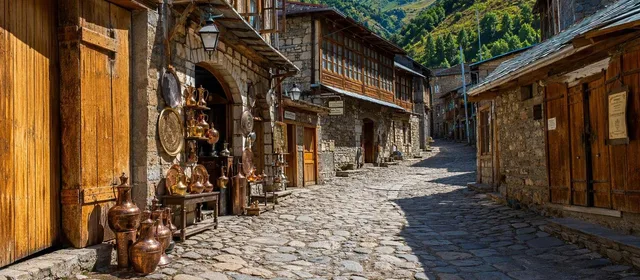
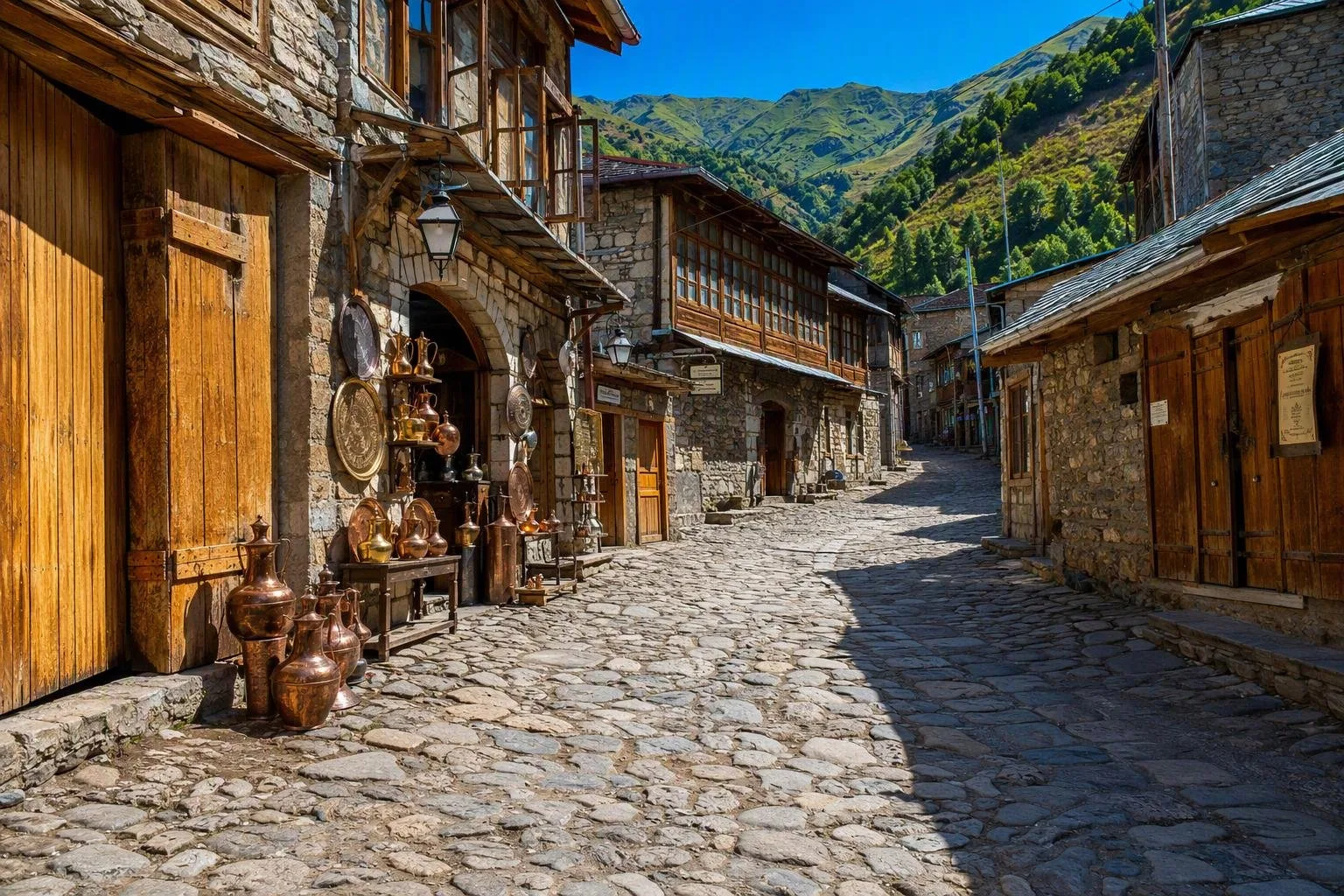
Lahij is a historic craft village in Azerbaijan’s Ismayilli District, high on the southern slopes of the Greater Caucasus. Its cobbled lanes and working copper workshops make the village a clear stop for living heritage rather than a museum display.
The village at a glance
Lahij, also written Lahıc, is a protected historic settlement in the Greater Caucasus. Its core is compact and best handled on foot: stone-paved lanes, stone-and-timber houses, mosques, springs and workshops sit tightly within the mountain setting.
The main route is Bazar Street, also called Great Street. This is where most copper workshops are concentrated. The reserve protects 103 historical and cultural monuments and restricts modern building materials, helping retain the old streetscape.
Copper at work
Copperworking is Lahij’s defining craft. The local tradition was inscribed on UNESCO’s Representative List of the Intangible Cultural Heritage of Humanity in 2015. It remains a working chain of skills: copper is hammered into thin sheets, polished, shaped and engraved.
Walk Bazar Street slowly and look into active workshops rather than treating every storefront as a souvenir stop. Typical pieces include trays, bowls, jugs and other household vessels with engraved decoration. Craft knowledge is passed through families and apprenticeship.
Workshop etiquette: these are workplaces. Ask before taking close photographs, avoid blocking entrances, and give artisans space while they work. If buying copper, inspect the engraving and ask the maker how to pack and care for the piece.
Streets, quarters and architecture
Lahij’s interest goes beyond copper. The historic settlement developed through neighbourhood quarters, traditionally organised around features such as a mosque, bathhouse and public space. Look for the relationship between the narrow lanes, workshop fronts and the houses above them.
Stone construction is paired with timber elements; the local building tradition developed in an earthquake-prone region. Water management is another notable feature: the settlement has a historic underground system for water supply and drainage. Stay on the paving and do not obstruct street channels.
For a more specific architectural stop, the reserve identifies Zavaro Mosque (built in 1805), Badavun Mosque (founded in 1791) and the river-stone Agholu Mosque (built in 1902).
Museum and timing
The Lahij History and Ethnography Museum holds 1,191 inventoried objects, including material connected with local crafts and daily life. Its collection was temporarily moved from the historic Agholu Mosque to the Lahij Community Center while a new museum building is arranged; part of it is displayed there.
Allow several unhurried hours for the village rather than rushing through it as a photo stop. Spring, summer and autumn are the main visiting seasons. The approach is a winding mountain road, so conditions can be more demanding in winter or poor weather. Wear shoes that handle uneven cobbles and bring a layer for the higher elevation.
From the magazine
Stories about Lahij
Editorial stories linked directly to Lahij.
No stories about Lahij have been published yet.
Routes from our editors
Travel through Lahij
Editorial routes connecting Lahij with other countries, cities and hotspots.
No routes through Lahij have been published yet.
More in Azerbaijan
Related hotspots
Other cities, nature areas and places within Azerbaijan.