
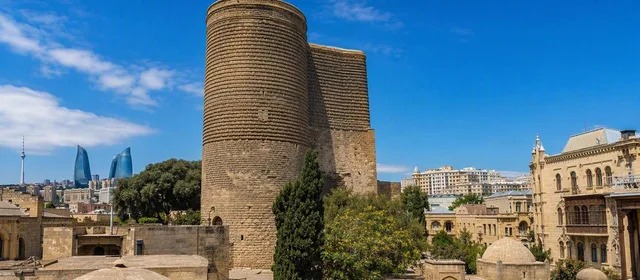
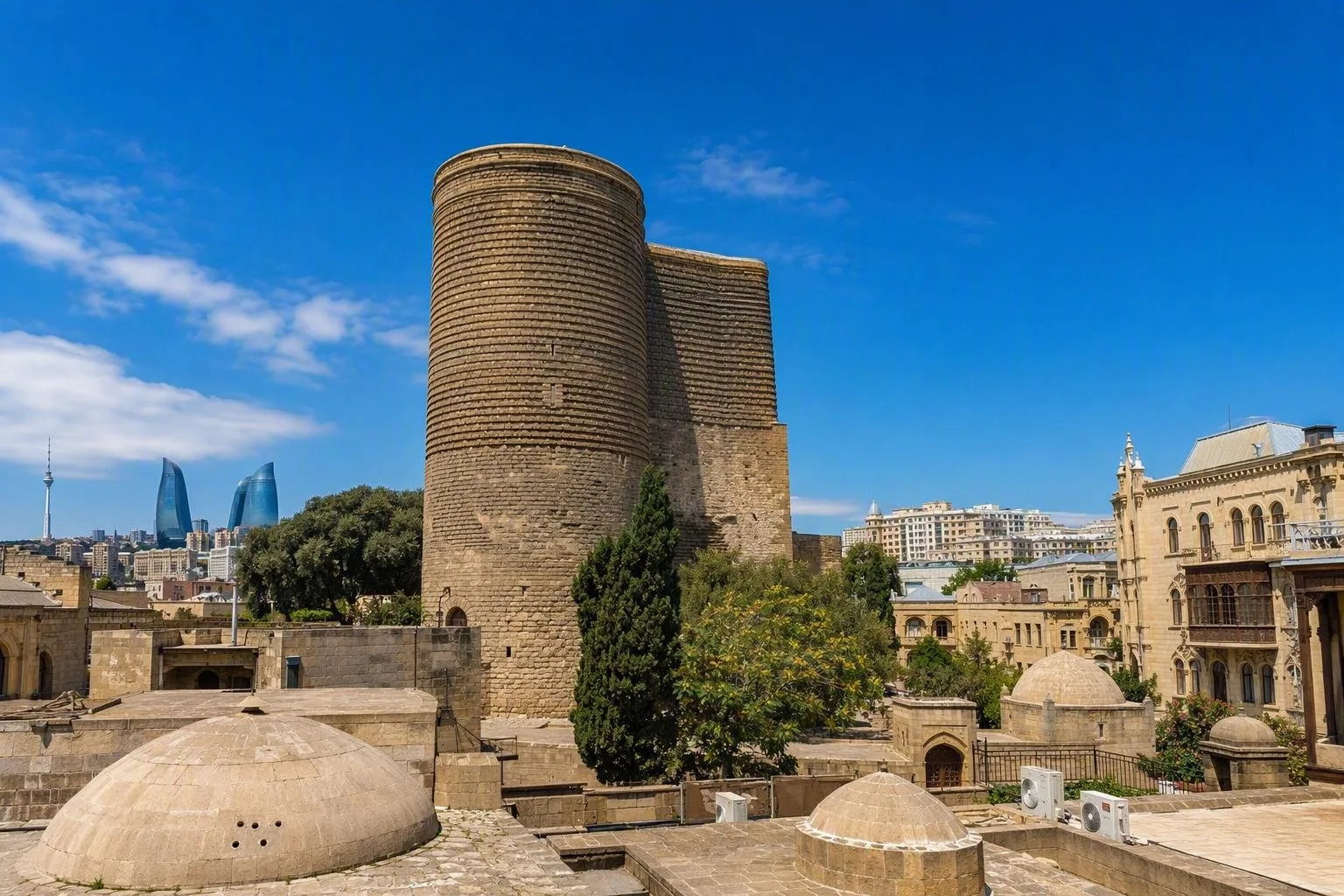
On Baku’s Caspian shore, the sandstone walls of the Old City hold mosques, caravanserais and the ancient Maiden Tower. Oil barons built ornate mansions beyond those walls during the first oil boom. Soviet apartment blocks stand beside the curved Flame Towers from more recent decades. At nearby Gobustan, prehistoric people carved hunters, boats and animals into rock. Mud volcanoes bubble through the dry hills beyond the carvings. Oil and gas deposits beneath this landscape transformed Baku into the capital it is today.
Northwest of Baku, the land rises towards the Greater Caucasus. In Lahic, coppersmiths still hammer metal in small stone workshops along narrow lanes. Farther west, trade between Europe and Asia helped pay for Sheki’s caravanserais. The Sheki Khan’s Palace has painted rooms and windows made from coloured glass and small pieces of wood, fitted without nails or glue.
Cooks fill qutab flatbreads with herbs, meat or pumpkin. Regional versions of plov pair saffron rice with lamb, chestnuts or dried fruit. In teahouses, people drink black tea from pear-shaped glasses, often with jam or sweets. The table draws on ingredients and habits found across the Caucasus, Iran and the Caspian coast. Stay long enough to leave Baku’s waterfront, eat in a teahouse and spend an afternoon in one of the mountain towns.


