
Twenty-Five Minutes to Karaköy
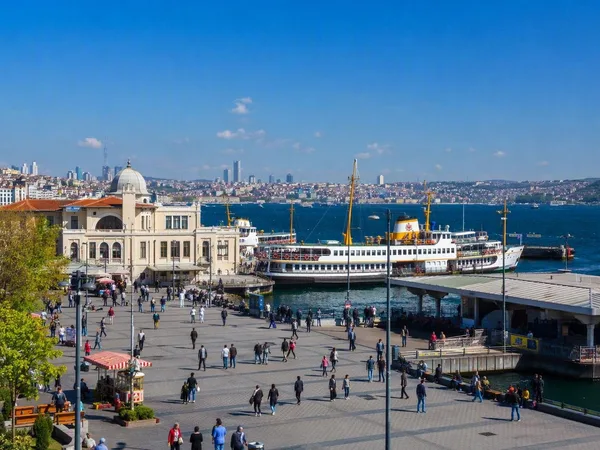
At Kadıköy’s tiled ferry pier, the humid air still softens the water and the far bank. Commuters tap through the gates with laptop bags, phones and İstanbulkarts, then step aboard for Karaköy before the day has properly gathered speed.
The old tiled pier stands beside the Haldun Taner stage, close to Kadıköy’s bazaar. In the early morning, the building serves a brisker purpose than its handsome tiles suggest. People arrive with somewhere to be.
Office workers carry laptop bags. Students check their phones. A few regulars hold their place in the small flow towards the gates, moving with the plain efficiency of people who know which boat they need.
Each passenger holds an İstanbulkart to the reader once and passes through. There is no second tap at Karaköy. Beyond the barriers, the waiting area collects a weekday mixture of work, study and onward connections. Nobody has come for a cruise. The crossing forms part of the commute, as ordinary as a tram ride, except that the route runs over open water.
Below the pier, the ferry rests against the quay. Mooring lines keep the hull in place until departure. The air carries the dampness of the water, and the boat shifts lightly against its berth. Boarding opens, and the queue breaks into smaller decisions: the enclosed lower saloon for a seat and shelter, or the open side and rear decks for wind.
The decks do not flatter anyone’s hair. They offer a better way to wake up.
Inside, passengers choose seats without ceremony. Bags settle between shoes and under knees. A student keeps scrolling. A commuter opens a newspaper or looks at a screen. Someone closes their eyes for the short stretch between one shore and the next. The ferry holds these separate morning routines together for a few minutes, then carries them across.
The last passengers board. The crew release the lines, the gap beside the quay opens, and Kadıköy begins to slide away. The service runs directly to Karaköy, without another stop in between. The boat does not turn into a sheltered inner route; it takes the water straight across, with Karaköy as the first stop before the service continues to Eminönü.
A low engine vibration rises through the deck. It reaches shoes first, then calves and knees. Water folds and knocks along the hull as the ferry gathers speed. The tiled pier shrinks behind the stern, along with people waiting for a later departure and the first hard edges of Kadıköy’s waterfront.
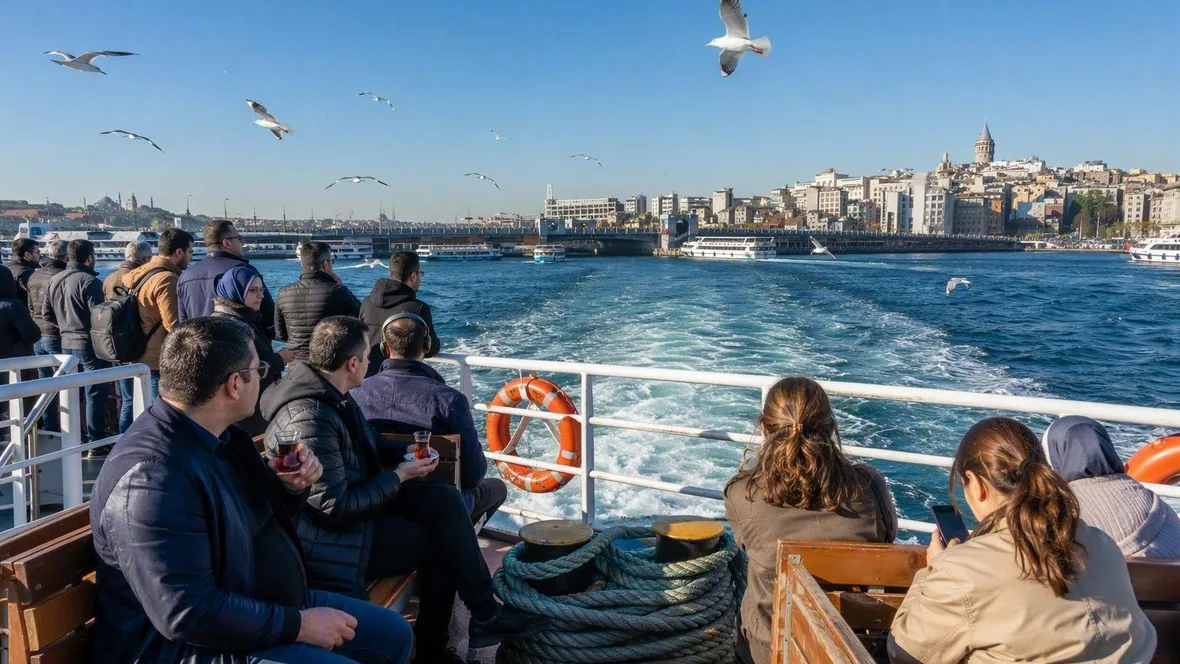
Out on deck, wind cuts through the mild dampness of the quay. It catches jacket fronts and lifts loose hair. Those who want less of it remain in the saloon, where the windows divide the water into bright moving panels.
A tray appears among the seats. Small tulip-shaped tea glasses pass into hands, their narrow waists warm against the fingers. Tea, simit and tost belong to the established ferry repertoire, though the exact service can differ from boat to boat. A sugar cube sits beside a glass. A spoon touches the thin glass with a small, clean tick, briefly clear above the engine and wash.
The breakfast is modest. It is also enough: hot tea, a piece of bread, twenty-odd minutes without a pavement underfoot.
Gulls circle behind the ferry and keep pace with it. They wait for scraps of simit, which passengers sometimes toss from the deck. Their calls cross the engine’s steady thrum. Below them, the stern leaves a pale disturbed strip that narrows into the morning water.
The light changes during the run. At departure, humid haze can flatten the far side into broad shapes and soften the water’s surface. As the sun climbs, the quays and façades ahead gain edges, and the slope behind Karaköy begins to show its form. The change happens without fuss. One minute the opposite shore looks distant and washed out; a few minutes later, it has windows, kerbs and traffic.
Most commuters do not mark the shift. They stay with their tea, their phones, their papers and the small pocket of silence that the crossing gives them. Others stand by the rail or move along the deck with cameras. The ferry accommodates both habits without changing pace.
The geography stays simple. The Golden Horn begins beside Karaköy, but this ferry does not head north along it towards Kasımpaşa, Fener or Balat. Other services take that route. This boat keeps its line across the water.
Karaköy draws closer. First come the working edges: ferry piers, the quay, and the low strip of road and tram tracks along the water. Behind them, the ground rises quickly towards Galata. The Galata Tower stands above the slope, not as a grand reveal but as a useful fixed point while the ferry closes the remaining distance.
Near the mouth of the Golden Horn, the Galata Bridge comes into view. Fishers line its upper rail. Restaurants sit below the bridge deck, close to the water. The rest of the horizon can wait. The pier now fills the attention of everybody who intends to get off.
The engines change note as the captain reduces speed. The vibration underfoot softens and changes texture. Open water no longer slaps freely along the hull; the boat moves in shorter, more controlled adjustments as it approaches the berth.
Passengers begin to stand before the ferry has fully arrived. Bags come off the floor. Jackets are pulled straight. Phones disappear into pockets. The loose distribution of bodies across the saloon gathers into a compact line facing the exits.
Practical: Board at Kadıköy for the ferry marked Karaköy–Eminönü; Karaköy is the first stop. The crossing usually takes about 25 minutes. Pay at the gate with a loaded İstanbulkart, and check the official timetable before setting out, since early weekday departures differ from weekend and holiday services.
The hull meets the rubber fenders with a short, blunt shudder. Pier fittings and pavement sit close beyond the windows. Crew secure the ferry, and the gangway drops.
Bodies lean forward with the last small movement of the deck. Then shoes step onto the metal plate, one after another, and the line rises from the ferry towards Karaköy’s fixed pavement, bright now in the full morning light.
Keep exploring
Places in this story
Middle East
Nog geen landen

Turkey
Kadıköy
Karaköy
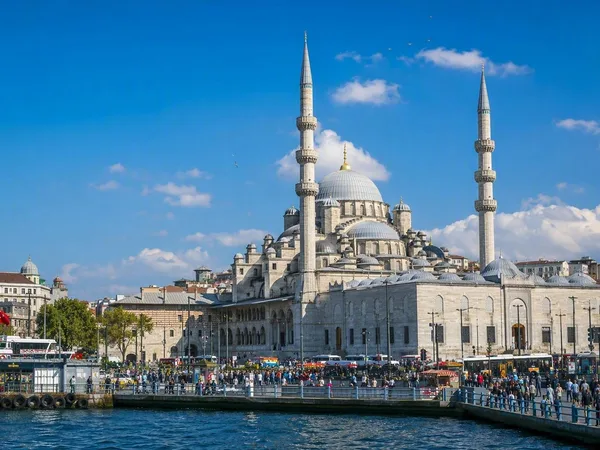
Eminönü
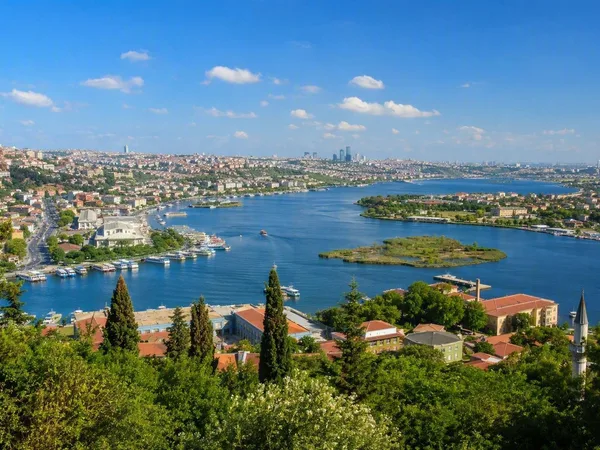
Golden Horn
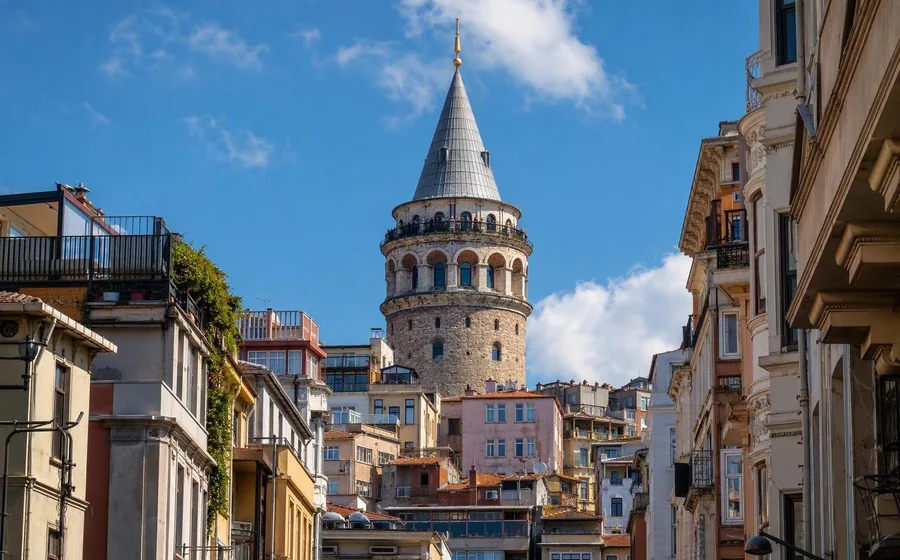
Galata
Galata is the historic hillside quarter in Istanbul’s Beyoğlu district, immediately above Karaköy and the Golden Horn. Its steep lanes converge on Galata Tower, the medieval landmark at the quarter’s high point.