Panamá Viejo: the ruined city behind Panama City’s skyline
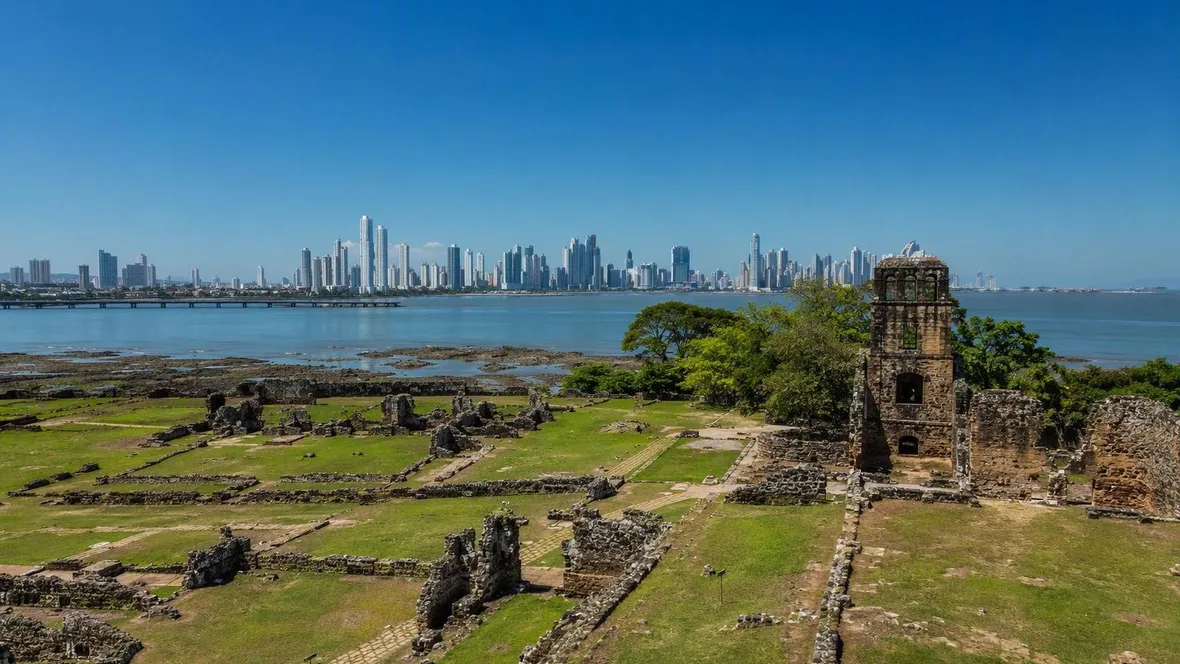
Roofless churches and low masonry walls stand on the Pacific shore while modern Panama City rises to the west. Panamá Viejo preserves the first Spanish city on this coast and the physical remains of a trading system that moved silver, merchandise and people between oceans.
The cathedral tower still dominates Panamá Viejo, though most of the former city now lies at ground level. Its upper platform brings the old street plan, the bay and the towers of modern Panama City into a single view.
That view can reduce the site to a neat contrast between ruins and high-rises. The stones tell a harsher, larger story. This was a Pacific port where Spanish expansion, Indigenous displacement, forced African labour and intercontinental commerce shaped a city that would later move eight kilometres southwest.
Streets, convents and a cistern
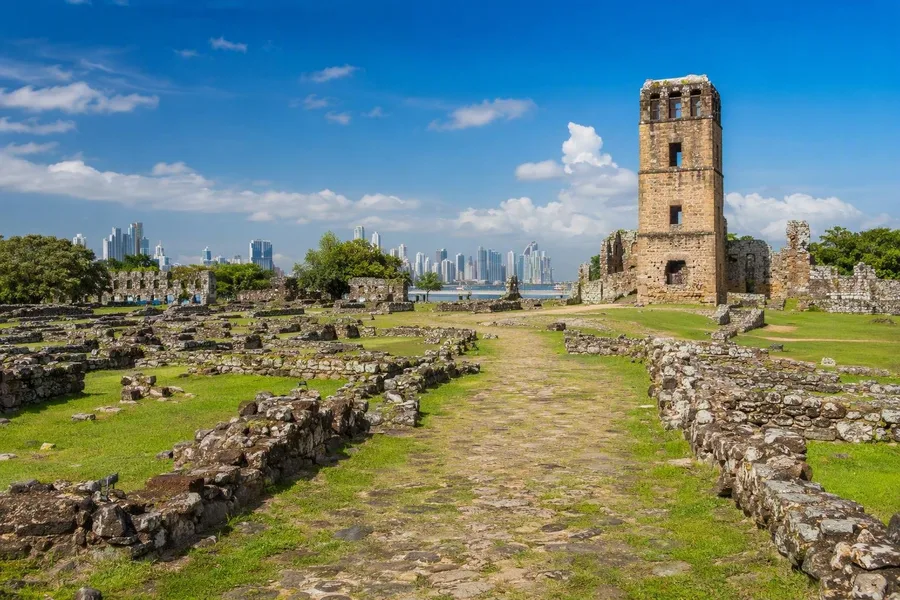 Low walls and old street lines lead toward Panamá Viejo’s cathedral tower.
Panamá Viejo reads best as a city plan rather than a collection of isolated fragments. Across 28 preserved hectares, irregular streets link churches, convents, houses, bridges and public buildings. The city remained abandoned after 1671, leaving its streets and open spaces unusually legible.
The visitor centre on Vía Cincuentenario leads into this open-air terrain. Visitors can walk or use internal transport between the Convento de la Concepción, the museum by Plaza Mayor and the cathedral tower; the route measures about one kilometre. The museum supplies the older ground beneath the colonial city, with more than 350 mostly locally excavated objects tracing roughly 1,500 years from a Cueva community of fishers and farmers to the Spanish settlement and its destruction.
The Convento de la Concepción does more than mark a church footprint. It housed colonial Panama’s only female religious community, and builders made its unfinished church in calicanto, masonry bonded with lime mortar. Nearby, four vaults carried by stone arches and columns form a large enclosed cistern. The structure makes the city’s water storage visible in brick, stone and shadow.
The Jesuit and Franciscan complexes show the scale of religious institutions in the old city. At the Jesuit convent, column bases and the foundations of a lost wooden gallery remain beside the church ruins; the complex served religious instruction and public education. The Franciscan complex occupied two city blocks, with a church, cloister, dormitory and surrounding wall.
Silver crossed the isthmus here
Pedrarias Dávila founded Panamá Viejo on 15 August 1519, the first European settlement on the Pacific coast of the American mainland. He placed it between the mouths of the Abajo and Gallinero rivers, at the Pacific end of routes across the narrow isthmus.
Ships brought gold and silver from Peru to this shore. Mule caravans then took the cargo along the Camino Real to Nombre de Dios and, later, Portobelo on the Caribbean coast, where fleets carried it onward to Spain. European food, textiles, hats, linen, medicines, iron, weapons, glass and soap travelled in the other direction towards Peru.
Each consignment changed hands and transport several times. Rain could turn the unpaved Camino Real into mud, so travellers and cargo also followed the Camino de Cruces to Venta de Cruces, then boarded wooden boats on the Río Chagres. Panamá Viejo depended on ships, mules, river craft, storage and labour.
That labour needs plain language. Enslaved Africans worked in households, agriculture and livestock farming, drove mule trains and worked on the riverboats that shifted goods across the isthmus. Merchants, sailors, soldiers, officials, clergy and craftspeople moved through a population of European, Indigenous and African origin. Commerce brought opportunity for some people and coercion for others.
Two bridges still fix those routes in the landscape. Puente del Rey linked the city entrance to the Camino Real, while Puente del Matadero led towards the Camino de Cruces and the Chagres. They lack the cathedral’s height, but their masonry records the everyday crossings behind the grander tale of bullion and empire.
Plaza Mayor and the machinery of rule
Plaza Mayor held the religious, commercial and political centre of the city. The cathedral and Cabildo stood on its eastern side, while houses with covered portals occupied the other sides. Visitors now cross open ground between low walls, but foundations still distinguish church, government and private houses.
The cathedral that survives in outline was built between 1619 and 1626 from dressed stone and masonry. It had a brick floor, three broad naves and a wooden roof carried on stone bases. Its stout tower worked as both bell tower and lookout. The church also breaks one familiar colonial convention: its apse faces south, towards the sea, rather than east.
The two-storey Cabildo held shops and a hall at ground level, with council offices and a meeting room above. A stone staircase and a cobbled gallery floor remain. Closer to the water, the Casas Reales grouped the royal court, treasury, prison, governor’s residence and other offices on a rocky rise above the city and sea.
Casa Alarcón provides the domestic counterpart. This roughly 900-square-metre stone residence, built for the wealthy Pedro de Alarcón, is the site’s best-preserved house. Its entrance, the start of an upper stair, a covered passage and a square patio remain easy to read; lower service rooms stood behind the patio.
Fire, stone and a second city
On 28 January 1671, the English privateer Henry Morgan defeated colonial defenders outside Panamá Viejo. His forces plundered the city, and fire destroyed much of it; Governor Juan Pérez de Guzmán had ordered gunpowder placed in houses and ignited as the attackers entered.
The authorities chose not to rebuild on this exposed shore. In 1673, they moved the city to a more defensible peninsula at Ancón, closer to Perico harbour and better supplied with fresh water. The fortified settlement, then called Panamá la Nueva, is today’s Casco Antiguo.
People and institutions moved, but building fabric moved too. Workers reused stone from Panamá Viejo in the new city, and they transferred the façade of La Merced stone by stone. Casco Antiguo gained walls, bastions and a regular grid around its Plaza Mayor; Panamá Viejo remained unrebuilt.
Visiting Panamá Viejo
The site opens Tuesday to Sunday from 8.30am to 5.30pm, with ticket sales ending at 4.30pm. Entry for a foreign non-resident adult costs US$17, and groups of up to 25 people do not need a reservation for a regular visit. A taxi or ride service offers the most direct route to the visitor centre on Avenida Cincuentenario. The cathedral tower forms part of the visit, but its 115-step modern stair has no lift.
The tower above the bay
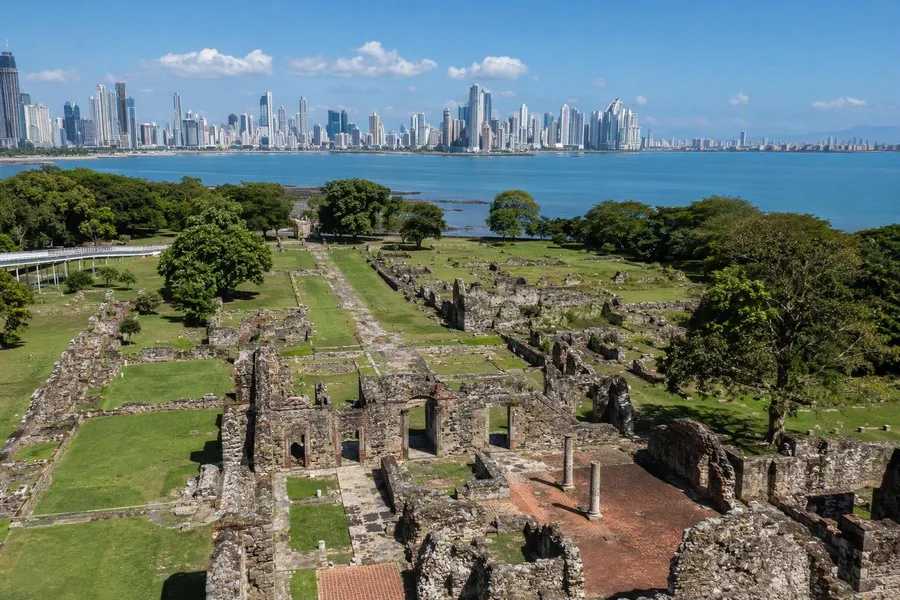 Panamá Viejo’s ruins, the bay and Panama City’s high-rises seen from the cathedral tower.
The climb ends at the tower’s former lookout. Below, Plaza Mayor narrows to open rooms, low walls and the thin lines of old streets. The bay runs beyond the ruins. Residential districts press close to the archaeological ground, and high-rises stand farther west.
The tower holds the city’s separate pieces in one frame: the cathedral walls, convent foundations, the rocky rise of the Casas Reales, the Pacific water and the modern capital beyond.
Keep exploring
Places in this story
South America
3 landen en gebieden
Central America
Europe
Panama
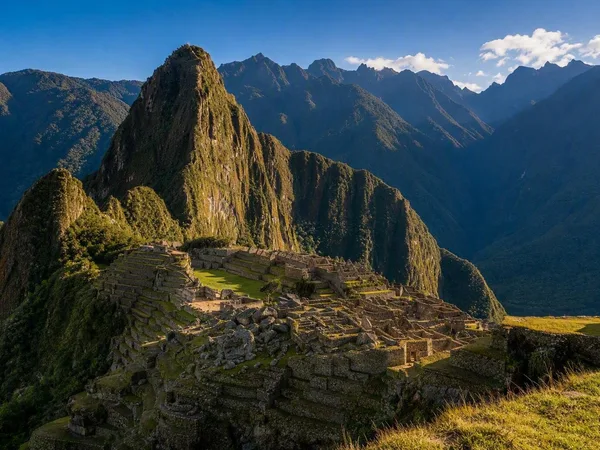
Peru
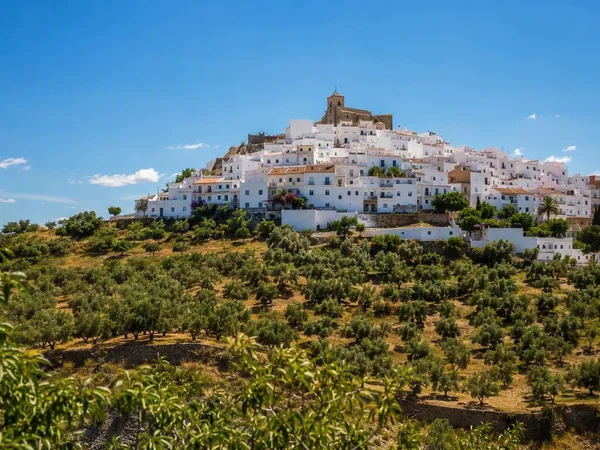
Spain
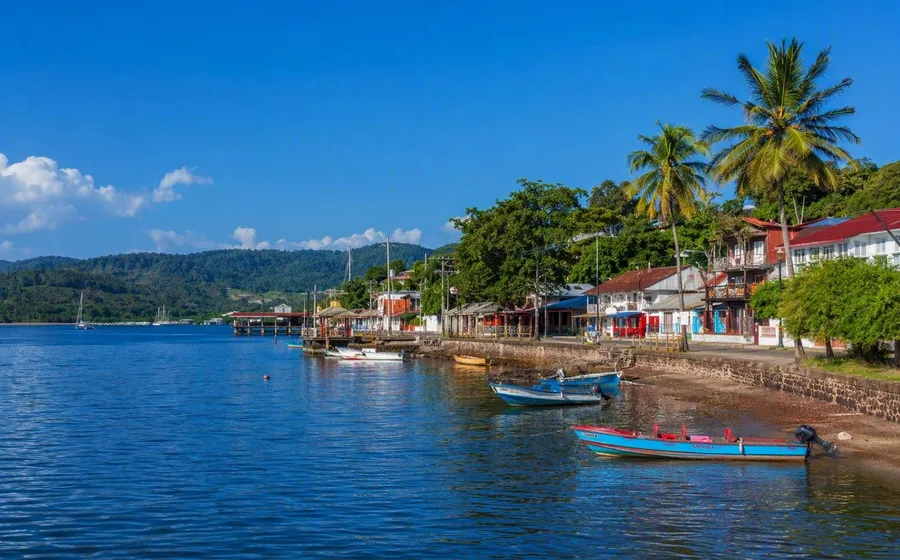
Nombre de Dios
Nombre de Dios is a small Caribbean coastal town in Panama’s Colón Province, in the Santa Isabel District. Founded in 1510, it was the original Caribbean terminus of the Camino Real before Portobelo took over that role.