Town · Panama
Portobelo
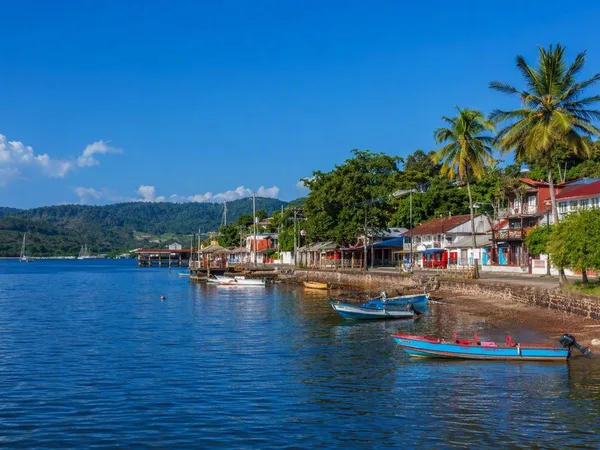
Portobelo is a historic Caribbean port town in Colón Province, Panama, built around a deep bay and the ruins of Spanish defenses. Its forts, customs house and Church of San Felipe trace the former trans-isthmus trade route and a living Afro-Congo culture.
Why Portobelo matters
Founded in 1597 as San Felipe de Portobelo, the town replaced Nombre de Dios as the Caribbean terminal for traffic across the Panamanian isthmus. Silver and other goods arrived from the Pacific side, were traded at the Portobelo fairs, then shipped onward to Spain.
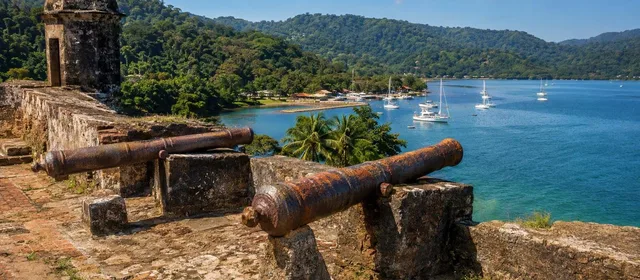
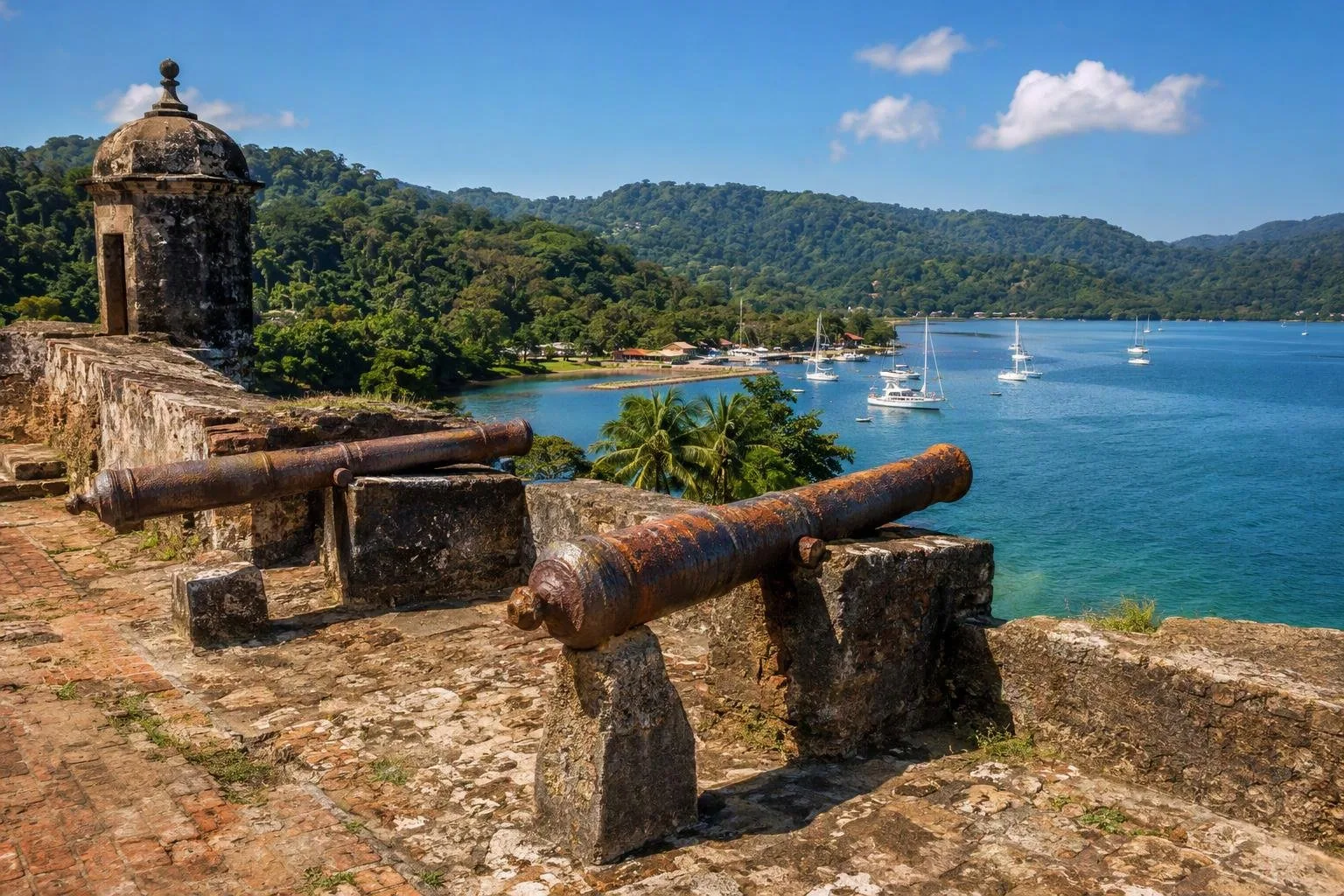
The bay dictated the town’s role: deep, sheltered water made it a practical anchorage, while the surrounding slopes made it defensible. Spanish engineers built and repeatedly altered a ring of forts to protect this harbour. The Portobelo fortifications form part of the UNESCO-listed Fortifications on the Caribbean Side of Panama: Portobelo–San Lorenzo.
Read the bay through its forts
Start in the compact historic centre, where Fort San Jerónimo stands close to the waterfront. Its low stone batteries and gun positions make the defensive logic immediately clear: the walls were built to command the water, not to be a palace.
Other surviving positions around the bay include the Santiago complex and the San Fernando fortifications. They are separate sites rather than one seamless monument circuit, so allow time to move between them. The Real Aduana, or Royal Customs House, is another key stop; it interprets the port’s commercial system and the Afro-descendant history of the area.
The structures are remnants, not reconstructed theme-park forts. Stay on open paths and do not climb masonry or cross barriers; conservation work and fragile surfaces can restrict access to individual sections.
Church and Congo heritage
The Church of San Felipe houses the Cristo Negro de Portobelo, a revered Black Christ image central to religious life in the town. The annual observance on 21 October draws large numbers of pilgrims. Dress and behave respectfully in the church, particularly during services, and ask before close-up photography of worshippers.
Portobelo is also an important centre of Congo culture, an Afro-Panamanian tradition expressed through music, dance, theatre, costume and community celebration. Treat performances and religious events as local cultural practice, not staged background for visitors.
Getting there and around
From Panama City, take the Panama–Colón highway towards Sabanitas, then the signed coastal road to Portobelo. The drive is roughly 1.5 hours in light traffic. By public transport, travel to Colón or Sabanitas from Albrook Terminal, then change for local transport to Portobelo.
The centre is best covered on foot, with uneven stone, open sun and sudden rain all part of the terrain. Wear grippy shoes, carry water and a light rain layer. Boat trips, beaches and reef activities beyond town are separate outings, with their own departure points and conditions.
Timing and access
December to April is generally the drier period, though rain is possible year-round on this Caribbean coast. Early morning is the most comfortable time for the exposed forts.
There is no single town-wide admission or timetable. The church, customs house and each fortification can operate differently, and restoration may alter access without closing Portobelo itself.
From the magazine
Stories about Portobelo
Editorial stories linked directly to Portobelo.
Routes from our editors
Travel through Portobelo
Editorial routes connecting Portobelo with other countries, cities and hotspots.
No routes through Portobelo have been published yet.
More in Panama
Related hotspots
Other cities, nature areas and places within Panama.