From Concepcion’s Morning Catch to the Grill
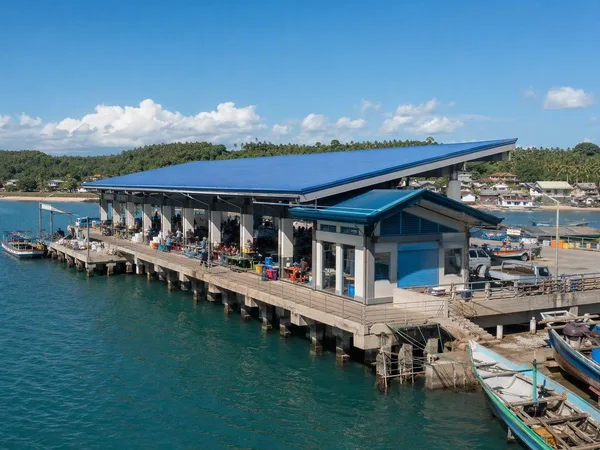
At Concepcion Fish Port, the day’s catch is already for sale in the morning. Buyers choose fish or squid by weight, then carry it across the road to paluto stalls, where a low grill fire turns the purchase into the first cooked dish of the day.
Morning trade at Concepcion Fish Port
Concepcion sits on Iloilo’s northern coast, and its fish port sells whatever the boats have brought in that day. The available sources do not fix a reliable landing hour. They do show a morning market with fresh seafood ready for buyers.
Tangigue, the narrow-barred Spanish mackerel, is a familiar choice. Pusit, or squid, also appears, including small ballpen squid when the season is open. Sardines called tuloy, striped mackerel and silver bream form part of Concepcion’s important pelagic catch, while squid stands out among its non-pelagic species.
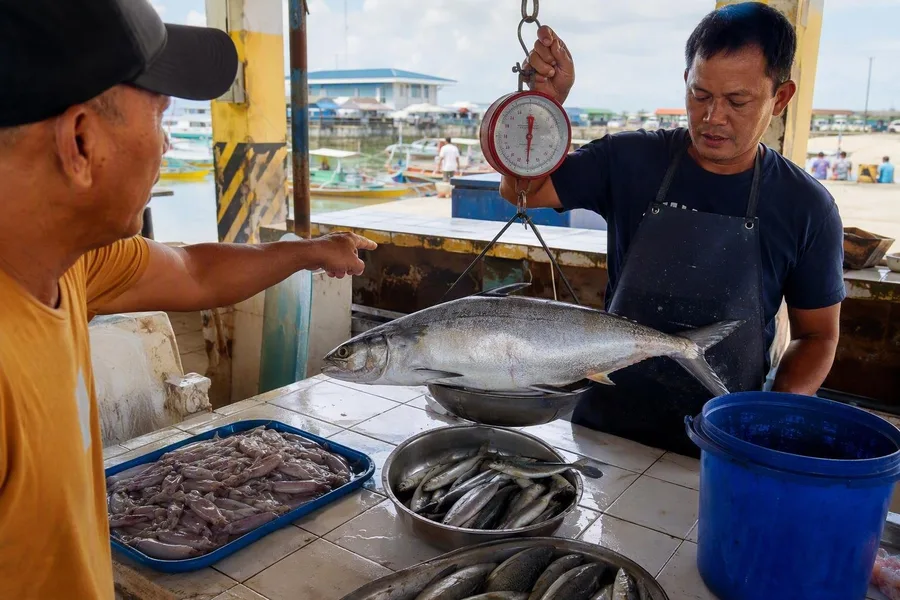 A buyer selects tangigue as a seller weighs it at Concepcion Fish Port.
The sale follows a plain, quick routine. A trader calls “itaway”; a buyer indicates a fish or squid, the seller weighs it, and the price is settled. That is the whole handover: catch, choice, weight, payment.
Marine products support livelihoods across northern and southern Iloilo, and Concepcion’s market keeps that work close to the cooking pot. The port does not need a long supply chain to explain its food. The buyer carries the purchase to paluto or dampa stalls directly opposite the market.
Across the road to the paluto stall
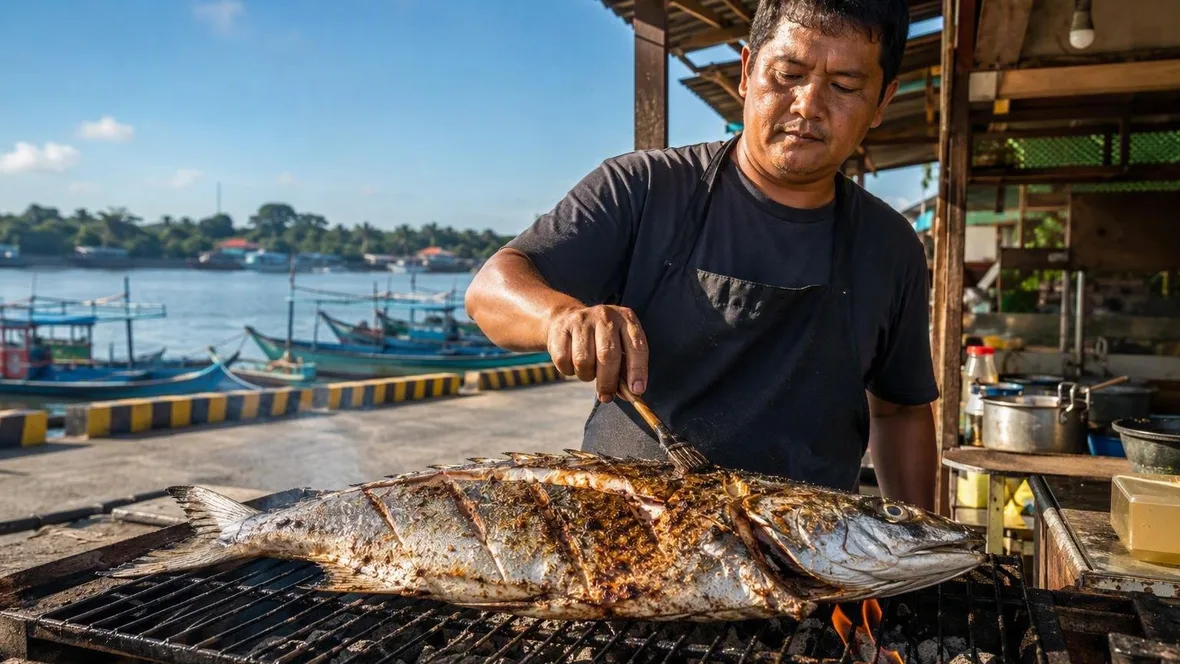
Paluto means that the buyer supplies the seafood and chooses the cooking method. At Concepcion, a cook can grill tangigue as sugba. The cook keeps the fire low so the fish does not burn.
Small squid can take a different route. A stall can prepare it as adobo, using a sauced preparation rather than the grill. The choice depends on the purchase, not on a fixed menu.
This is a small-scale version of a pattern found elsewhere in Iloilo. At the larger fish port in Tanza, catches arrive from Iloilo’s coastal towns as well as Guimaras, Aklan, Antique, Capiz and parts of Negros, then move through traders to city markets and kitchens. Paluto stalls at Tanza grill, fry, stew, sour or simmer seafood selected in the adjoining market. Concepcion reduces that sequence to a few visible steps: the market counter, the road, the stall and the grill.
Fish at breakfast, in another form
A fresh grilled tangigue is not Iloilo’s best-documented breakfast fish. That place belongs more securely to pinakas and other forms of bulad, dried fish that can be fried crisp in the morning.
For pinakas, fish such as mackerel, herring, rabbitfish or threadfin bream is split open, salted and dried in the sun. Salt and drying draw out moisture and concentrate the fish’s savoury flavour. Frying gives it a crisp finish.
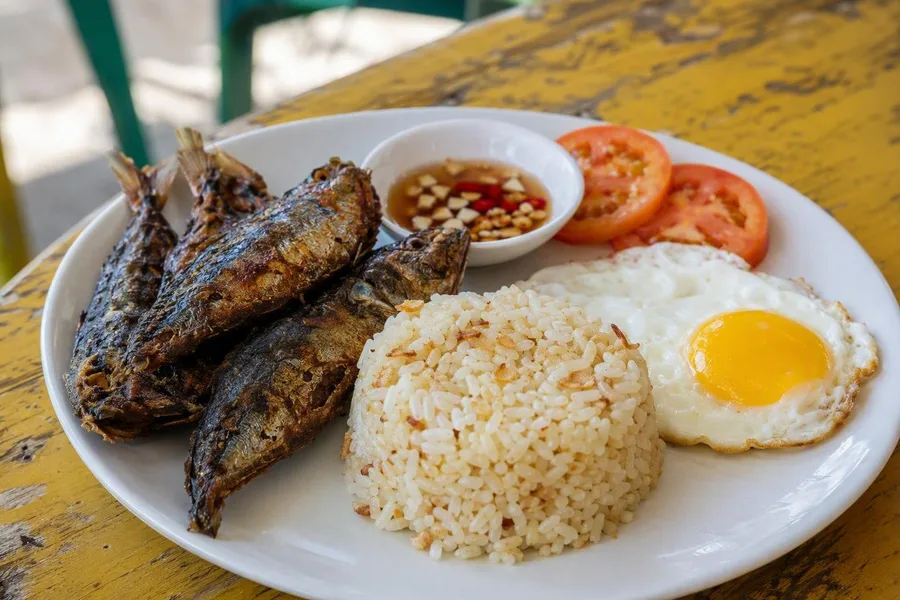 An Iloilo breakfast plate pairs crisp fried pinakas with garlic rice, tomato, egg and vinegar.
An Iloilo breakfast plate often pairs the fish with sinangag or kalo-kalo, garlic fried rice, tomato, a fried egg and langgaw, seasoned vinegar. Calamansi or garlic vinegar cuts the salt. The plate comes from a longer process than Concepcion’s fresh catch, but it explains why fish belongs so naturally to an early meal in Iloilo.
The morning port offers a different kind of immediacy. A buyer selects tangigue at the market, hands it to the cook across the road, and waits through the short work of grilling. The stall then serves the fish as sugba, still hot from the low flame.
Practical: Go in the morning for the day’s market trade, but do not plan around a fixed boat-arrival time; availability follows the catch. The paluto and dampa stalls stand directly opposite Concepcion Fish Port, so the walk from purchase to cooking is short.
The grilled tangigue reaches the table after only that crossing: whole fish from the morning market, cooked over a controlled flame, with the port still just across the road.
Keep exploring