Cremona, where the violin is still made by hand
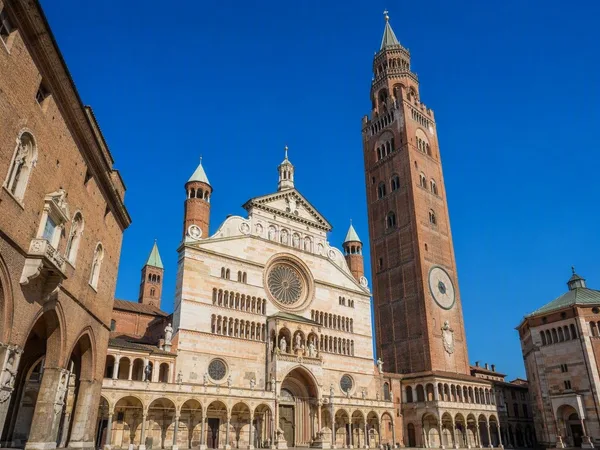
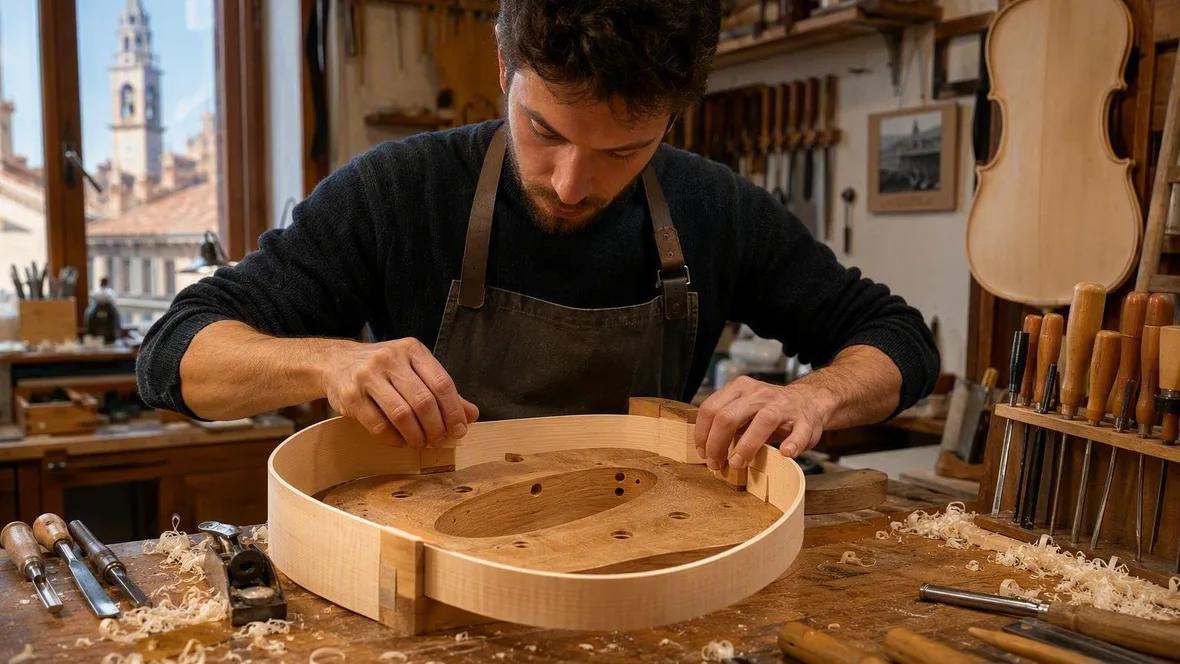
Near Cremona’s cathedral, Andrea Amati established a workshop that helped shape the violin. Nearly five centuries later, students and professional makers still select spruce, sharpen gouges and bend maple around wooden moulds in the city.
Andrea Amati rented a house and workshop near Cremona’s cathedral in 1539. The city already had skilled woodworkers, artists and musicians, and Amati brought those practices into a new instrument-making trade.
His sons continued the business. Nicolò Amati, Andrea’s grandson, trained other makers, including Andrea Guarneri, so knowledge moved between workshops as well as through families. Antonio Stradivari grew up in the same close network of craftsmen; his earliest known violin, from 1666, calls him alumnus Amati, though no formal apprenticeship with Nicolò Amati has been proved. By 1700, Stradivari had become Cremona’s leading maker, refining violins and cellos as musical repertoire changed.
The great names do not sit only behind glass. Workshop windows still display instruments in the centre, while makers inside continue to cut, join and adjust them by hand.
Five centuries at Piazza Marconi
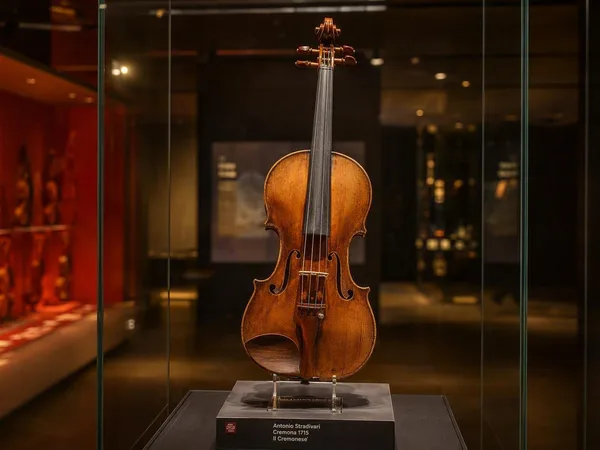
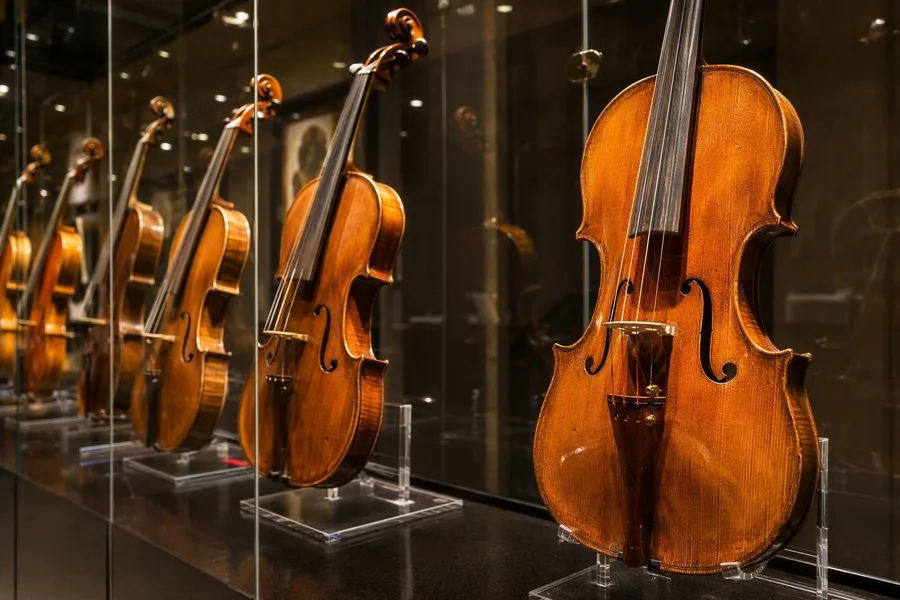 Historic Cremonese violins are displayed in the Museo del Violino on Piazza Marconi.
The Museo del Violino, in Palazzo dell’Arte on Piazza Marconi, gives the clearest public introduction to Cremona’s old makers and their successors. Its galleries run from Amati, Stradivari, Guarneri, Rugeri and Bergonzi to prize-winning twentieth-century and contemporary instruments.
The treasure room puts the lineage into objects rather than legend. It includes Andrea Amati’s Carlo IX, made around 1566, Nicolò Amati’s Hammerle, Stradivari’s Clisbee, Il Cremonese and Vesuvius, a violin by Giuseppe Guarneri ‘del Gesù’, and Carlo Bergonzi’s Misha Piastro. The display makes clear that Cremona’s reputation grew from several competing and connected workshops, not one miraculous surname.
Stradivari’s original wooden forms, drawings and tools give the museum its strongest link to the bench. These objects show how a maker could work from a recognisable model while responding to each piece of wood. The museum also presents modern competition instruments, so the story does not stop in the eighteenth century.
Scheduled Il suono di Stradivari auditions in the Giovanni Arvedi Auditorium put historic instruments by Stradivari, Amati and Guarneri back into players’ hands. That is a concert setting, however, not a working workshop. The museum preserves tools and instruments; it does not show a maker’s ordinary day at the bench.
Spruce, maple and a sharp edge
A present-day Cremonese violin starts with naturally dried wood, chosen piece by piece rather than taken from a standard kit. Makers generally use spruce for the top and flamed European maple for the back and ribs. Fine spruce grain remains visible under varnish, while maple supplies the rippling figure on the back and sides.
A maker judges spruce for density, grain and elasticity, and may tap the wood to assess its resonance. That judgement affects the work that follows. The traditional method brings together more than seventy wooden parts by hand around an inner mould, and each piece of wood receives slightly different treatment according to its acoustic response. No two finished violins are identical.
The workbench still relies on hand planes, gouges, sharp knives and a wooden inner mould. The maker bends thin maple ribs around the mould, shapes the arched front and back with planes and gouges, and refines the plates’ thicknesses. Assembly, varnishing and final adjustment follow.
This is a classical method, not an exercise in copying Stradivari. Some modern makers map plate thicknesses more systematically, and they adjust the bridge, soundpost, strings and fingerboard projection for a particular player, repertoire and physical comfort. The inner mould sets a discipline. The wood and the musician settle the final details.
Learning the trade at the Stradivari school
Cremona did not carry its craft forward without interruption. Between 1737 and 1749, Stradivari, his sons, Guarneri del Gesù and other key figures disappeared, and the city later lost ground to other Italian centres. The 1937 Stradivari commemoration renewed attention to surviving workshop material, and the violin-making school opened in 1938 to recover the craft.
Today, the International School of Violin Making runs a five-year state programme with workshop practice from the first year. Groups of ten to twelve students work under violin-making masters and study acoustics, music theory, art history and Cremona’s heritage alongside practical work.
Students learn to assess and select aged spruce and maple, make an inner mould, carve and graduate arched plates, cut edge inlay, and prepare and apply varnish. Later years cover complete instruments, maintenance and repair; from the fourth year, students can specialise in modern bowed instruments, restoration and maintenance, or plucked instruments. A compulsory placement in a professional workshop comes in the final year.
That placement continues an older Cremonese pattern. Nicolò Amati trained Andrea Guarneri in a workshop, while today’s students carry formal training into active botteghe, where makers keep adapting shared methods to individual wood and musicians.
The school is not a walk-in museum. Announced open days allow visitors into its workshops and introduce teachers; outside those occasions, classrooms remain places for teaching.
Museum visit or workshop appointment
The Museo del Violino stands at Piazza Marconi 5, a short walk from Piazza del Comune. It opens Tuesday to Friday from 11am to 5pm and on weekends and public holidays from 10am to 6pm; Monday is closed. A standard ticket costs €14, while groups and guided tours should reserve. A workshop visit needs separate advance booking. The Consorzio Liutai Antonio Stradivari arranges visits for individuals and small groups according to language and maker availability; a visitor service also offers workshop visits starting from Piazza del Comune.
Behind the workshop door
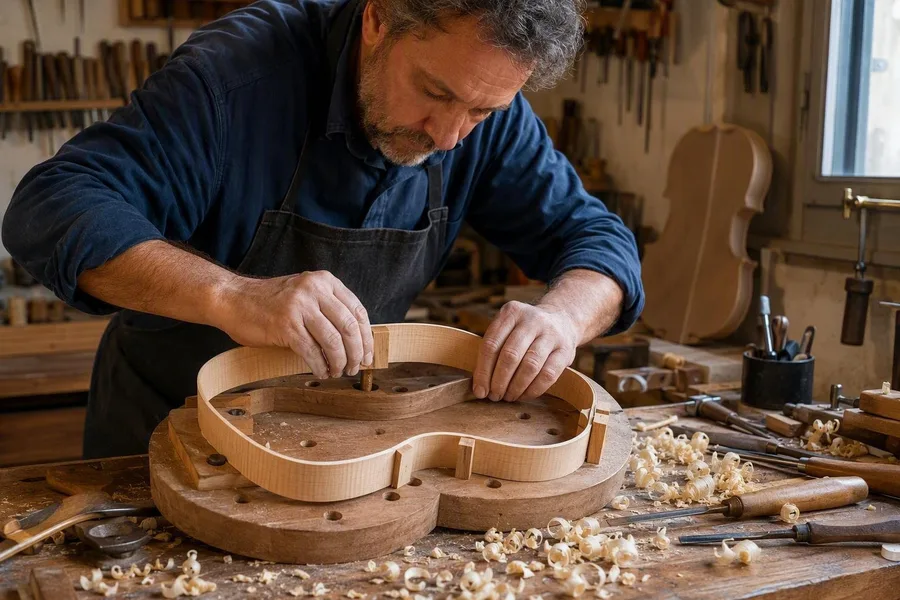 A violin maker bends a maple rib around an inner mould in a Cremona workshop.
An instrument in a shop window does not mean that the room behind it is open to the public. Cremona has showrooms where visitors can view or try instruments, but those spaces do not guarantee access to the associated workshop.
A working atelier is first a place for making, restoring and meeting musicians. Many makers therefore receive visitors only by appointment, rather than allowing casual entry. A guided visit arranged with an affiliated maker has a different purpose: the maker explains the route from wood selection and drawing to inner mould, construction, varnish, assembly and final testing.
What appears on the bench still depends on that day’s work. A booked visit may show dried timber, shavings, hand tools and an instrument in progress; some workshops can also arrange a brief comparison between old and new instruments. It is not a lesson in which visitors build a violin.
Beyond the workshop door, a thin maple rib sits against a wooden inner mould while the maker builds another Cremonese violin from hand-cut parts.
Keep exploring