Neighbourhood · Lebanon
Hamra
Hamra is the compact commercial and cultural neighbourhood in Ras Beirut, Beirut, centred on Hamra Street and shaped by its university, publishing and café history.
Orientation
Hamra is a mixed residential and commercial neighbourhood in Ras Beirut, with Hamra Street as its central spine. It developed rapidly from the late 1950s, when apartment and office blocks with shops at street level replaced a more low-rise landscape. The result is a dense, walkable district of façades, side streets and university traffic rather than a preserved historic quarter.
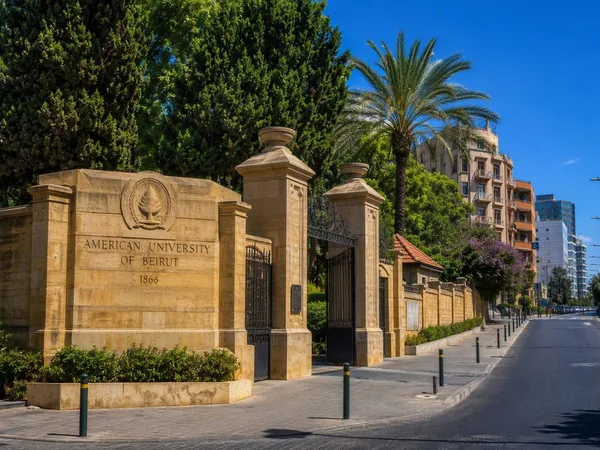
Use Hamra Street as the main line, then branch towards Bliss Street near the American University of Beirut. The neighbourhood is compact enough to explore on foot; its interest lies in reading the relationship between streets, buildings and former cultural addresses.
Why Hamra matters
In the 1960s and early 1970s, Hamra brought publishers, magazines, cinemas, bookshops, students, artists and political exiles into a few blocks. Arab writers and editors used its cafés as working rooms and meeting places. Arguments over literature, translation, nationalism, Marxism, religion and Palestine were part of the district’s daily public life.
The Lebanese Civil War fractured that concentration. Many residents and intellectuals left, businesses closed or changed use, and later redevelopment altered the street further. Hamra’s significance is therefore not a single surviving monument: it is the unusually close overlap of commercial, academic and cultural life that its streets once held.
Read the street
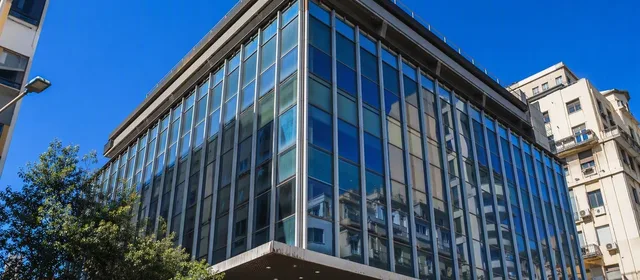
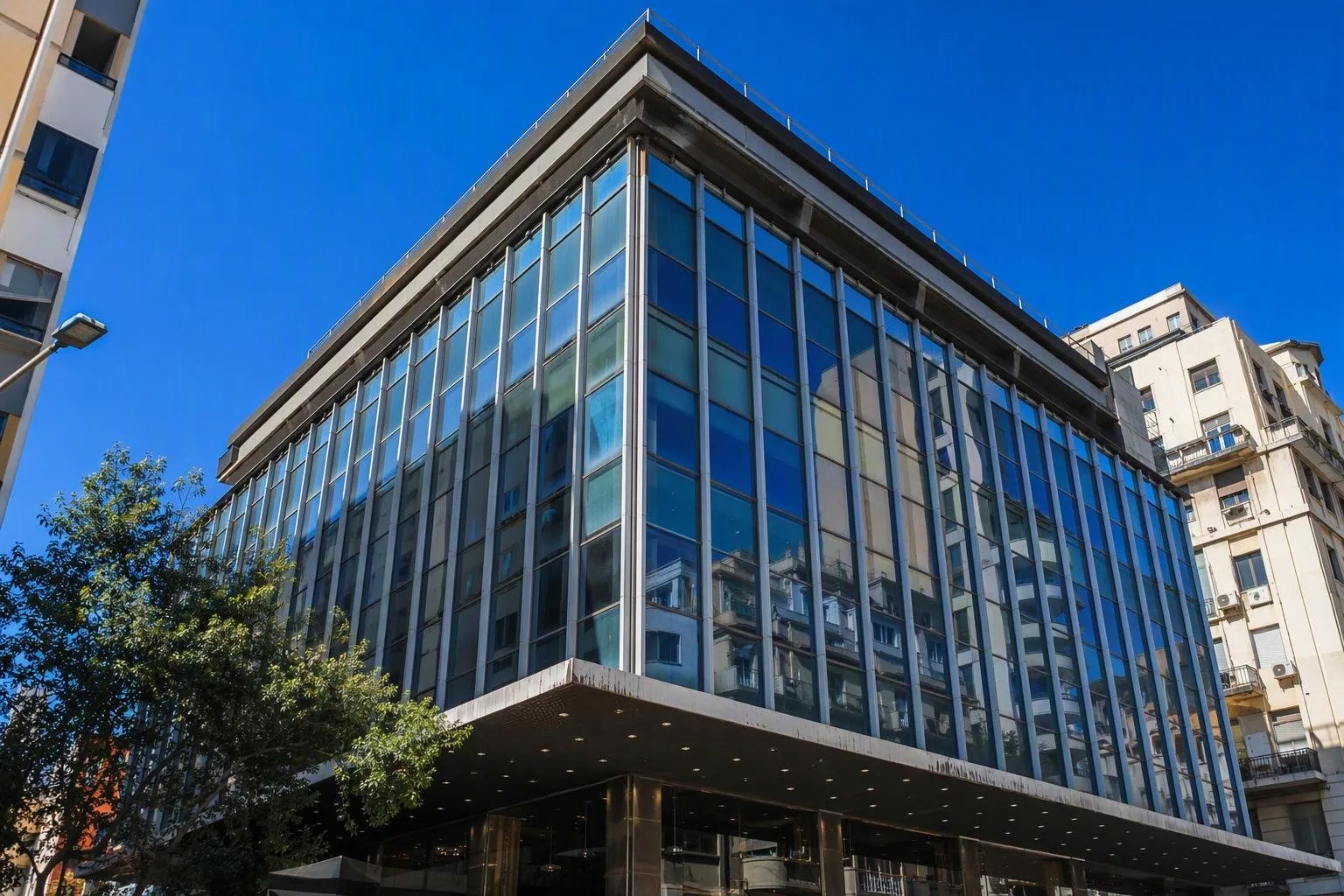
Look up as well as across the shopfronts. Hamra’s mid-century growth produced modern façades in glass, aluminium and concrete, with offices and apartments above ground-floor commerce.
Key traces include:
- The former Murr Building, a 1957 office building with Lebanon’s first curtain-wall façade. The Horseshoe Café occupied its ground floor and became a defining intellectual meeting place after opening in 1959.
- The former locations of cafés including Café de Paris, Modca, Eldorado, Strand and Wimpy. Several have closed or been replaced; the changed frontage is part of the story.
- Bliss Street, which links the university setting with the streets that supplied Hamra’s book, print and café economy.
In 1969, a banned play, Majdaloun, was staged on the pavement outside the Horseshoe. That episode neatly explains Hamra’s former connection between the street, the café and the stage.
Practical approach
Start at the Bliss Street end and walk through Hamra Street at an unhurried pace, taking the side streets rather than treating the district as a single retail strip. The experience is urban and architectural: expect active traffic, narrow pavements and frequent changes in frontage.
Allow time to compare older modernist buildings with later towers. Do not expect the celebrated cafés and bookshops of the pre-war period to survive as a complete circuit; Hamra is best understood through what remains, what has changed and how little distance separated campus, office, shop and café.
From the magazine
Stories about Hamra
Editorial stories linked directly to Hamra.
No stories about Hamra have been published yet.
Routes from our editors
Travel through Hamra
Editorial routes connecting Hamra with other countries, cities and hotspots.
No routes through Hamra have been published yet.
More in Lebanon
Related hotspots
Other cities, nature areas and places within Lebanon.