Neighbourhood · Sweden
Vasastan
Vasastan is Stockholm’s northern inner-city neighbourhood, built out in the late 19th and early 20th centuries as a district of broad streets and stone apartment blocks. Come for the public architecture, hilltop parks and everyday bakery-and-café stops around Odenplan.
Get your bearings
Vasastan—formally Vasastaden—lies north of central Stockholm, between Kungsholmen to the west and Östermalm to the east. It is a neighbourhood rather than a single attraction: its appeal is the coherent run of residential streets, local businesses, parks and cultural addresses.
Start at Odenplan. The square is the practical hub, with metro, commuter-rail and bus connections. From here, Odengatan, Karlbergsvägen, Sveavägen and S:t Eriksgatan give the district a useful framework. Walk rather than trying to cover it as a checklist.
Read the streetscape
Stockholm expanded onto the fields north of Norrmalm from the 1880s, and much of Vasastan’s fabric dates from the late 19th and early 20th centuries. Look for continuous stone-fronted blocks, generous streets and ground-floor cafés, shops and restaurants.
The district changes character as you move through it:
- Around Odenplan: transit, cafés and the domed Gustaf Vasa Church.
- Birkastan and the northwest: denser residential blocks and a more irregular street pattern.
- Röda Bergen: a hillier early-20th-century residential area where the terrain shapes the streets.
- Around Sveavägen: the strongest architectural landmarks and the route to Observatorielunden.
Architecture and culture
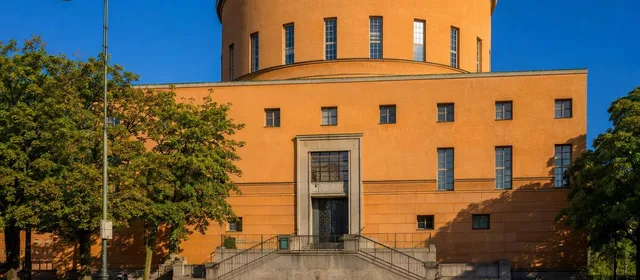
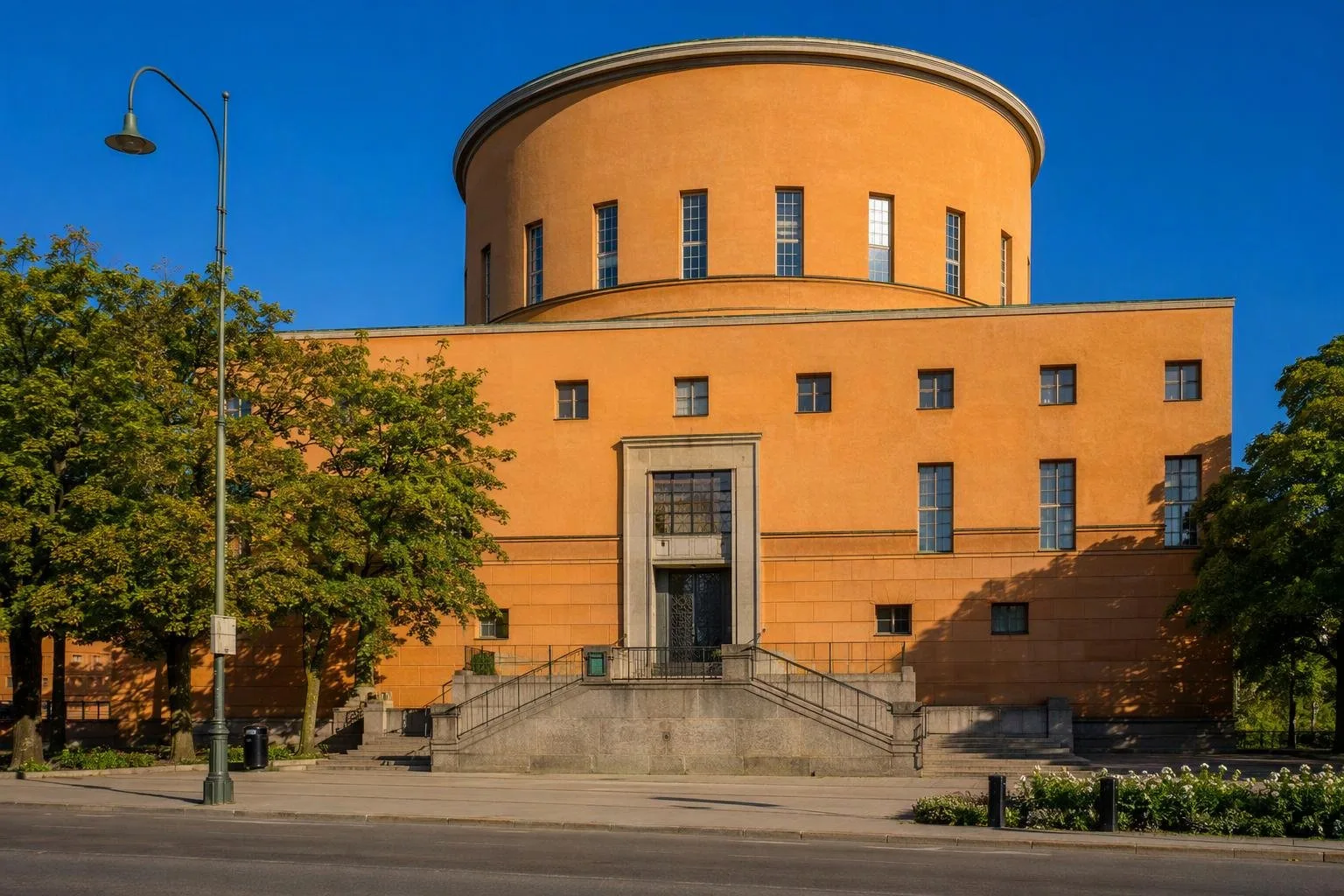
Stockholm Public Library is Vasastan’s essential building. Gunnar Asplund designed the 1928 library as a restrained ochre composition with a prominent rotunda, a defining work of Swedish Grace and Nordic Classicism. The building is closed for renovation, with reopening planned for 2027; its exterior remains a worthwhile stop.
From the library, climb into Observatorielunden, the park around Stockholm’s old observatory. Its elevated paths make a quick break from the street grid and provide rooftop views. The weather station here has recorded temperature and rainfall since 1756.
For smaller-scale culture, Vasastan also contains the Strindberg Museum, Carl Eldh’s Studio Museum, Bonniers Konsthall and Sven-Harry’s Art Museum. Choose one rather than attempting them all in a single walk.
Parks, fika and pace
Vasaparken is the district’s largest park and an easy pause between Odenplan and the northwest. In warmer months, use it as a picnic stop; in winter, ice skating is a regular feature.
Vasastan works well for fika because cafés and bakeries are embedded in the residential streets rather than clustered at one visitor precinct. Around Odenplan and along the main streets, order coffee with a cardamom bun or cinnamon bun, then continue on foot. For bread to take away, look for sourdough and rye loaves alongside sweet baking.
Practical route
Allow half a day for Odenplan, the library exterior, Observatorielunden and Vasaparken, with time for a café stop. Add a museum or continue northwest toward Birkastan for a fuller day. Odenplan is the simplest arrival point; S:t Eriksplan is useful for the western side. The neighbourhood is compact but includes hills and steps around the parks, so a route between its main streets is easier than a straight-line walk.
From the magazine
Stories about Vasastan
Editorial stories linked directly to Vasastan.
No stories about Vasastan have been published yet.
Routes from our editors
Travel through Vasastan
Editorial routes connecting Vasastan with other countries, cities and hotspots.
No routes through Vasastan have been published yet.
More in Sweden
Related hotspots
Other cities, nature areas and places within Sweden.