Neighbourhood · Sweden
Östermalm, Stockholm
Östermalm is a central Stockholm neighbourhood east of the city centre, defined by late-19th-century boulevards, formal residential blocks, museums and the waterfront at Strandvägen.
Orientation
Östermalm is a distinct neighbourhood within Stockholm’s northern inner city. Its older name, Ladugårdslandet, reflected its former royal-farm and military connections; the name Östermalm arrived during the district’s late-19th-century rebuilding.
The practical centre is Östermalmstorg. From here, the district fans out towards Karlaplan and north to Valhallavägen, while Strandvägen forms its southern waterfront edge. This is a compact but varied area: formal stone apartment blocks, broad avenues, embassy streets, institutions and small pockets of parkland.
Read the street plan
Walk Östermalm as a sequence of strong urban spaces rather than a checklist.
- Östermalmstorg to Karlaplan: take Nybrogatan, Storgatan or Karlavägen through the regular street grid.
- Karlaplan: a large circular square and a clear expression of the 19th-century plan.
- Strandvägen: follow this waterfront boulevard for the harbour-side facades and views across Nybroviken.
- Lärkstaden: west of the main grid, its terrain-led streets and early-20th-century buildings provide a marked contrast.
The district’s 17th-century grid remains visible around Nybrogatan and Storgatan; Karlaplan and the major esplanades were added by later planning.
Food and historic fabric
Start at Östermalms Saluhall, the red-brick food hall at Östermalmstorg. Opened in 1888 and restored before reopening in 2020, it is the straightforward stop for produce, fish, meat, cheese, pastries and meals. Look up at the cast-iron structure as well as the counters.
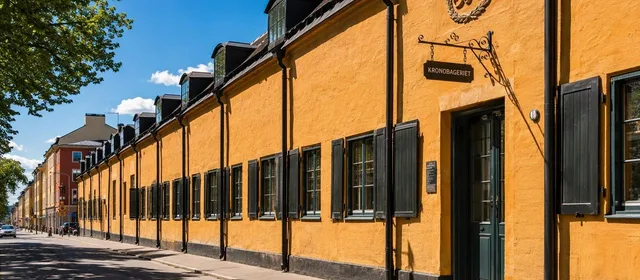
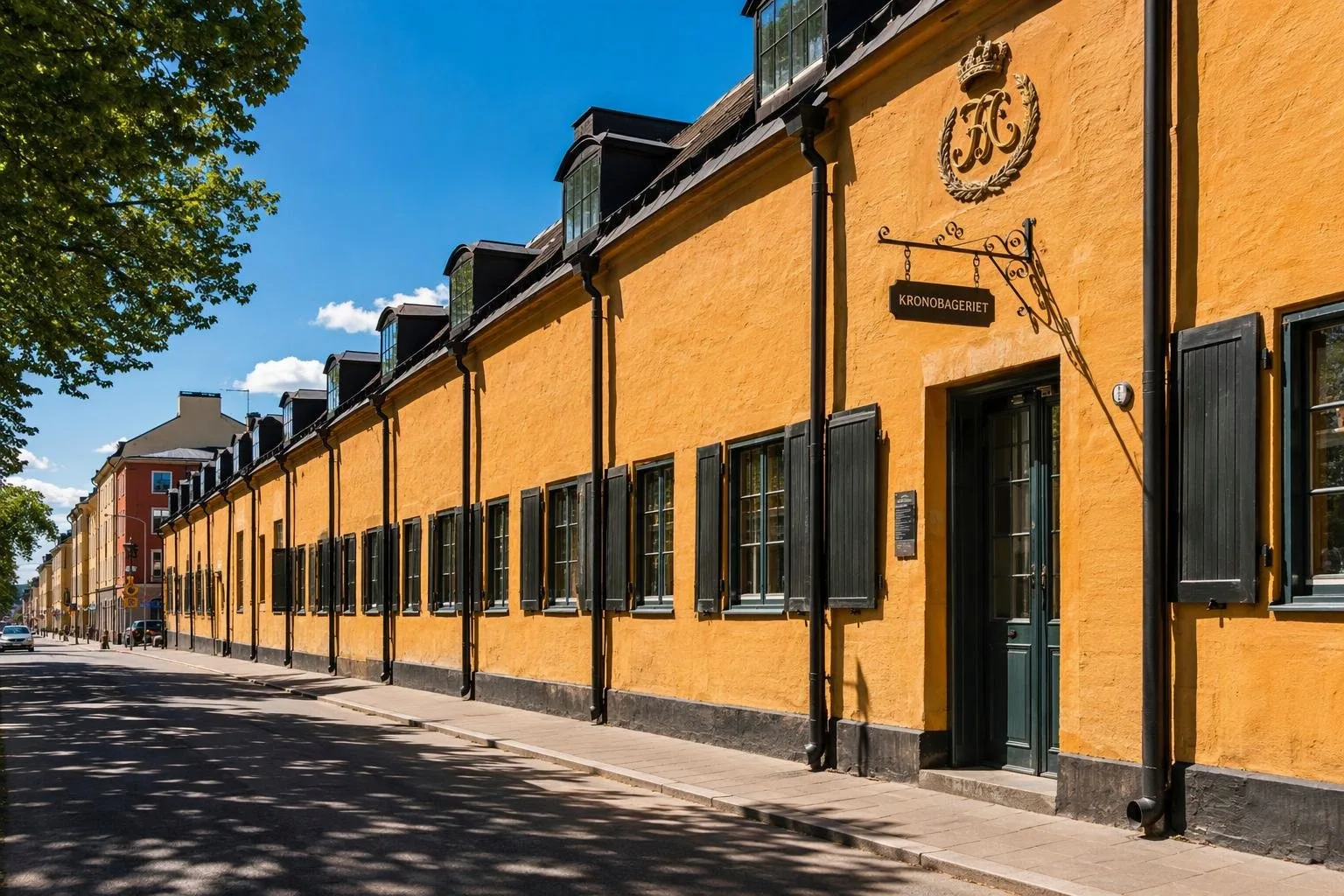
For the bakery thread behind this guide, head to Sibyllegatan 2. Kronobageriet is Stockholm’s oldest surviving industrial building. Bread was baked here from 1645 until 1958, originally for military supply. The preserved 17th-century building now contains the Museum of Performing Arts, while Stora Bageriet continues the bread connection on site.
Museums and performance
The southern part of Östermalm concentrates several substantial cultural stops. The Army Museum examines Sweden’s military past and its social consequences; the Swedish History Museum holds national history collections, including its Gold Room. At Nybroplan, the Art Nouveau building of the Royal Dramatic Theatre is Sweden’s national stage for spoken drama.
Choose one museum or a performance rather than trying to cover the whole district in a single visit.
Getting around
Use Östermalmstorg on the red metro line as the most useful arrival point for the market hall, Sibyllegatan and the southern streets. Karlaplan serves the eastern and northern side. On foot, Östermalmstorg, Strandvägen, the museums and Karlaplan connect well; allow extra time for the long north–south blocks. City transport also runs along the waterfront corridor toward Djurgården.
For the food hall, note that shop hours and restaurant hours are not the same; Sunday trading is limited in the hall itself.
From the magazine
Stories about Östermalm, Stockholm
Editorial stories linked directly to Östermalm, Stockholm.
No stories about Östermalm, Stockholm have been published yet.
Routes from our editors
Travel through Östermalm, Stockholm
Editorial routes connecting Östermalm, Stockholm with other countries, cities and hotspots.
No routes through Östermalm, Stockholm have been published yet.
More in Sweden
Related hotspots
Other cities, nature areas and places within Sweden.