Sight · Russia
Prechistenka
Prechistenka is a 1.1-kilometre historic street in central Moscow, running from Prechistenskiye Vorota to Zubovskaya Square. Its sequence of mansions, tenements and literary addresses makes it a focused walk through several layers of old Moscow.
Orientation
Prechistenka runs south-west from Prechistenskiye Vorota towards Zubovskaya Square, roughly parallel to Ostozhenka. It began as part of the road from the Kremlin to Novodevichy Convent and received its present name in 1658, after the Smolensk icon of the Virgin kept at the convent.
The street is short but dense. It moves from seventeenth-century chambers through post-1812 Empire houses to early twentieth-century apartment buildings. Side lanes preserve the scale of former estates: a grand street façade, a gate, then service wings and courts behind.
What to look for
Start near Kropotkinskaya and walk towards Zubovskaya Square.
- White Chambers, 3 Prechistenka: a seventeenth-century stone house, among the street's oldest surviving structures.
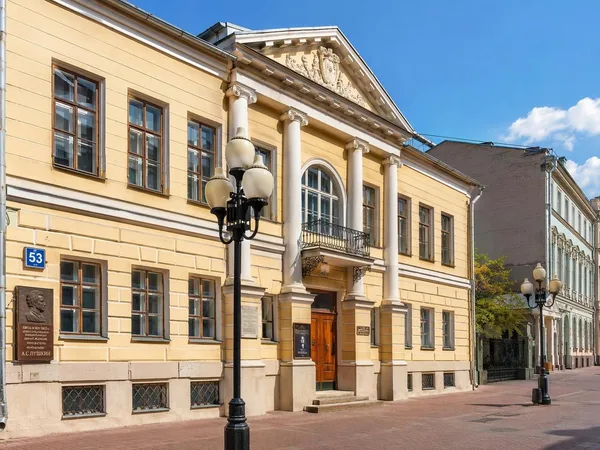
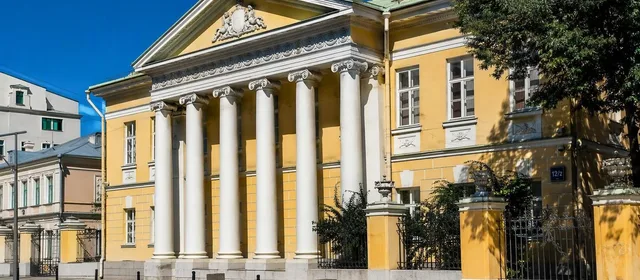
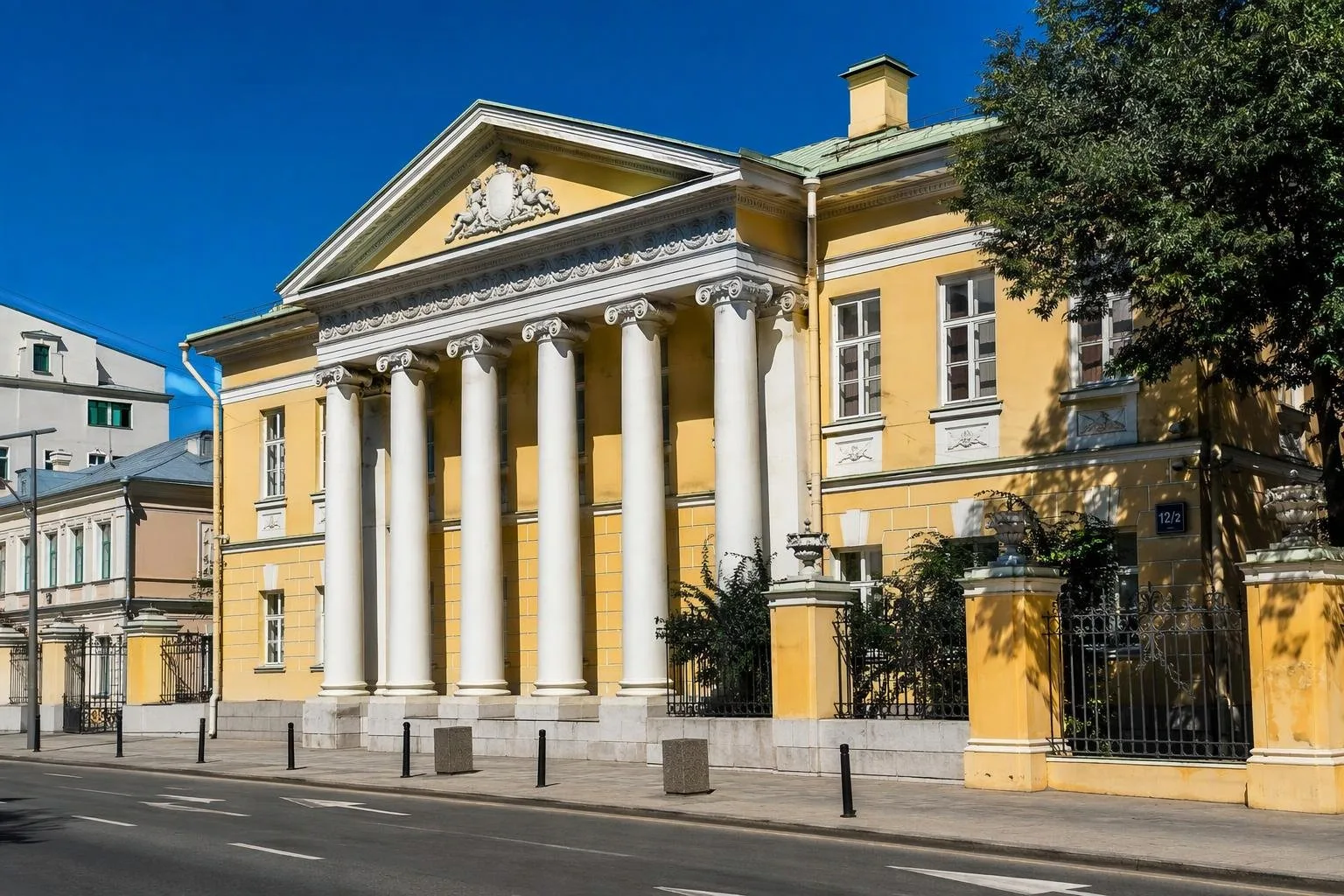
- Khrushchyov–Seleznyov mansion, 12/2: an Empire ensemble built after the 1812 fire, with a six-column Ionic portico, reliefs and a second formal façade on Khrushchyovsky Lane. It houses the State Museum of A. S. Pushkin.
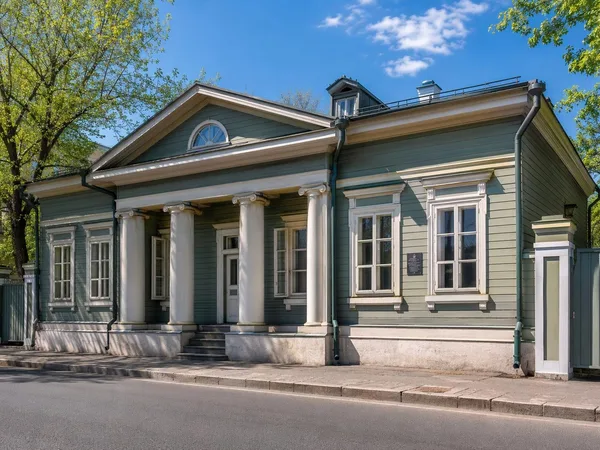
- Lopukhin–Stanitskaya house, 11/8: an early nineteenth-century Empire house now used by the State Leo Tolstoy Museum. Tolstoy did not live here; visit for exhibitions and the courtyard monument.
- Rekka apartment house, 13/7: a tall early twentieth-century corner building that marks the shift from private estates to rental housing.
- Kulagin apartment house, 24/1: the principal real-world model for Professor Preobrazhensky’s home in Bulgakov’s Heart of a Dog.
Literary Prechistenka
Bulgakov used this street as a precise urban setting rather than a vague old-Moscow backdrop. His uncle, doctor Nikolai Pokrovsky, lived at 24/1 and helped inspire Professor Preobrazhensky. The building's courtyard-side service circulation fits the domestic geography of the novella; nearby addresses and gateways also appear in its Moscow.
Literary interest here is best read through the architecture. Mansions recall the eighteenth- and nineteenth-century elite quarter; rental blocks show the denser city that followed. After 1917, many large flats became communal apartments, making staircases, passages and rear courts part of everyday shared life.
Practical walk
Allow 60–90 minutes for the street itself, longer if visiting a museum. Kropotkinskaya is the most useful starting station; Park Kultury is closer to the Zubovskaya end.
Keep the street walk separate from museum visits: opening times and ticket arrangements vary. Most courtyards, entrances and residential stairwells are private; admire them from public streets and do not enter gated properties. The broad pavements make this an easy walk, but crossings become busier near the two squares.
From the magazine
Stories about Prechistenka
Editorial stories linked directly to Prechistenka.
No stories about Prechistenka have been published yet.
Routes from our editors
Travel through Prechistenka
Editorial routes connecting Prechistenka with other countries, cities and hotspots.
No routes through Prechistenka have been published yet.
More in Russia
Related hotspots
Other cities, nature areas and places within Russia.