Neighbourhood · Russia
Arbat, Moscow
Arbat is Moscow’s historic district west of the Kremlin, centred on the pedestrian Old Arbat street and its web of lanes. It is a compact guide to the city’s literary addresses, former estates and dense courtyard housing.
Orientation
Arbat is both a historic and administrative district in central Moscow. Its best-known spine is Old Arbat (Ulitsa Arbat), the pedestrian street running between the Arbatskaya and Smolenskaya sides of the district; do not confuse it with the broad, twentieth-century New Arbat nearby.
The street began as part of the road towards Smolensk. Craft settlements once lined the route, and their trades survive in lane names: Plotnikov recalls carpenters, Serebryany silversmiths and Denezhny workers of the mint. By the nineteenth century, aristocratic estates, small gardens and Empire houses had replaced much of that early fabric.
Read the street and the lanes
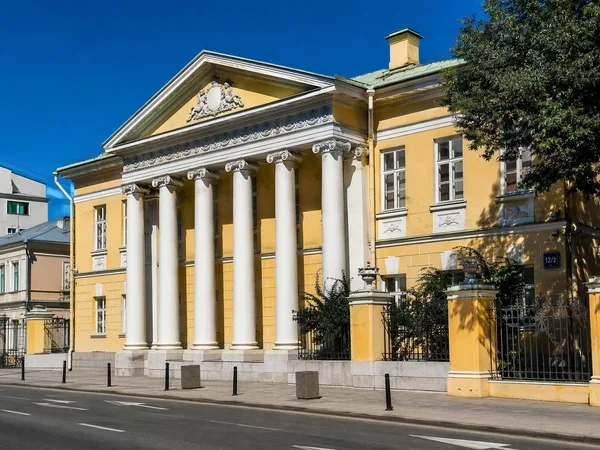
Old Arbat is useful as an introduction, but the district makes more sense when you turn into its side lanes. Street façades often conceal long plots, service wings and inner courtyards. The contrast between a low early-nineteenth-century mansion and a later rental block is part of the point.
Look for:
- Empire-era proportions: low, plastered houses, pediments and tall principal-floor windows.
- Late-imperial density: shops at street level with flats above, built deeper into former estate plots.
- Courtyard entrances: arches and passageways reveal how the street continued behind its public front.
Arbat has been pedestrian-only since 1986, so the main street works best on foot. Use the lanes for quieter architectural reading rather than expecting a continuous monument zone.
Pushkin and Andrei Bely
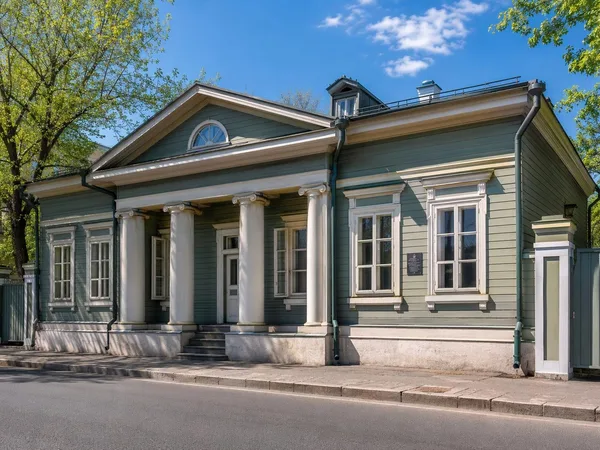
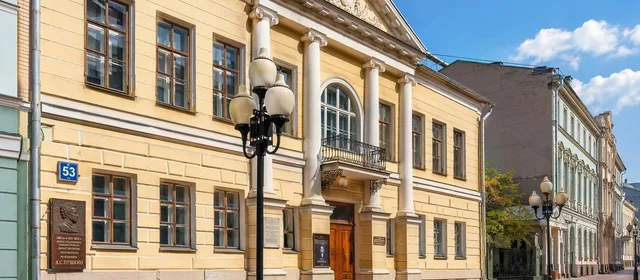
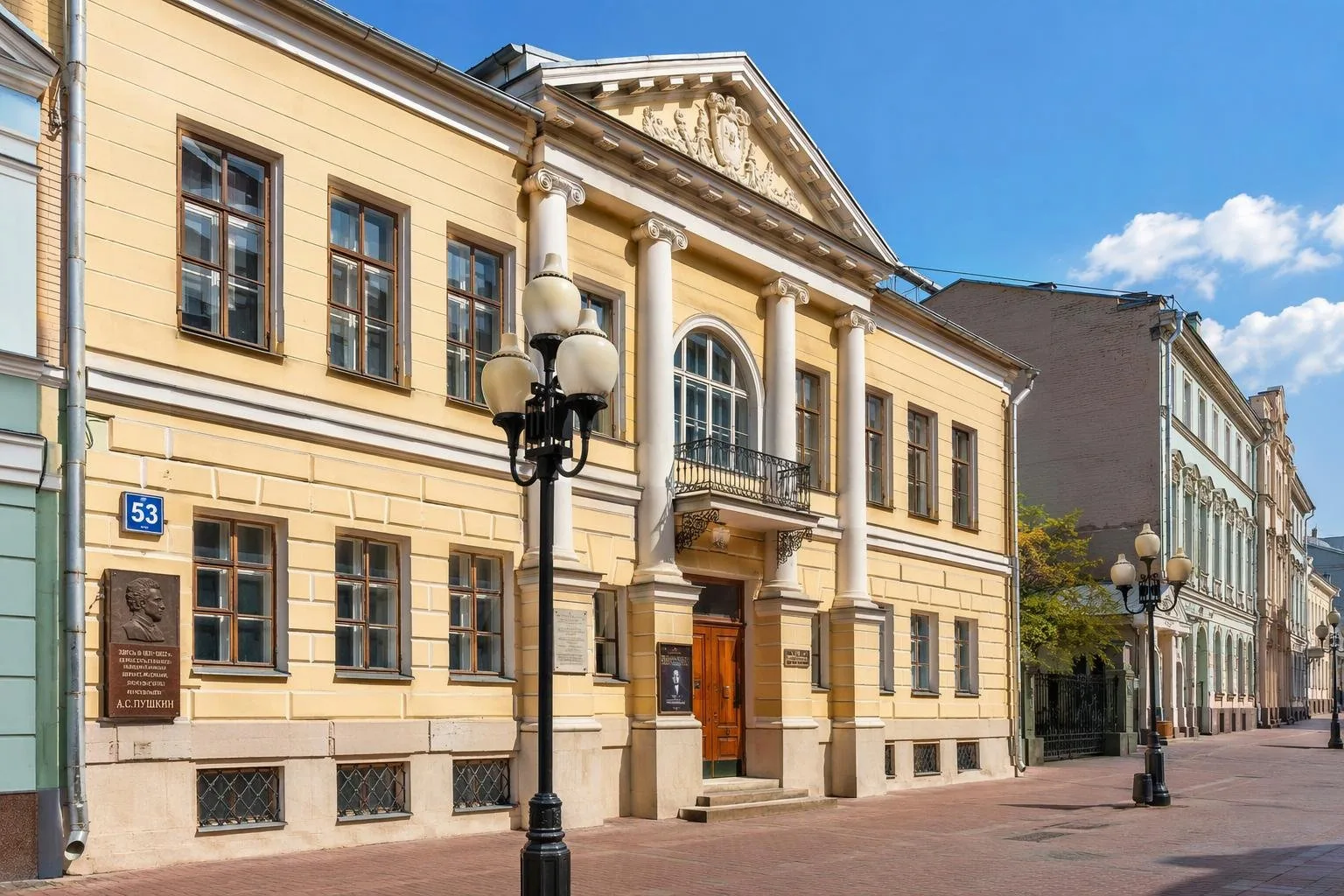
The essential literary stop is the Pushkin Memorial Apartment, Arbat 53, building 1. Alexander Pushkin rented the second floor shortly before marrying Natalia Goncharova in February 1831. Their wedding celebrations and the first three months of their marriage took place here. The restored house has displays on the history of Arbat and Pushkin’s Moscow years, followed by reconstructed rooms on the upper floor.
Two doors away at Arbat 55/32 is the Memorial Apartment of Andrei Bely. Boris Bugaev—later the Symbolist writer Andrei Bely—was born here in 1880 and lived in the building until 1906. Seeing the two addresses together clarifies Arbat’s shift from the private world of a nineteenth-century mansion to the apartment life of the modern city.
Getting there and visiting
Smolenskaya is the most direct metro stop for the Pushkin and Bely addresses; the Pushkin apartment is about 500 metres away. Arbatskaya is better for approaching Old Arbat from its eastern end.
The memorial apartments are small museum interiors, not street-access sights. Their schedules, timed entry and ticket arrangements can change; plan the museum visit separately from the outdoor walk. The Pushkin apartment is generally closed on Monday and Tuesday, with a later Thursday opening. Allow an hour for the Pushkin museum, then continue along the street and into Denezhny or Plotnikov Lane.
From the magazine
Stories about Arbat, Moscow
Editorial stories linked directly to Arbat, Moscow.
No stories about Arbat, Moscow have been published yet.
Routes from our editors
Travel through Arbat, Moscow
Editorial routes connecting Arbat, Moscow with other countries, cities and hotspots.
No routes through Arbat, Moscow have been published yet.
More in Russia
Related hotspots
Other cities, nature areas and places within Russia.