Nature area · Romania
Danube Delta
The Danube Delta is a vast protected wetland in eastern Romania, where the Danube divides into the Chilia, Sulina and Sfântu Gheorghe branches before reaching the Black Sea. Its lakes, channels, reed beds and marshes are best explored by boat.
The delta at a glance
The Danube Delta is Europe’s largest and best-preserved delta, a shifting lowland of channels, shallow lakes, marshes, reed beds and sandy ground. It is a UNESCO World Heritage site and biosphere reserve; more than 300 bird species and 45 freshwater fish species are recorded here.
The Romanian delta lies in Tulcea County on the Black Sea coast. The Chilia branch forms much of the border with Ukraine; Sulina runs centrally to the sea, while Sfântu Gheorghe follows the southern arm. Water is the transport network, not a backdrop.
Choose a base and route
Tulcea is the practical main gateway for permits, scheduled water transport and private boat departures. For an overnight stay inside the delta, look at settlements on the waterways such as Crișan, Mila 23, Sulina or Sfântu Gheorghe; each gives access to different stretches of water.
The reserve has designated visitor routes. Useful examples include:
- Tulcea–Șontea–Mila 23–Crișan–Tulcea for a classic central-delta circuit.
- Crișan–Lake Roșu–Sulina–Crișan for lakes and the Sulina arm.
- Crișan–Mila 23–Lake Trei Iezere–Crișan for the interior waterways.
- Murighiol–Uzlina–Lake Uzlina–Lake Isac–Murighiol in the southern delta.
Take an authorised boat for the route you intend to follow. Kayaks and rowboats suit quiet, narrow water, but distances and exposure are substantial.
What to look for
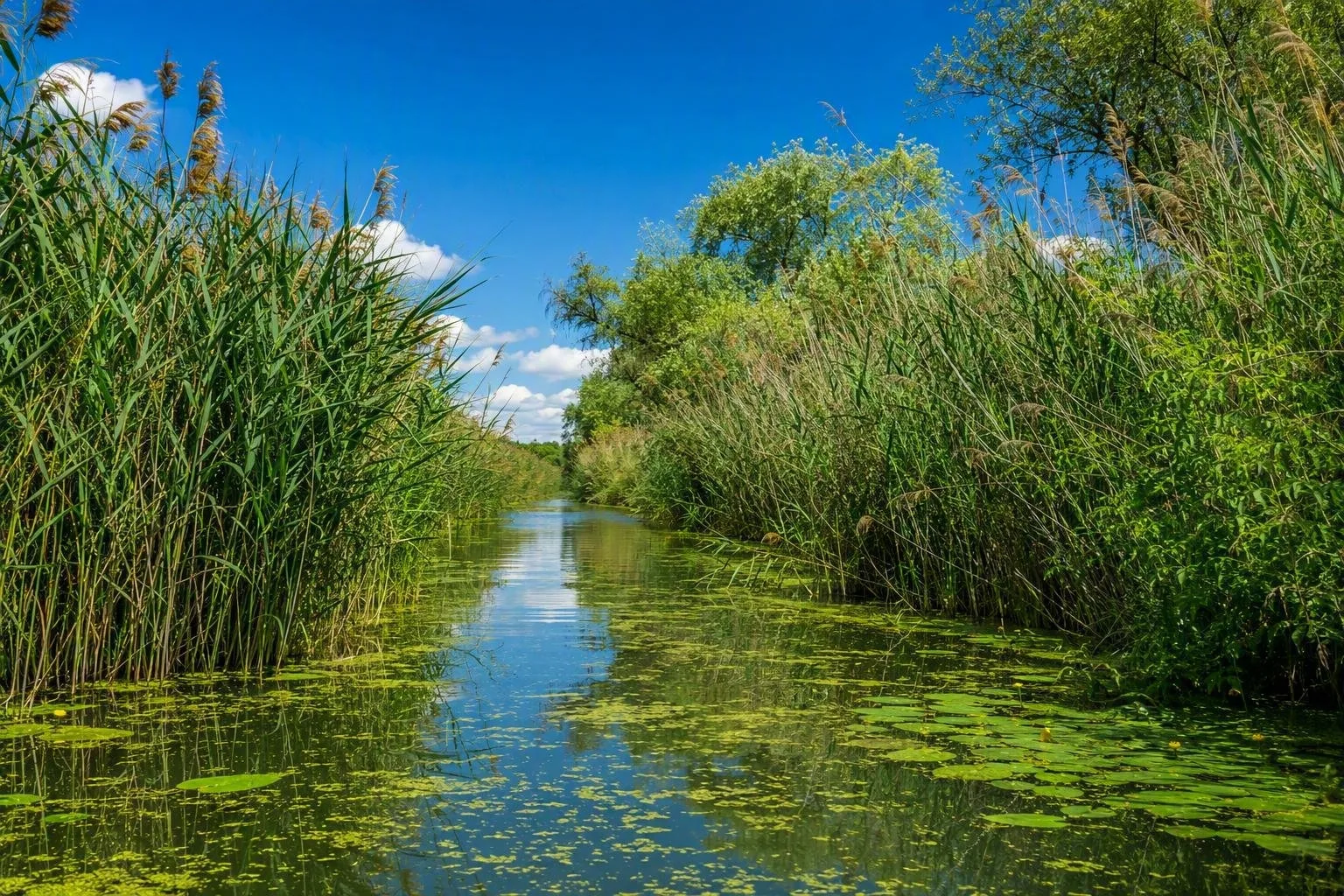
Reed beds dominate the delta and sometimes form floating mats known locally as plaur. Open water breaks into lakes and narrow canals, while willow and poplar grow along wetter banks. The landscape is dynamic: the river carries sediment into the delta and continually alters banks and sandbars.
Birdwatching is the central reason to slow down. Pelicans, cormorants, herons and egrets are characteristic sightings, but wildlife is not guaranteed on a timetable. Keep a respectful distance and use observation points where provided; bird colonies, nests and young must not be approached or disturbed.
Access and rules
A visitor access permit is required for the biosphere reserve. Permits are available online and at reserve information points; a separate permit applies if using your own boat, and recreational fishing requires its own reserve-issued permit.
Stay on approved routes: strictly protected zones are closed to visitors. Camping is allowed only in authorised places. Outside main routes, access is restricted to rowboats. Take all packaging out with you, and do not collect plants or enter bird colonies.
Timing and field conditions
Spring and autumn are strong periods for bird movement; summer brings long daylight and hot, exposed water. Bring sun protection, drinking water, a waterproof layer and effective insect protection. On the water, wear the safety equipment supplied by your operator and allow extra time: weather, wind and water conditions set the pace.
From the magazine
Stories about Danube Delta
Editorial stories linked directly to Danube Delta.
Routes from our editors
Travel through Danube Delta
Editorial routes connecting Danube Delta with other countries, cities and hotspots.
No routes through Danube Delta have been published yet.
More in Romania
Related hotspots
Other cities, nature areas and places within Romania.