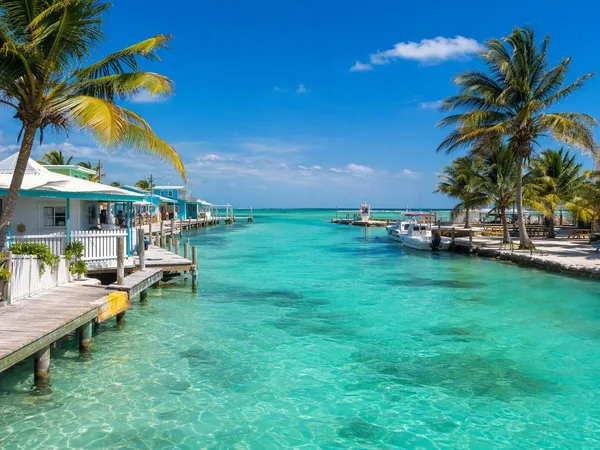
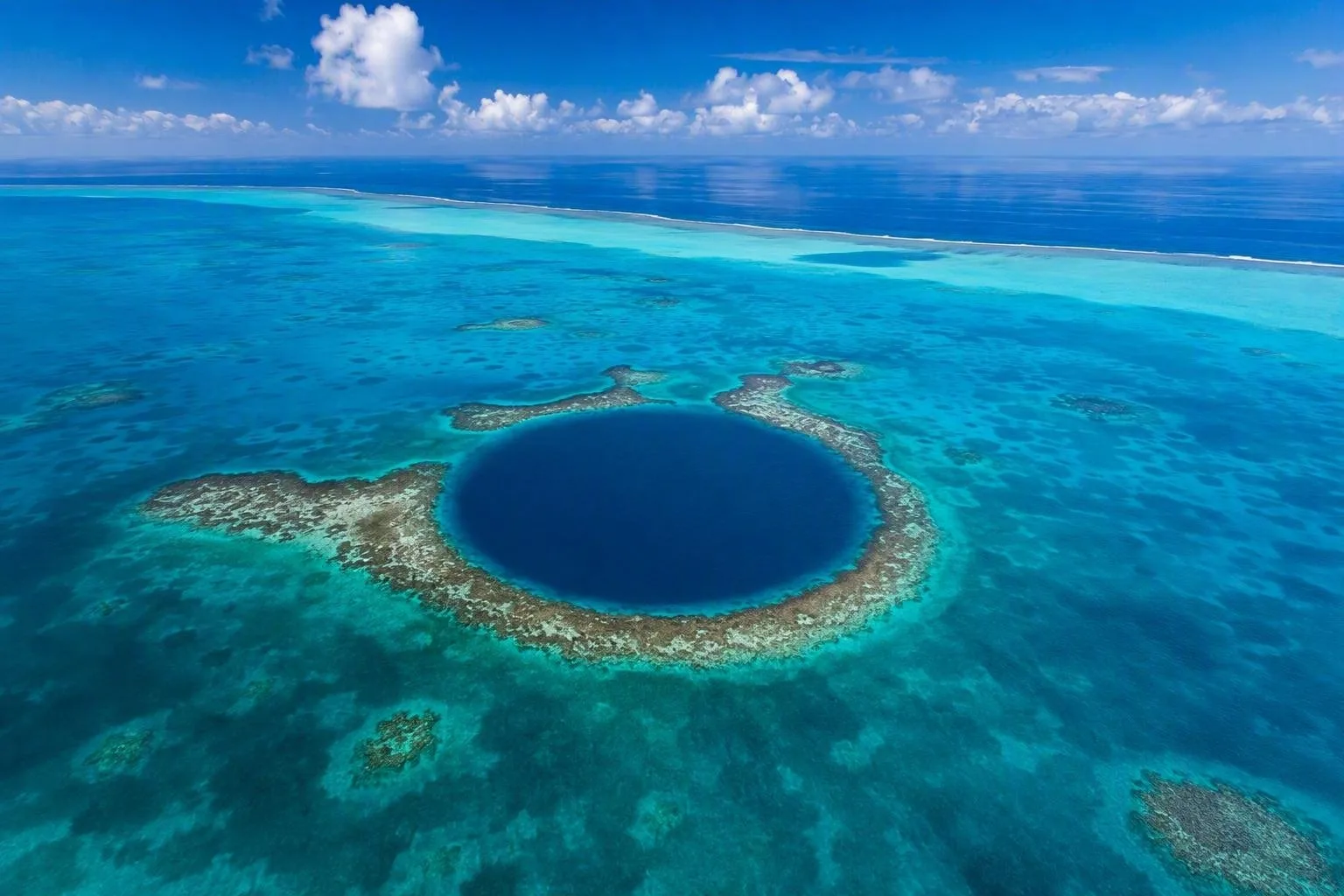
Many people first see Belize in aerial photographs of the Great Blue Hole: a dark circle set in the turquoise water of Lighthouse Reef Atoll. The view from a boat shows a more detailed coast. Snorkellers swim over coral gardens near Caye Caulker, fish gather in Hol Chan Marine Reserve, and mangroves edge the cayes. A few hours inland, broadleaf forest covers Maya temples and limestone hills. Scarlet macaws live in the Chiquibul, while waterfalls and pine woods mark the higher ground around Mountain Pine Ridge.
The road from Belize City’s Caribbean waterfront reaches San Ignacio in about two hours. English is the official language, but Kriol, Spanish, Garifuna, and Maya languages fill daily conversation. In San Ignacio, market stalls sell fruit, spices, and produce from the Cayo District. Visitors climb the stone terraces at Xunantunich or head farther into the forest to Caracol, one of the region’s major Maya cities.
On the southern coast, Dangriga and Hopkins are centres of Garifuna culture. Cooks make cassava bread and hudut, a fish stew served with mashed plantain. In Toledo, Maya farmers grow cacao and small producers make chocolate. Belize City adds Kriol food, wooden colonial-era buildings, and the collections at the Museum of Belize. Give the coast and mainland time. Belize makes sense when you see both.