
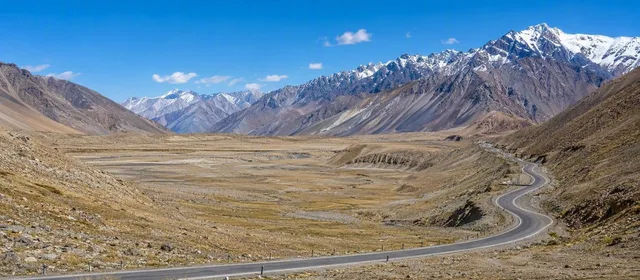
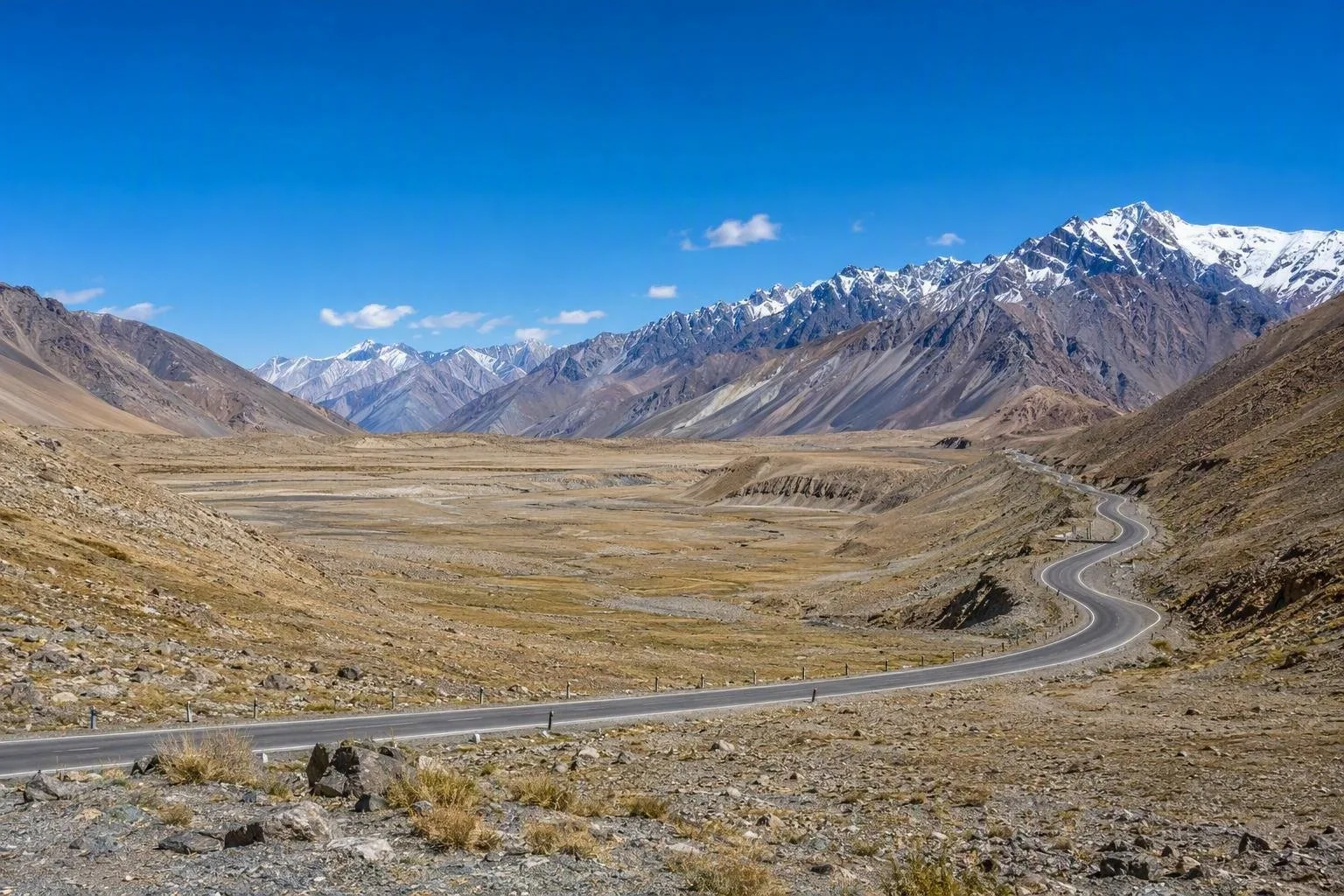
Few countries shift as quickly from a leafy capital to high mountain country. In Dushanbe, broad Soviet-era avenues run past parks, museums and tea houses. West of the city, orchards, vineyards and fields fill the Fergana and Zarafshan valleys. Then the land rises. The Pamir Highway crosses open plateaus, passes Karakul Lake and links small settlements beneath peaks above 7,000 metres. In the Wakhan Valley, the Panj River marks the border with Afghanistan, while the Hindu Kush stands across the water.
Tajikistan’s history shows clearly in the west. Ancient Panjakent holds the remains of a Sogdian city, and Sarazm preserves one of Central Asia’s oldest archaeological sites. Tajik, a form of Persian written in Cyrillic, carries Persian poetry and music into daily life.
Food follows the same divide between valley and mountain. In the west, cooks serve plov with rice, carrots and meat, and markets sell apricots, grapes and fresh bread. Families make qurutob from torn bread, qurut and vegetables, then pour tea throughout the meal. In the Pamirs, livestock and hardy crops support households through a shorter growing season. Take time for Dushanbe, the old sites in the west and the long roads east, and Tajikistan will stay with you long after you leave.


