City · Tajikistan
Dushanbe
Dushanbe is Tajikistan’s capital, set on the Varzob River in the Gissar Valley. Its broad planned avenues connect formal parks, national monuments, museums and markets.
Read the city
Dushanbe began as a Monday market settlement; its name still means “Monday” in Tajik. It became the capital of the Tajik autonomous republic in 1924, and Soviet planning gave it its straight, tree-lined boulevards, public buildings and squares. The city was called Stalinabad from 1929 until 1961.
The useful visitor axis is Rudaki Avenue, running through the central districts. This is not an old-city destination: understand Dushanbe through its parks, civic architecture, museums and food markets rather than by looking for a historic quarter.
Central park and monuments
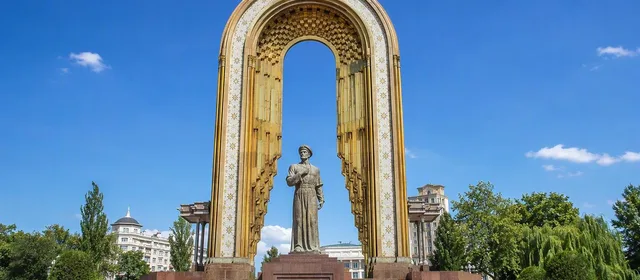
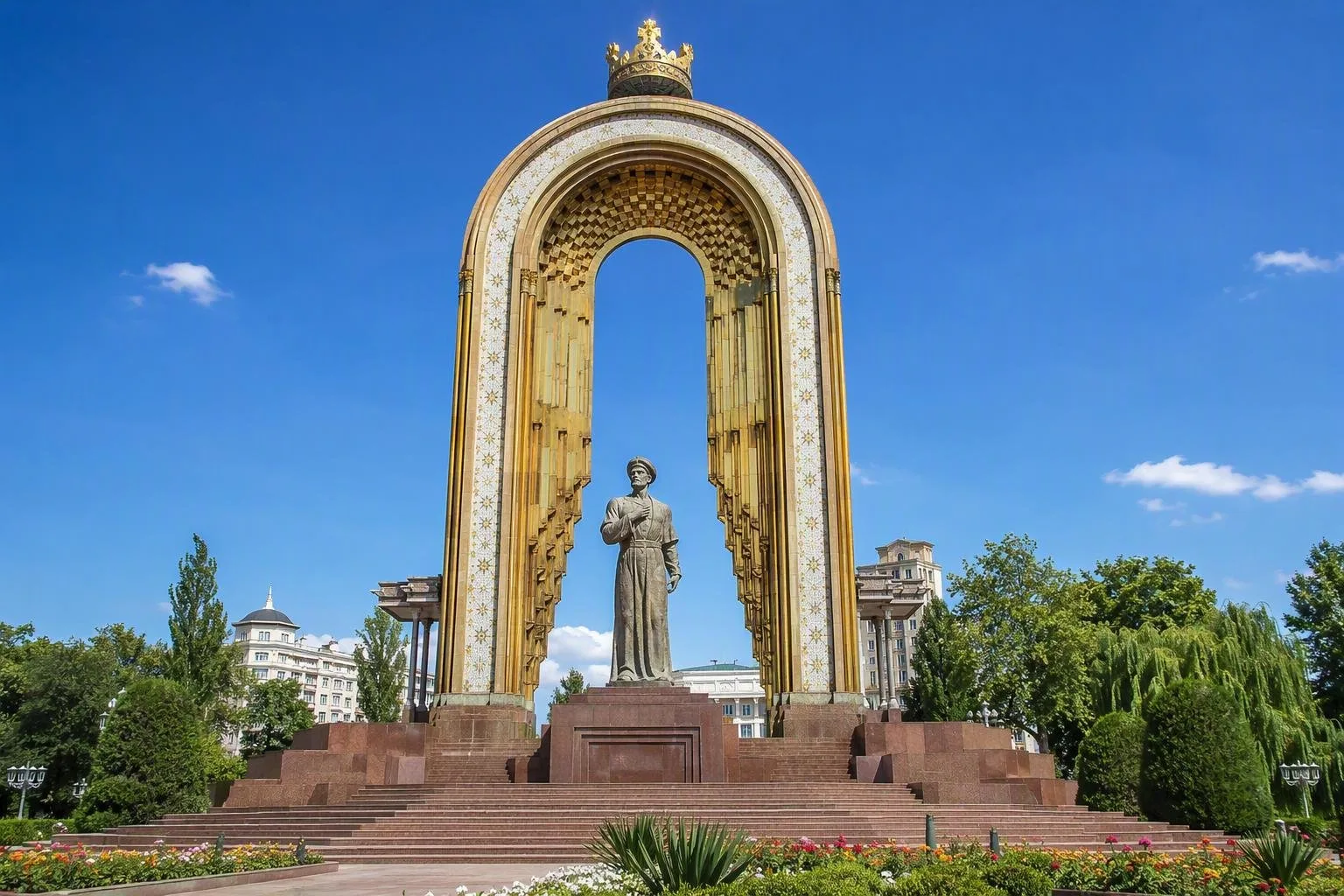
Start in Rudaki Park, a formal central garden named for the classical poet Rudaki. Its paths, fountains and monument make a good pause between sights. Nearby sit the National Library, the National Museum of Tajikistan, the State Flag Square and the Ismoil Somoni Monument at Dusti Square.
The flagpole and surrounding ceremonial landscape are best treated as part of a walk, not a standalone stop. The National Museum provides the fuller overview: its displays cover nature, ancient and medieval history, modern history, and fine and applied arts. Allow time rather than trying to squeeze it between landmarks.
Markets and Tajik food
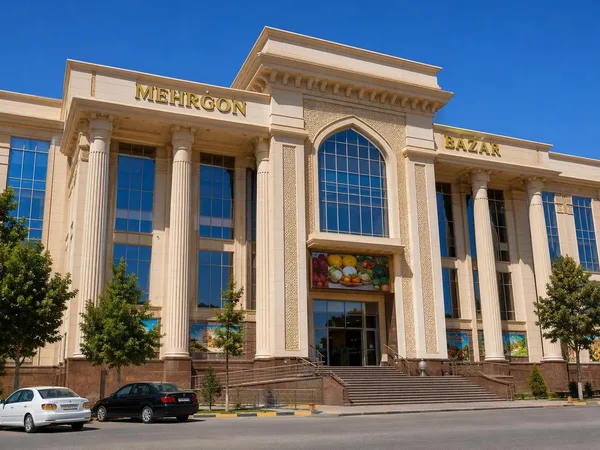
For the everyday city, go to Mehrgon Bazaar at 4 Mehnat Street. The covered market brings together seasonal fruit, nuts, dried apricots, spices, rice, round loaves, chakka strained yoghurt and hard white balls of qurut. Morning is the practical time for the fullest bread and produce displays.
Order qurutob for a distinctly Tajik lunch: torn fatir flatbread is soaked in a sharp sauce made from dissolved qurut, then topped with fried onion, tomato, cucumber and herbs. It is commonly served on a shared platter. Also look for plov, mantu, sambusa and green tea in a chaikhana.
Getting around and timing
The city centre works on foot when temperatures are moderate; use taxis or public transport for the market, airport and outer districts. Dushanbe International Airport serves the city and lies south of the centre.
Spring and autumn suit long walks. Summers are hot and dry, so use mornings and late afternoon for parks and avenues. Winters are cool and wetter. Carry somoni cash for market purchases and small transactions.
Rules worth knowing
Carry your passport or a notarised copy: police can request identification. Do not photograph military, police or security sites, and ask before photographing government buildings. Drone use requires permission. In crowded markets and public transport, keep valuables out of sight and use an official or pre-arranged taxi at night.
From the magazine
Stories about Dushanbe
Editorial stories linked directly to Dushanbe.
No stories about Dushanbe have been published yet.
Routes from our editors
Travel through Dushanbe
Editorial routes connecting Dushanbe with other countries, cities and hotspots.
No routes through Dushanbe have been published yet.
More in Tajikistan
Related hotspots
Other cities, nature areas and places within Tajikistan.