Nature area · Tajikistan
Gissar Valley
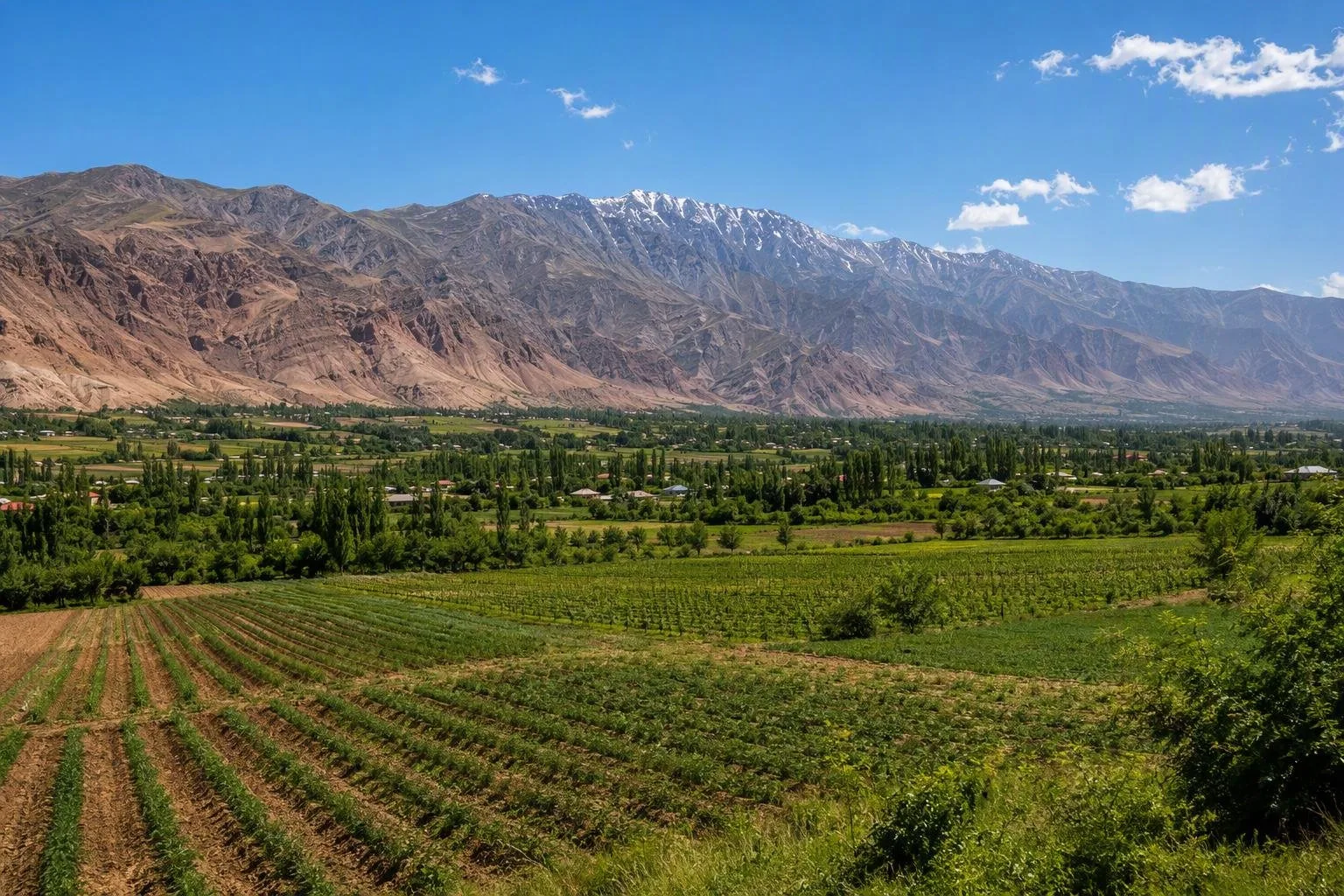
Gissar Valley is a broad, cultivated intermontane valley in western Tajikistan, running between Vahdat and Tursunzoda with Dushanbe and Hisor at its centre. Its irrigated floor, mountain backdrop and historic settlements make it the geographic frame for the capital region.
The lay of the land
Gissar Valley—also written Hisar, Hissar or Hisor—runs east to west along the southern foot of the Hisar Range in western Tajikistan. It extends for roughly 100 km from Vahdat District towards Tursunzoda and the Uzbek border, and reaches about 20 km across at its broadest.
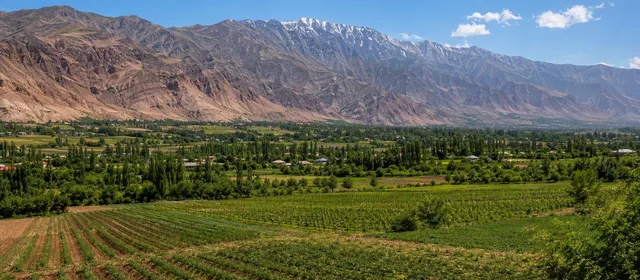
The valley floor generally lies between 700 and 1,000 metres above sea level. The Kofarnihon River and its tributaries, including the Varzob and Ilyak, supply the water that turns this mountain-framed basin into productive farmland. Expect a working landscape: irrigated plots, orchards, villages and expanding urban districts rather than a single contained scenic site.
How to read the valley
Dushanbe occupies the eastern-central part of the valley, while Hisor lies west of the capital. Use the valley as the route and landscape linking these places, not as a destination with one entrance or visitor centre.
The main visual contrast is immediate: broad agricultural ground and built-up areas below, steep mountain slopes to the north. Roads give the clearest sense of its scale; short stops in rural sections reveal canals, fields and orchards more clearly than the city does.
Historic anchor: Hisor
The most legible historic stop in the valley is the Hisor Historical and Cultural Preserve, west of Dushanbe. Its focal point is the reconstructed arched gate of Hisor Fortress, flanked by two round towers. The wider ensemble includes the old madrasa, a caravanserai, mosques, a mausoleum and a museum.
This is not the whole Gissar Valley, but it is the best concentrated introduction to the valley’s long role as a settled and cultivated corridor. Allow time to walk the grounds rather than treating the gate as a roadside photo stop.
Food and farming landscape
Agriculture is central to the valley’s identity. Cotton has long been grown on the irrigated plains; fruit, vegetables, cereals and livestock are also part of the wider farming economy. In the Hisor foothills, vineyards and sheep husbandry remain particularly important.
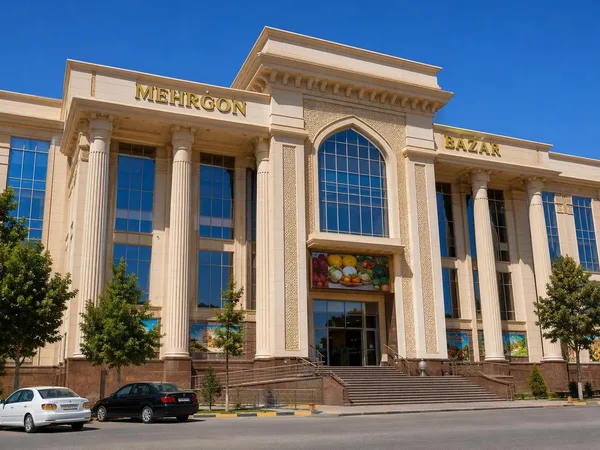
Markets in Dushanbe and Hisor are the practical place to see the valley’s produce in circulation. Look for seasonal fruit, grapes, bread, dairy products, nuts and dried fruit. Keep field access respectful: irrigation channels, orchards and cultivated plots are workplaces and usually private land.
Planning a visit
Base: Dushanbe is the simplest base for exploring the eastern and central valley. Hisor makes a logical heritage stop on a westbound day trip.
Best conditions: Spring brings greener fields and active orchard growth. Summer is hot on the valley floor; carry water and plan exposed walks early. Autumn is useful for fruit and grape produce.
Getting around: A car or driver is the most flexible way to connect rural views, Hisor and the western valley. Public transport serves settlements, but it is less useful for stopping where the landscape opens out.
From the magazine
Stories about Gissar Valley
Editorial stories linked directly to Gissar Valley.
No stories about Gissar Valley have been published yet.
Routes from our editors
Travel through Gissar Valley
Editorial routes connecting Gissar Valley with other countries, cities and hotspots.
No routes through Gissar Valley have been published yet.
More in Tajikistan
Related hotspots
Other cities, nature areas and places within Tajikistan.