
Cambodia

Khmer temples, river towns and living craft

Cambodia

Ancient temples, immense waterways and a resilient contemporary culture shape Cambodia far beyond Angkor.

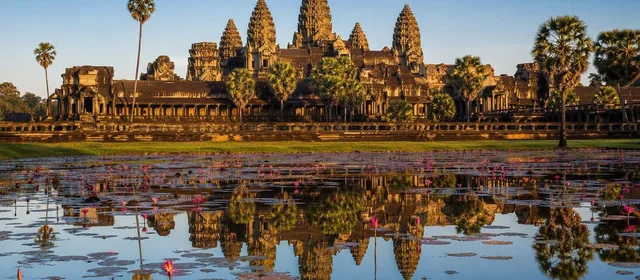
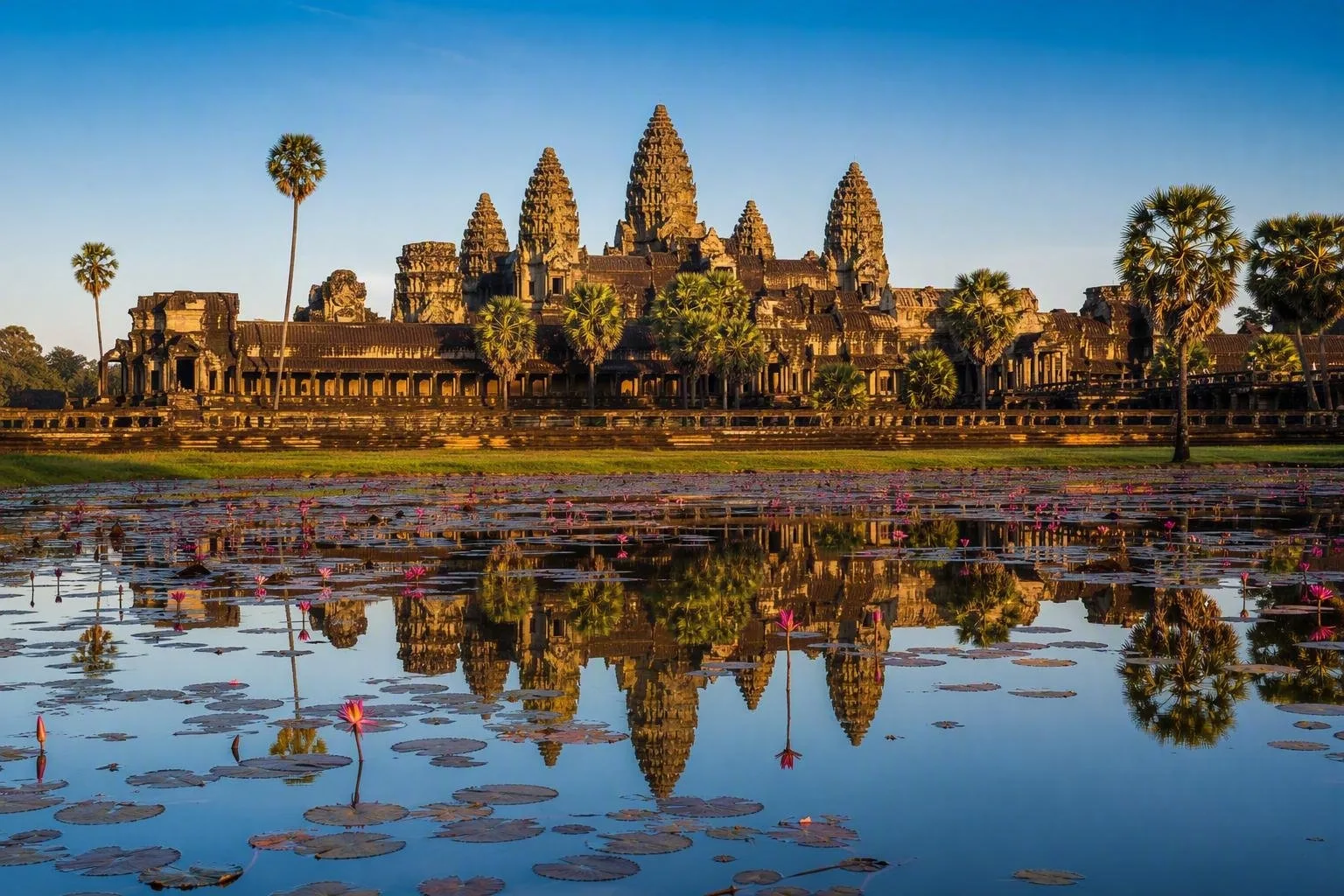
Angkor’s sandstone towers draw the crowds, yet the carved galleries hold just as much attention: soldiers march, traders work and cooks prepare meals. Those scenes record the lives of the farmers, craftspeople and merchants who supported the Khmer kings. In Siem Reap, conservators repair stone reliefs, dancers rehearse classical Khmer pieces and workshops produce silk and lacquer. Rice fields, villages and active pagodas lie beyond the main temple circuit. Monks tend the pagodas, and farmers grow rice beside the archaeological park.

In central Phnom Penh, French-era buildings stand beside Khmer modernist landmarks and market stalls. Tuol Sleng preserves prison cells and photographs from the Khmer Rouge period, while Choeung Ek commemorates those killed under the regime. The Royal Palace and National Museum show another side of the country’s history, through Khmer sculpture, religion and royal collections.

The Mekong and Tonle Sap meet beside the capital. During the rains, the Tonle Sap River reverses course and the lake spreads over forests and fields. Fishing families raise their houses above the waterline and use freshwater fish in soups, curries and prahok. Around Battambang, rice farms sit near restored shophouses and independent art spaces. Near Kampot, pepper growers continue a trade that has shaped local cooking for generations. Give these places time, and Cambodia’s temples become part of a larger, deeply lived-in country.

When to go

Best time to travel

The monthly values are indicative average maximum temperatures for Phnom Penh. Temperatures and rainfall vary meaningfully between the central plains, the coast and higher areas such as the Cardamom Mountains. The monthly values are indicative average maximum temperatures for Phnom Penh. Temperatures and rainfall vary meaningfully between the central plains, the coast and higher areas such as the Cardamom Mountains.

jan32°C feb33°C mar35°C apr35°C may34°C jun33°C jul32°C aug32°C sep31°C oct31°C nov31°C dec31°C

Weather in the capital

Practical Cambodia

On every country page we show the current weather for the capital.

Phnom Penh
Morning25°Cdrizzle
Afternoon29°Cdrizzle
Evening26°Covercast
today29°C / 25°Chigh and low

Current forecast by Open-Meteo

Visa and entry

Requirements depend on your nationality, purpose of travel and length of stay. Check Cambodia’s official immigration authority before departure.

Getting around

Intercity buses and minivans connect the main towns. Tuk-tuks and app-based rides cover local journeys, while domestic flights link Phnom Penh, Siem Reap and Sihanoukville.

Money and payments

ATMs are common in cities and larger towns. Cards work mainly at mid-range and upscale businesses, so carry small riel notes for markets, tuk-tuks and rural stops.

Where to stay

Phnom Penh and Siem Reap have large hotels and small guesthouses. Kampot has riverside stays, the southern islands have bungalows, and provincial towns offer simple lodgings.

Before you leave

Worth knowing

A practical starting point for your trip. Check current conditions and local information before you leave.

01

Calling code

+855 is Cambodia’s international calling code.

02

Driving side

Traffic drives on the right.

03

Official language

Khmer is the official language and uses the Khmer script.

04

Mobile connectivity

Metfone, Smart and Cellcard run broad mobile networks. Shops sell and register prepaid SIM cards using a passport.

05

Tipping

Tipping is optional. People commonly round up a bill or leave a modest amount for attentive service.

06

Cash payments

Small notes are useful at markets, food stalls and with local drivers. Vendors may refuse torn or heavily marked notes.

07

Bargaining

Polite bargaining is normal in many markets. Fixed-price shops, supermarkets and restaurants generally do not negotiate.

08

Tuk-tuk fares

Use a ride-hailing app or agree on the total fare before departure, including any waiting time and extra stops.

09

Meal rhythm

Breakfast often starts early, lunch falls around midday and dinner begins in the early evening. Rice accompanies most main meals.

10

Business hours

Government offices usually open Monday to Friday with a midday break. Shops and markets often trade daily and keep longer hours.

11

Temple etiquette

Cover shoulders and knees at active temples. Remove shoes where indicated, speak quietly and avoid touching carvings or religious objects.

12

Measurements

Cambodia uses the metric system for distance, weight and temperature.