
City · Bangladesh
Dhaka
Dhaka is Bangladesh’s capital, spread north of the Buriganga River in the country’s south-central delta. Its Mughal-era core, civic architecture and painted cycle rickshaws make the city a concentrated introduction to Bangladeshi history and urban life.
Read the city by district
Dhaka is not a compact sightseeing city. Treat it as distinct working areas linked by slow, traffic-heavy roads. Old Dhaka, near the Buriganga, is the historic core: dense lanes, markets, religious buildings and the Mughal remains are concentrated here. Shahbag and the university area hold major cultural institutions and civic landmarks. Sher-e-Bangla Nagar is the setting for the National Assembly Building.
The city became a Mughal provincial capital in the early 17th century and a centre of the muslin trade. It became the capital of independent Bangladesh in 1971. That sequence explains the sharp shifts from riverfront Mughal fabric to colonial and modern civic buildings.
Historic Dhaka
Start in Old Dhaka with Lalbagh Fort, the unfinished palace-fort begun in 1678. Its surviving complex includes the tomb of Pari Bibi, an audience hall with hammam and a mosque. Allow time for the surrounding streets rather than treating the fort as an isolated stop.
Other worthwhile reference points are:
- Husaini Dalan, a 17th-century Shi'a religious monument.
- Dhakeshwari Temple, in western Dhaka.
- Star Mosque, known for its later decorative work.
- Jatiya Sangsad Bhaban, Louis I. Kahn’s National Assembly Building, completed in 1982. View it from the public surroundings; it is a functioning parliamentary complex.
Rickshaws as moving art
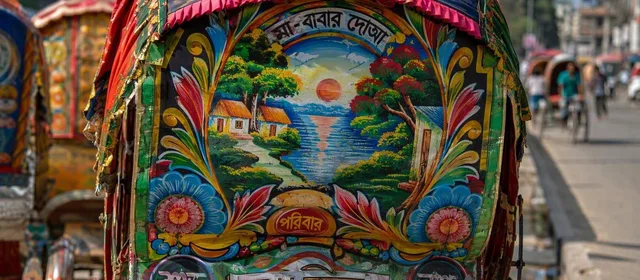
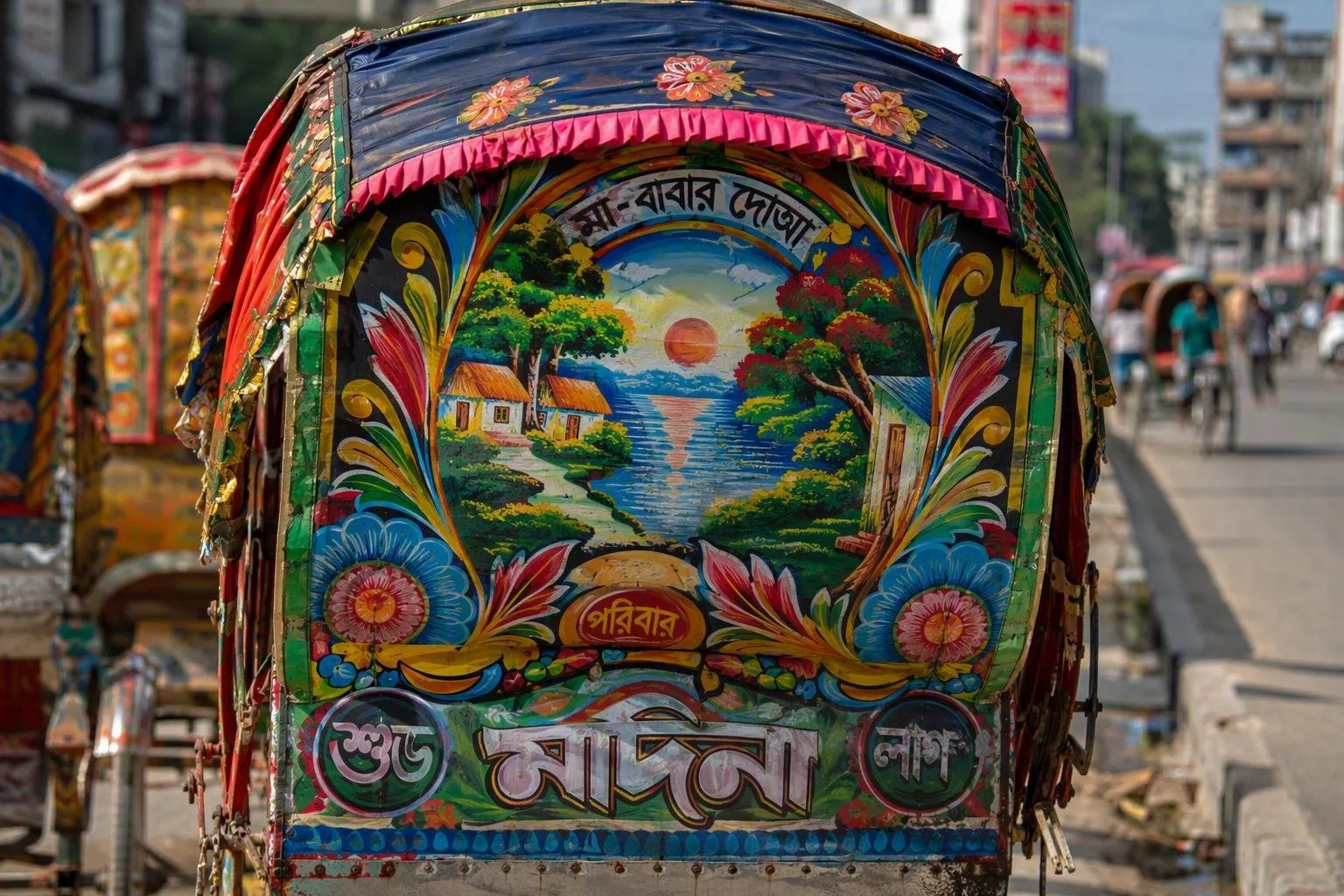
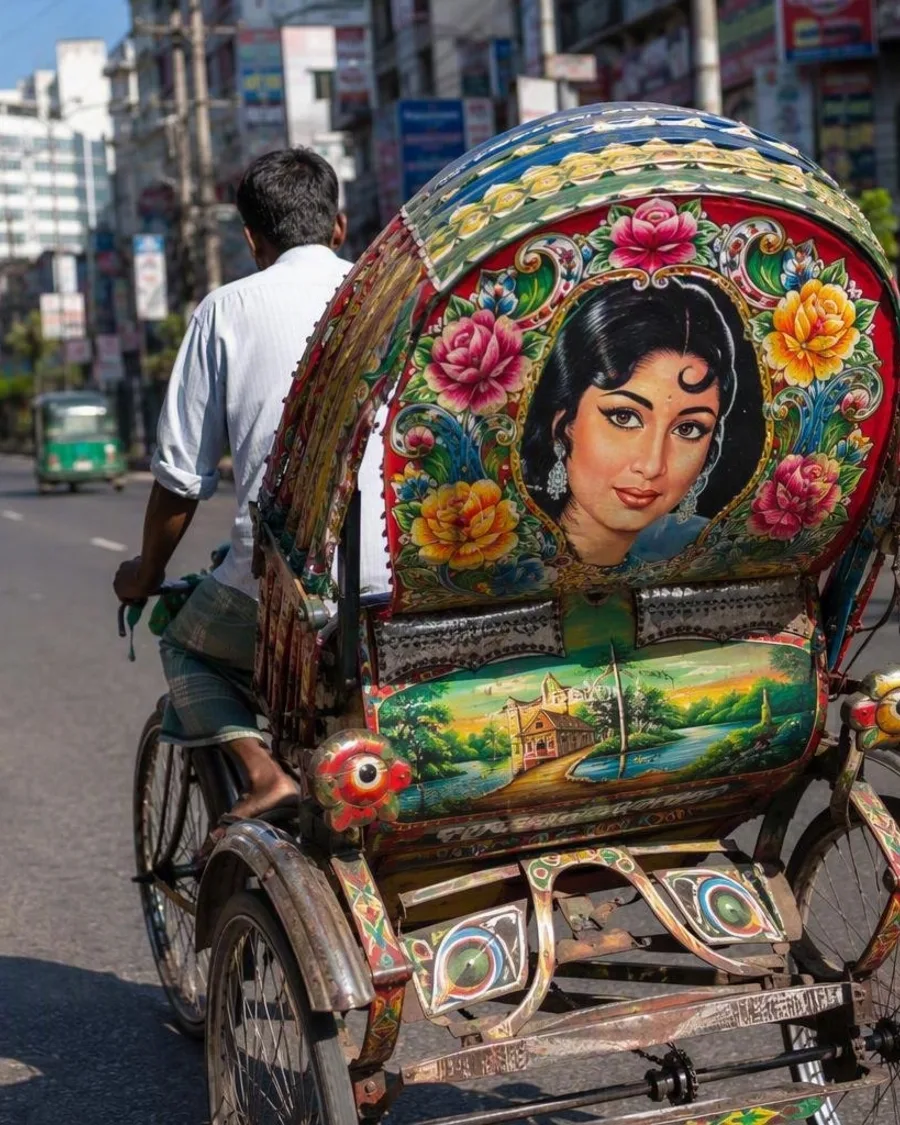
Cycle rickshaws are part of Dhaka’s everyday streetscape, not a staged attraction. Look closely at their backplates, seat backs and frames. Painters use flowers, birds, animals, rural scenes, film stars, national figures and short inscriptions, then add tinsel, tassels and plastic flowers. The result is a mobile form of urban folk art.
Rickshaw building and painting entered UNESCO’s Representative List of Intangible Cultural Heritage in 2023. The tradition includes both the vehicle and the skills behind it: workshop-based building, commissioned painting and informal teaching within families and close circles. A short rickshaw ride can be useful for close observation, but agree the fare and destination before setting off.
Getting around
Hazrat Shahjalal International Airport is in Kurmitola, about 17 km from the city centre. Build generous time into every cross-city journey: distance is a poor predictor of travel time.
MRT Line 6 runs north–south between Uttara and Motijheel, with stops including Agargaon, Farmgate, Shahbag, Dhaka University and Bangladesh Secretariat. Use it where its route fits; elsewhere, combine walking with rickshaws, ride-hailing or taxis.
Practical warning: Old Dhaka’s lanes are often too narrow and congested for efficient vehicle travel. Visit one compact area at a time, keep your route simple, and cross major roads carefully.
From the magazine
Stories about Dhaka
Editorial stories linked directly to Dhaka.
Routes from our editors
Travel through Dhaka
Editorial routes connecting Dhaka with other countries, cities and hotspots.
No routes through Dhaka have been published yet.
More in Bangladesh
Related hotspots
Other cities, nature areas and places within Bangladesh.
There are no other hotspots in Bangladesh yet.