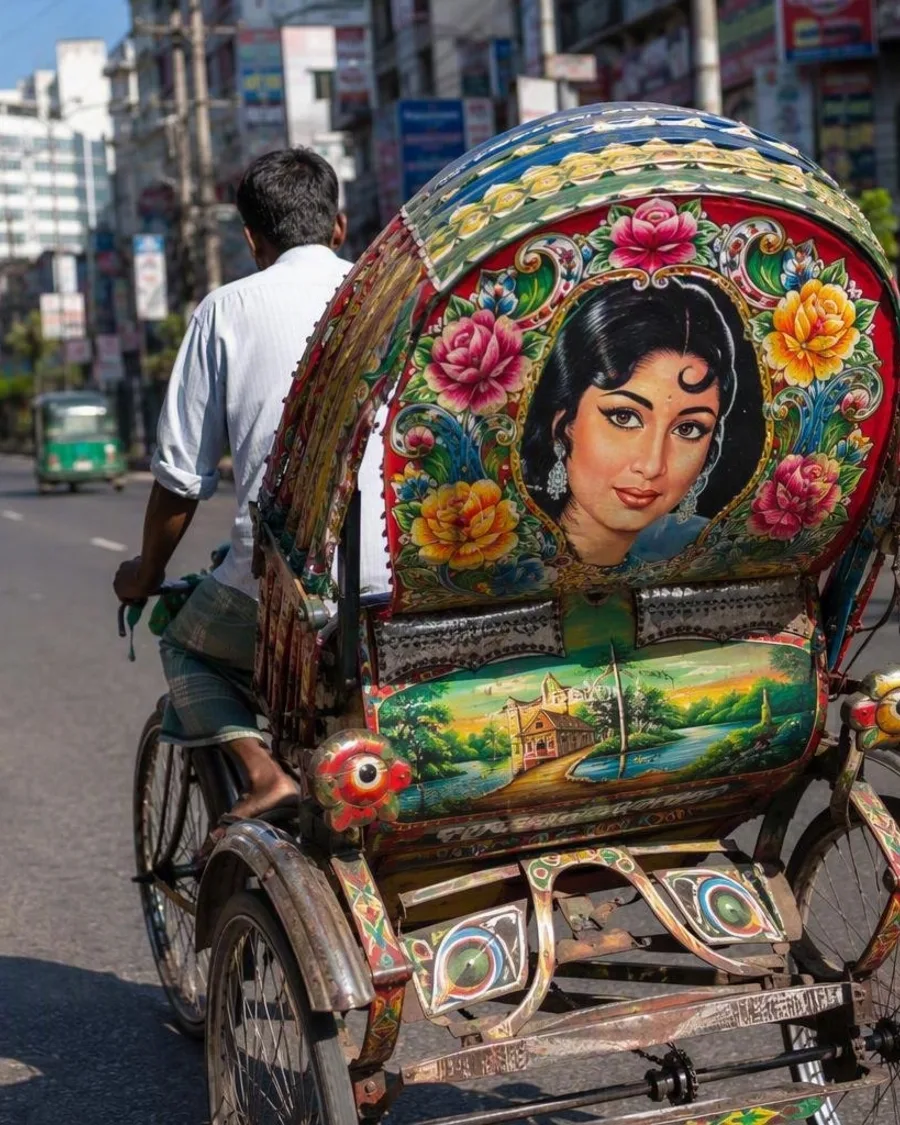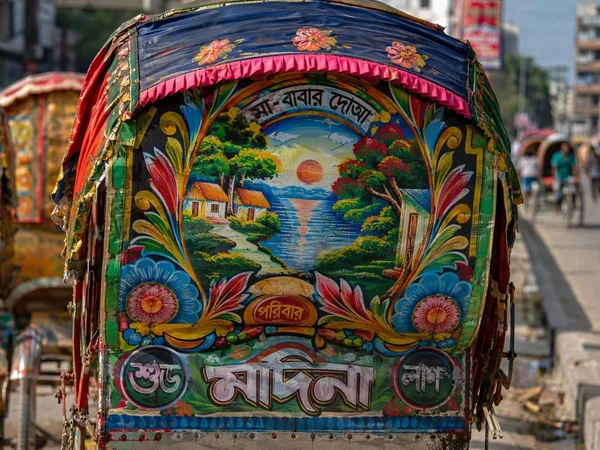
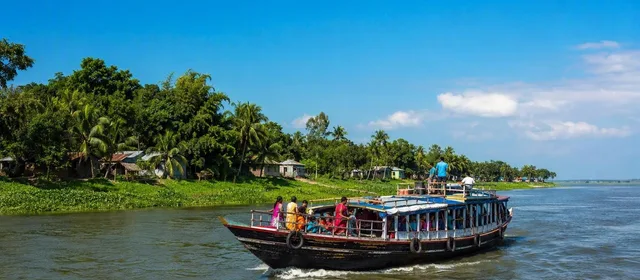
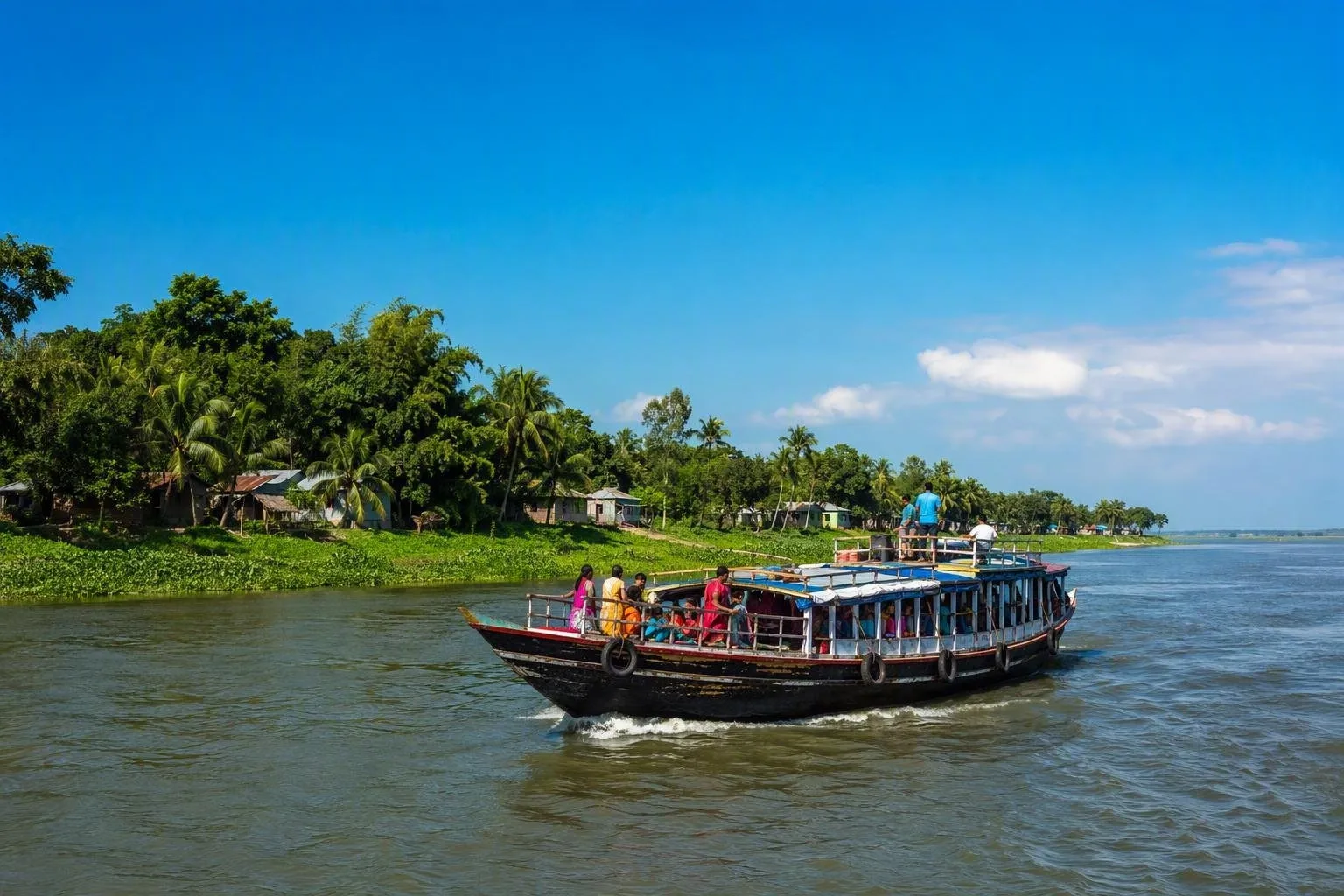
The rivers offer the clearest way to see Bangladesh beyond Dhaka’s traffic. The Padma, Jamuna and Meghna cut floodplains into islands and farmland, and ferries carry passengers over their broad channels. In Dhaka, rickshaws pass apartment blocks and old mosques, while traders unload goods beside the Buriganga at Sadarghat. Farmers plant in soil left by seasonal floods; boat crews and market sellers work along the same waterways. This daily traffic shows a side of the country that no view from the capital can show.
At Bagerhat, brick mosques from the Bengal Sultanate stand among ponds and palms. The Buddhist monastery ruins at Paharpur point to an older Bengal, while Panam City’s merchant houses in Sonargaon recall textile trade and the colonial era.
South of Khulna, boats move through the muddy creeks of the Sundarbans. Around Srimangal in the northeast, tea gardens cover low hills, and nearby haors flood into vast seasonal wetlands. Meals often put rice beside fish, lentils, vegetables and mustard-rich curries. Pitha rice cakes and mangoes mark seasonal tables. Bangla poetry and music are part of public life, and the 1952 Language Movement remains central to the country’s path to independence in 1971. Take a river crossing, wander an old quarter and sit down for a meal: Bangladesh becomes easier to know at that human scale.