Red Brick and Cotton: Inside Łódź’s Manufaktura
At the junction of Ogrodowa and Zachodnia, Izrael Poznański’s former cotton complex sets a long red-brick spinner beside an ornate palace. The factory made the fortune; the palace displayed it. Both still explain how textile work shaped Łódź.
Factory walls on Ogrodowa
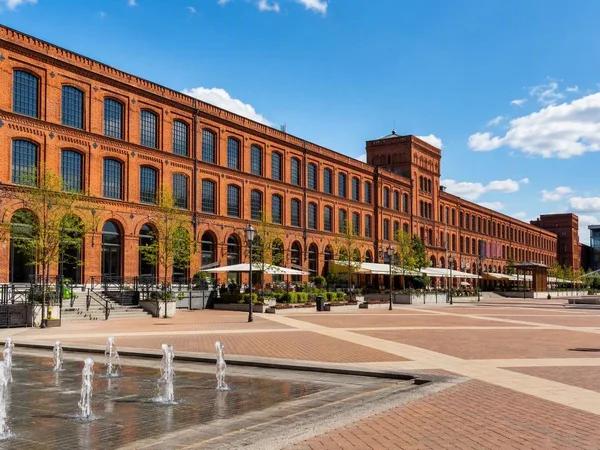
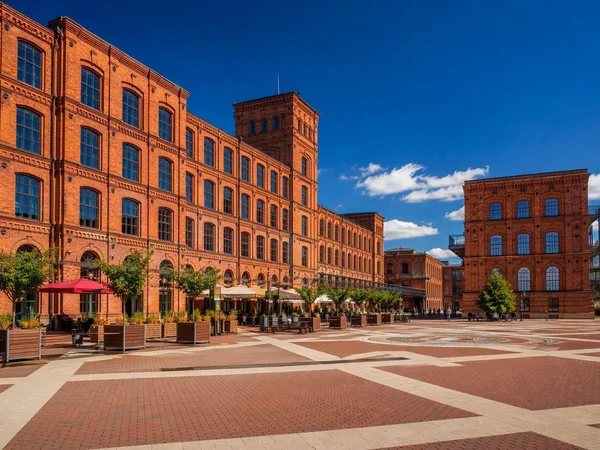
The former spinner dominates Ogrodowa with four storeys of bare red brick, four towers and a 170-metre length. Its fortress-like outline drew on medieval defensive forms, but its height and mass also served a concentrated cotton-spinning operation.
The palace beside it supplies the other half of the picture. Poznański used its richly decorated rooms not only as a residence but also for company business, trade and storage. Between palace and factory, the office building still shows two faces: a more ceremonial façade towards the owner’s residence and sober brickwork towards production.
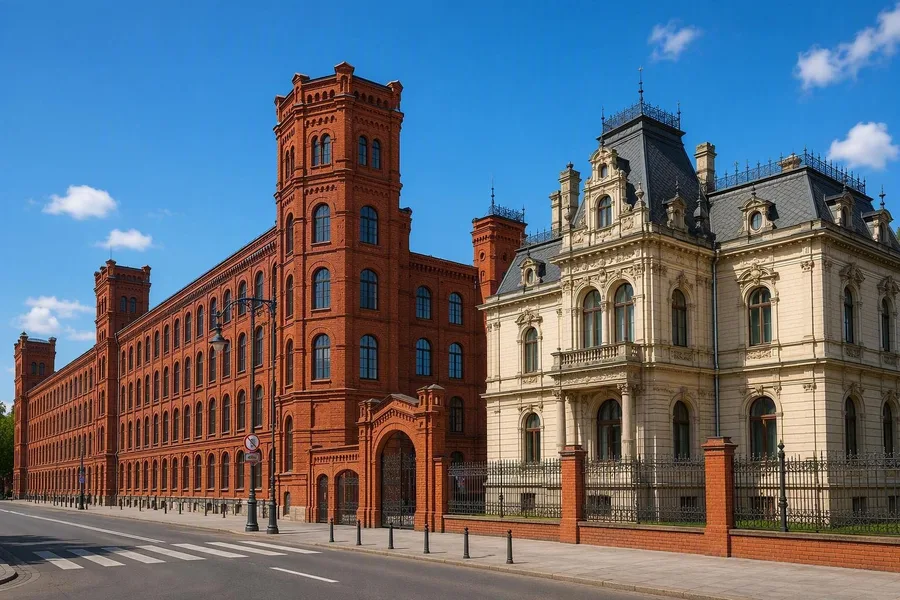 Poznański’s red-brick spinner and ornate palace stand together on Ogrodowa in Łódź.
Across Ogrodowa stand the multi-storey workers’ houses known as famuły. The factory, offices, owner’s palace and housing stood within a few minutes’ walk, making the old hierarchy unusually plain from the pavement.
Łódź acquired this dense form after the authorities designated it a textile town in 1823. During the nineteenth century, the population grew from about 800 to more than 300,000 as mills, workshops and housing expanded for a new industrial workforce. The city’s red-brick factories and tightly built residential streets came from the same surge.
From yarn to printed cloth
Poznański opened his first weaving mill in 1872 with 200 steam-powered English mechanical looms. He expanded it into an integrated cotton works that spun yarn, wove cloth, then bleached, dyed, printed and finished textiles.
Each stage needed its own building. The site also contained a foundry, locksmith’s and repair workshops, storage, power supplies, a fire brigade, railway links and a locomotive shed. By about 1900, the works covered 27 hectares, held more than 1,500 looms and employed 6,000 people.
The spinner explains the architecture particularly well. Cast-iron columns and beams supported floors laden with machinery, while the tall brick block held production vertically rather than spreading it across a low shed. Large factory windows brought daylight into the work floors; the brick façades also made the size and wealth of the enterprise impossible to miss.
After the Second World War, the state nationalised the factory and it later operated as Poltex. Lost markets, competition from cheaper Asian goods and Poland’s economic transition reduced production, and Poltex went bankrupt in 1991. The machinery fell silent, but the site’s biggest buildings remained.
A public square where the works stood
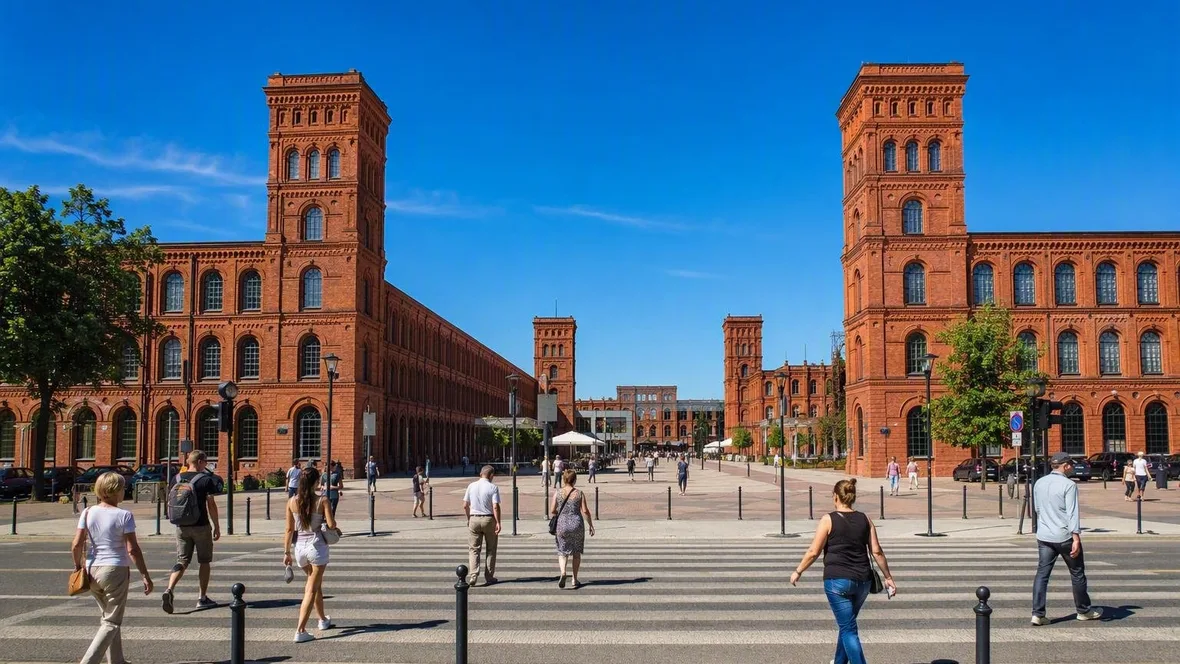
Manufaktura opened on the former factory grounds in 2006. Shops and restaurants occupy former workshops, the high spinner is now a hotel, and ms2 presents twentieth- and twenty-first-century art in a former weaving hall.
The former finishing building contains Muzeum Fabryki. Its model of the works, original machinery, reconstructed workstations and operating historic looms trace cotton’s passage from fibre to cloth without pretending that the factory has resumed mass production.
At the centre, brick façades face Rynek Włókniarek Łódzkich, the public square named in 2017 for Łódź’s women textile workers. Art and sporting events use the square, while residents, families, museum visitors and hotel guests cross land that once belonged to an enclosed industrial works.
The conversion kept major façades, factory windows and the old sequence of gate, office, spinner and palace. It did not keep the entire factory system: low sawtooth-roof halls, weaving sheds and the dye house disappeared, while new volumes and the square replaced parts of the internal streets and rail layout. Glass gallery entrances, shopfronts and café tables now occupy space once given to materials, machinery and factory traffic.
That change becomes clearer on Ogrodowa. At number 24, restored former workers’ housing now contains 80 homes, offices and service spaces; trees, benches, pergolas and paths fill a yard that once held wooden fuel sheds. New housing has appeared near Drewnowska, while other famuły have become or are planned as rentals, apartments and hotel space. The old link between home and factory employment has given way to housing, office work, visitor accommodation and retail. Heavier traffic and concerns about rising rents have accompanied the new footfall.
Sewing survives on a smaller scale
Textile work continues in Łódź, but in workshops, smaller production and training rather than in one vast mill. At Textilab on Gdańska 37/3, beginners learn to thread and use a sewing machine, tell knit fabrics from other cloth, make a shopper or lined zip pouch, and alter or mend their own clothes.
At ELES Zakład Krawiecki on Retkińska, tailors shorten, take in or let out garments, replace zips and fit press studs. The workshop uses equipment including sewing, overlock and hemming machines, alongside a press for fastenings.
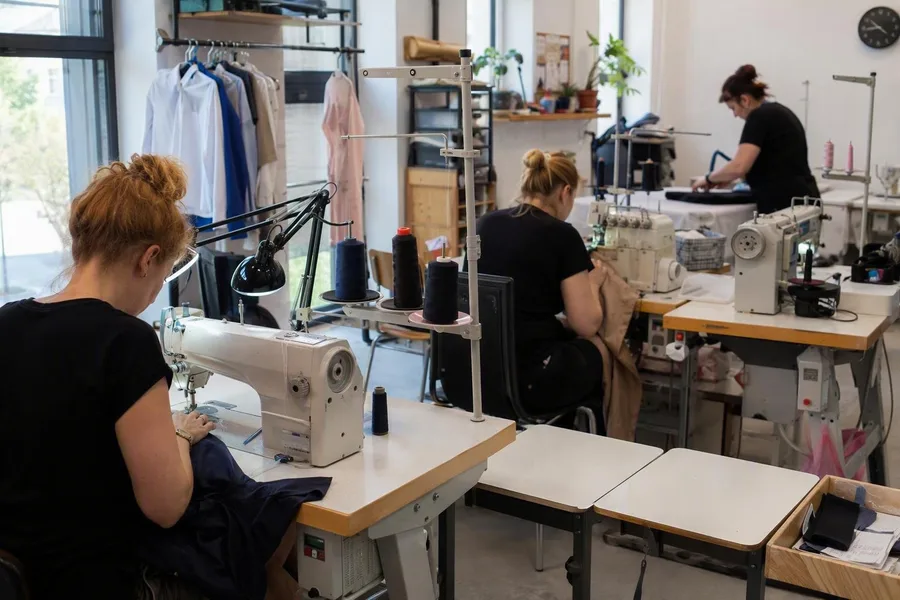 Tailors alter garments at ELES Zakład Krawiecki in Łódź.
Vocational teaching has moved still further from the ranks of old mechanical looms. Branżowe Centrum Umiejętności nr. 1 at Żeromskiego 115 teaches digital textile and pattern design, computer embroidery, sublimation printing and work with an industrial Stoll knitting machine. These places keep practical textile knowledge in circulation through repair, design and specialist production.
Practical details
Manufaktura fills the blocks between Ogrodowa, Zachodnia, Drewnowska and Karskiego. The grounds need no ticket or reservation; trams 2, 3, 11A and 11B stop on Zachodnia. Muzeum Fabryki, at Drewnowska 58, opens Tuesday to Sunday, 10am–6pm; from September 2026, a standard ticket costs 18 zł. Arrange guided visits and activities in advance.
Through the gate
The gate on Ogrodowa still sets the palace, office and spinner in one short line. Beyond it, pedestrians enter the broad square beneath the spinner’s four towers, with the restored factory windows rising in long rows above the brick.
Keep exploring