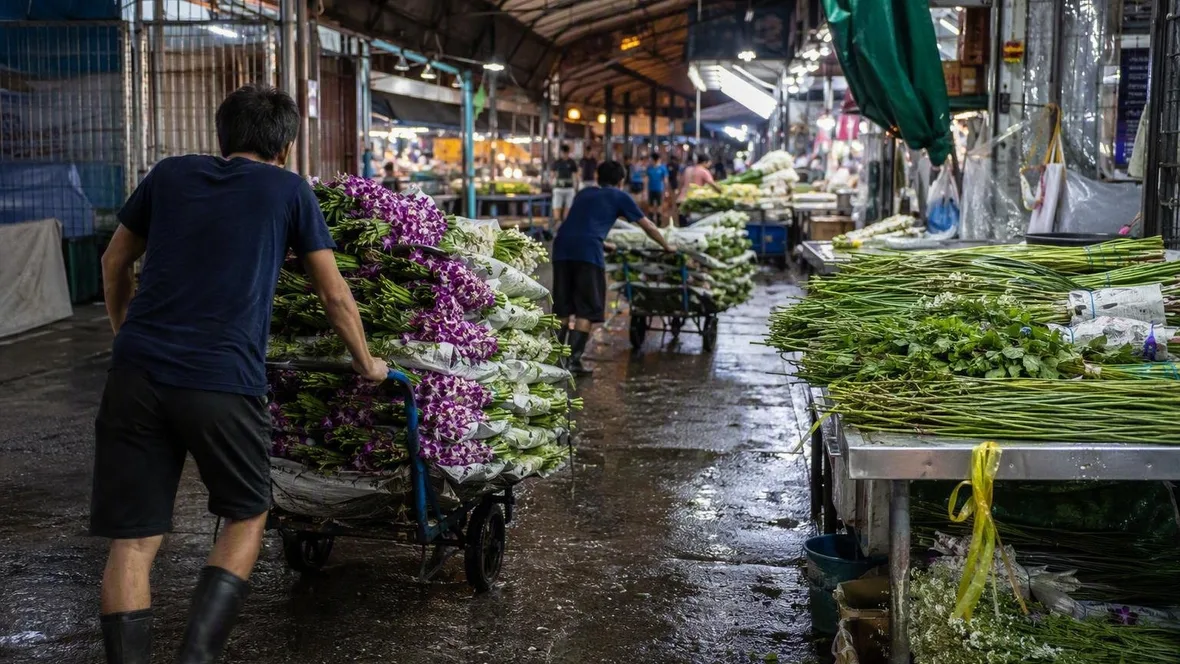
Pak Khlong Talat, Bangkok’s Flower Market at Work
After midnight, flower carts move through Pak Khlong Talat while workers bundle stems for florists, temples and hotels. Bangkok’s best-known flower market is also an old trading district, first shaped by the Chao Phraya and then by the road that runs through it.
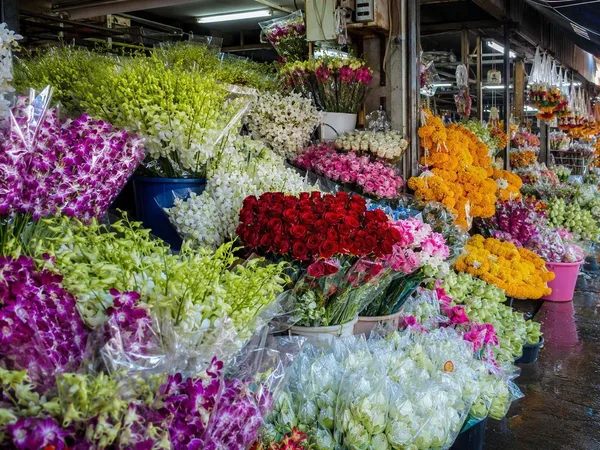
Pak Khlong Talat does not sit inside one neat market hall. Flower shops, covered markets and old shophouses form a long commercial strip along Chak Phet Road, extending towards the Chao Phraya and Maharat Road. Most stock and worktables now stand behind shopfronts and inside market halls, rather than under a continuous run of pavement stalls.
Flowers made the district famous, but fresh trade still defines its working day. Fruit and vegetables occupy part of the daytime market; by evening, flower sellers take a larger share of the street and halls. Before dawn, new deliveries arrive, workers move flowers on carts, and garland makers thread small blossoms by hand.
Where canal met river
The name Pak Khlong Talat means market at the point where canal and river meet. Its old port lay near the junction of the Rop Krung canal and the Chao Phraya, where traders could transfer perishable goods arriving by water. The market’s long shape along Chak Phet Road still follows that early geography.
Fish came first. Boats brought catches from the Tha Chin river basin to the port, and traders later added vegetables, fruit and fresh flowers. As Bangkok shifted more transport from water to road, shophouses rose along Chak Phet Road and commerce spread to both sides of it. The market did not abandon its original purpose. It continued to gather goods that had to be sorted, sold and sent on quickly.
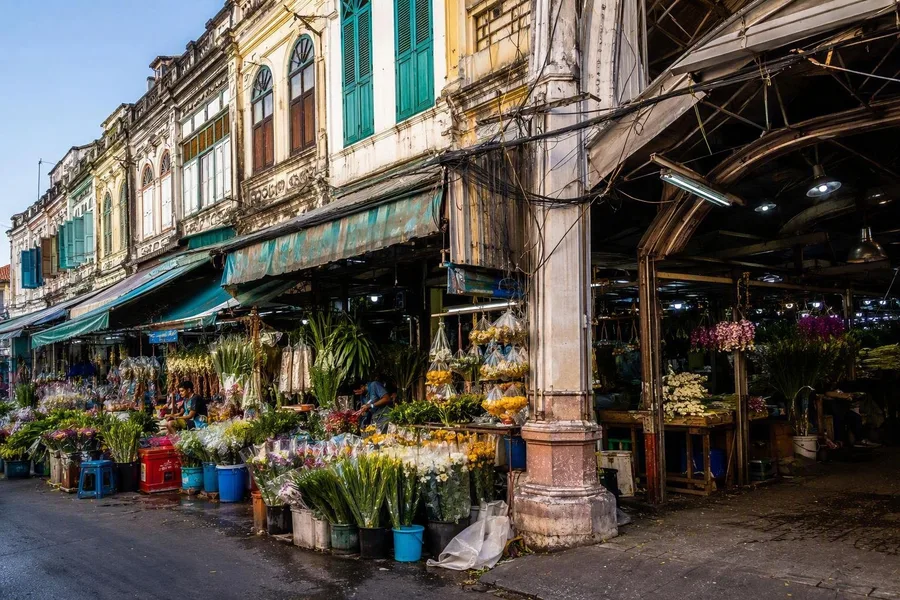 Flower shops, covered markets and old shophouses line Chak Phet Road in Pak Khlong Talat.
Flowers gradually became the dominant trade. Pak Khlong Talat now includes Yodpiman Market, the Market Organization Market and the Thai Farmers Promotion Market, alongside shops and smaller workspaces. Some sellers offer a single garland or bouquet. Others prepare larger orders for hotels, florists and temples.
That makes the market more than a photogenic concentration of blooms. Growers, drivers, wholesalers, retailers and garland makers use the district to move fragile goods from growing areas to customers across Bangkok.
The wholesale hours
Pak Khlong Talat operates through the day and night, though individual shops keep different hours. The deepest night brings the strongest wholesale activity. Fresh flowers arrive from growing areas between roughly 2am and 6am; workers shift them on carts and prepare orders for florists, hotels and religious sites.
The wet floor during heavy deliveries records the practical side of the market. Loose stems lie alongside leaves, ribbons and coloured paper for bouquets and ceremonial work. A shophouse or market unit can hold storage, preparation and retail sales within a few steps.
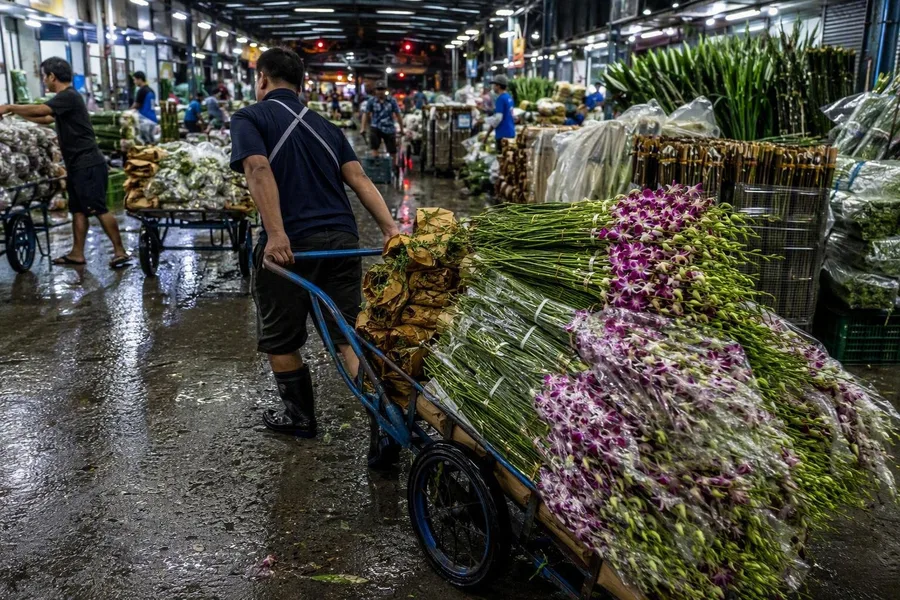 Workers move flower carts and bundle stems inside Pak Khlong Talat’s covered market halls.
A few products show what that work supplies. White jasmine buds and crown flowers are threaded into phuang malai, compact garlands used as offerings and signs of respect. Marigolds add yellow and gold to ceremonial garlands. Lotus buds are sold as fresh offerings, and people may fold their petals before placing them near a Buddha image.
Orchids and roses also pass through the market, but the garland table shows the specialised handwork most clearly. Makers turn small flowers, leaves and thread into objects for a shrine, a person or a particular ceremony.
By early morning, wholesale buying continues while sellers sort stock, make bouquets and finish garlands. During the day, flowers share the district with fruit and vegetable trade. This changing timetable comes from the short life of the goods: flowers arrive, are handled and leave again without much pause.
From flower stall to temple offering
Wat Pho stands on Maharat Road near the Grand Palace, within the same old riverside district as Pak Khlong Talat. The flower market is not part of the temple complex, but its proximity helps explain the religious goods, garlands and offering flowers sold in nearby streets.
The connection has a longer history. Traders who had worked along Wat Pho’s walls were moved to the Pak Khlong Talat area, adding religious commerce to a district already centred on fresh produce. Today the market sends flowers to temples and merit-making ceremonies, as well as to homes, businesses, weddings, ordinations, graduations and funerals.
The phuang malai travels easily between these settings. People place the garlands at Buddha images, home altars and spirit houses as gestures of devotion or requests for good fortune. They also hang in vehicles or at business altars, and people present them to elders, teachers and guests as signs of gratitude and respect.
Larger ceremonies use a different kind of floral work. A bai sri combines folded banana leaves with flowers, food and candles for blessings, weddings and ordinations. Baskets of lotus buds, banana leaves and bundles of jasmine therefore belong to the same trade. Each material has a defined use beyond the market.
Behind the shopfronts
For much of its modern history, Pak Khlong Talat spread across pavements as well as shops and halls. That changed sharply in 2016, when the city removed flower vendors from pavements and directed them towards Yodpiman and other nearby markets. The continuous outdoor rows disappeared, and many visitors assumed that the flower market itself had gone.
The trade continued in a different layout. Sellers moved much of their work indoors or deeper into adjacent market spaces, leaving clearer pavements in front of the shophouses. The contemporary market concentrates its working stock, tables and sales counters inside open-fronted shops and covered halls.
The riverside has changed as well. Yodpiman Riverwalk added restaurants and pedestrian space behind part of the wholesale district. Some renovated shophouses now contain cafés, workshops or small exhibition spaces beside flower businesses. Yet workers still unload flowers, bundle stems, thread garlands and prepare orders in the market below.
After midnight, carts bring fresh consignments over the wet floor. Bundles move from vehicle to worktable, and jasmine buds reach the hands that thread them into garlands.
Keep exploring