In Laweyan, Batik Still Lives at Home
In Kampung Batik Laweyan, batik passes from experienced makers to children, trainees and design students inside family businesses, workshops and organised classes. The neighbourhood is Solo’s oldest and largest batik production centre, making it a strong place to follow how a drawing becomes cloth, work and inherited knowledge.
Some of Laweyan’s old merchant houses still work as homes and production spaces. Shops and galleries sell hand-drawn batik tulis, stamped batik cap and printed batik textiles nearby.
That overlap makes Laweyan more than a place to buy cloth. Families introduce children to the trade, local makers run courses, students take internships in active businesses, and producers share orders when a single workshop cannot meet the volume.
Merchant houses and narrow lanes
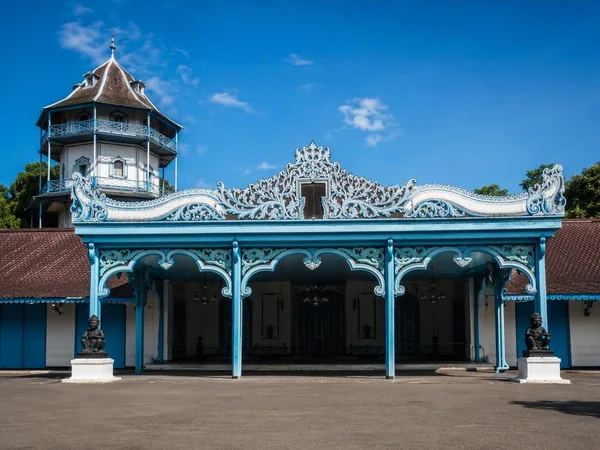
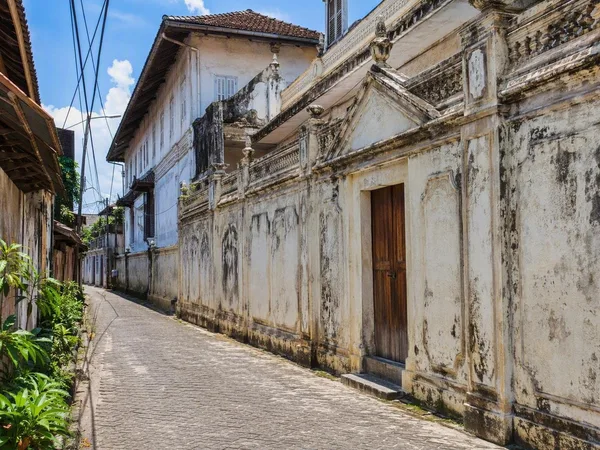
Laweyan has been linked to batik commerce since the sixteenth century. Batik merchants built substantial compounds behind narrow lanes, gates and high boundary walls. Their houses combine Javanese spatial plans with colonial Art Deco and other imported details.
A compound could contain a courtyard, terrace, open-sided pendopo, inner dalem, side wing and a factory or workroom. That layout placed domestic life and business on the same plot, and some properties still use that arrangement for making and selling batik.
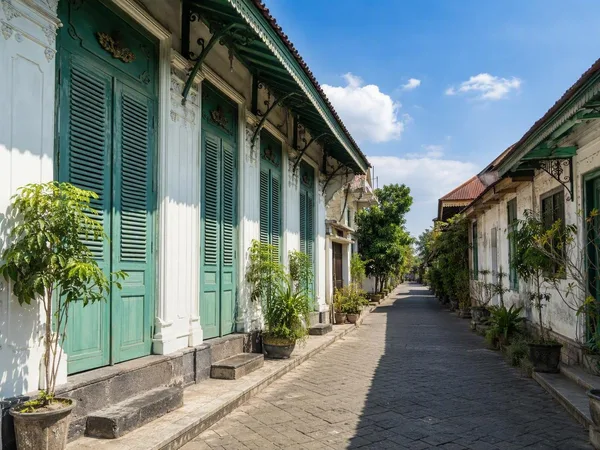
More than 50 batik-related sales points operate in Laweyan. Motorbikes pass through the enclosed lanes, and galleries stand beside production spaces. Cloth remains part of the neighbourhood’s ordinary commerce: people design it, make it, teach it and sell it within the same streets.
Court cloth beyond the kraton
Solo’s batik trade grew from the contact between court culture and urban commerce. Batik first served as clothing for the Surakarta court, and the city developed its own style after the division of the Mataram kingdom in 1755.
Court servants and traders later carried designs and technical knowledge beyond the palace. In Laweyan and nearby Kauman, producers adapted court-linked designs for a wider market. The copper cap, or stamp, also made larger and more affordable runs possible than drawing every wax line by hand.
That adjustment has not stopped. Laweyan producers change motifs and colours for younger customers, and some producers export their work. The merchant compounds help explain why batik in Solo has long involved design, household labour and trade at once.
What wax does
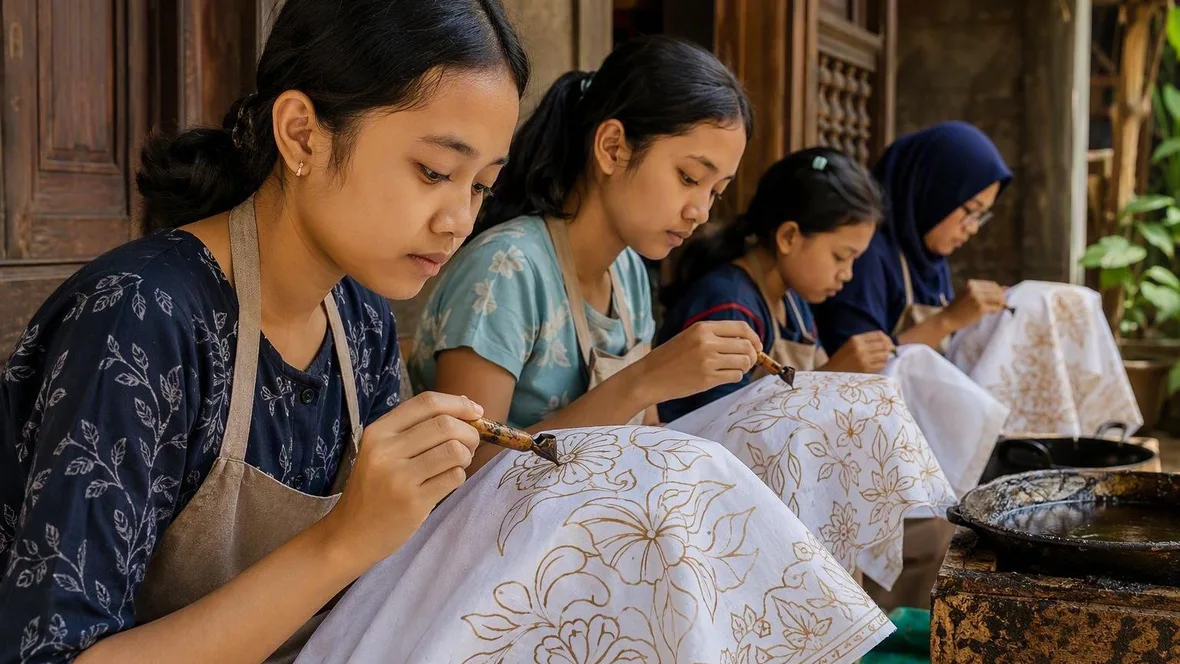
The basic method is exact. A maker applies liquid wax, known as malam, to cotton or silk; the wax resists dye, leaving selected parts of the cloth uncoloured.
For batik tulis, the maker draws the wax with a canting, a pen-like tool with a small reservoir and spout. The cloth then goes into dye. Makers remove the wax in hot water and can repeat the waxing and colouring for further colours.
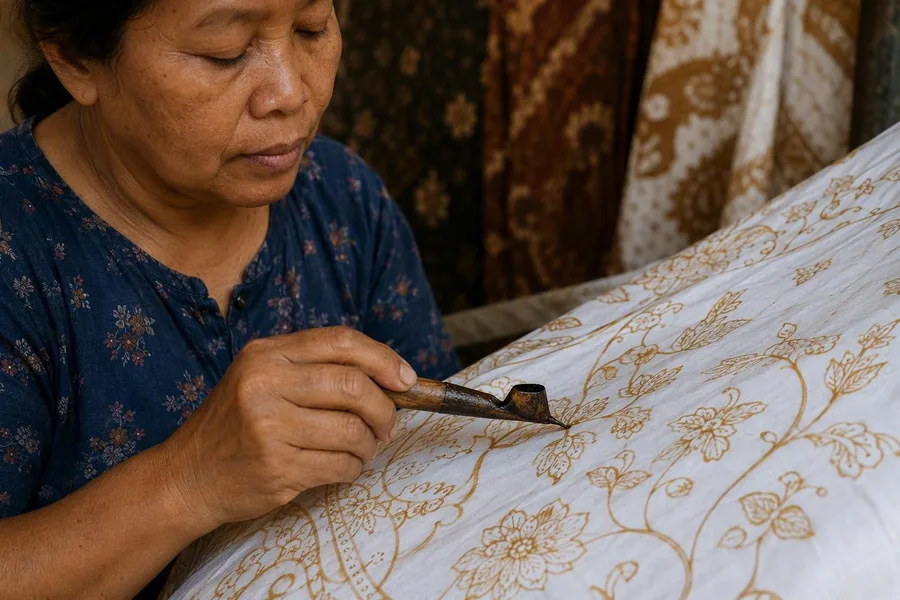 A maker applies liquid malam to cotton cloth with a canting in Laweyan.
In batik cap, a copper stamp applies the wax pattern instead. Laweyan businesses teach and produce both drawn and stamped batik, while galleries also sell printed textiles. The difference matters in a market where handmade wax-resist cloth competes with cheaper printed fabric that can copy batik’s appearance without using the same process.
Learning begins with simple work
For many makers, the first classroom is the family business. Children in batik households watch daily production, learn motifs and colours, and may start by preparing cloth or helping with colouring before moving to more difficult tasks.
Experienced makers divide work among pattern making, dyeing, sewing and finishing. Beginners take on simpler jobs first, then learn more complex ones under supervision.
The Forum Pengembangan Kampoeng Batik Laweyan runs training for local young people, school groups and other participants. In these sessions, learners draw a motif on cloth, apply wax with a canting, add colour and dry the fabric with guidance from local makers. Instructors who join the training team complete separate canting training first.
Internships take the process further. Students work with experienced makers inside batik businesses, linking formal design study to decisions about pattern, colour and production. At Batik Mahkota Laweyan, a deaf design graduate began by drawing motifs, then learned colouring and batik techniques; three deaf friends later joined and learned from the basics. Their work developed into Batik Tuli Laweyan, rooted in an operating workshop rather than a visitor demonstration.
Batik in use and in trade
Batik is not confined to ceremonies or collections. Across Indonesia, people wear it in workplaces and schools, as well as at weddings, pregnancy ceremonies and other important occasions.
Solo’s 2025 workwear direction asked municipal staff to wear locally made cap or tulis batik rather than printed cloth, tying office clothing to orders for local small businesses. In Laweyan, producers also cooperate when an order exceeds one workshop’s capacity. That work keeps pattern makers, dyers, tailors and finishers connected to commercial production.
Courses add another modest source of income. Visitors and students pay to learn the same relationship between wax, dye and design that shapes the finished cloth.
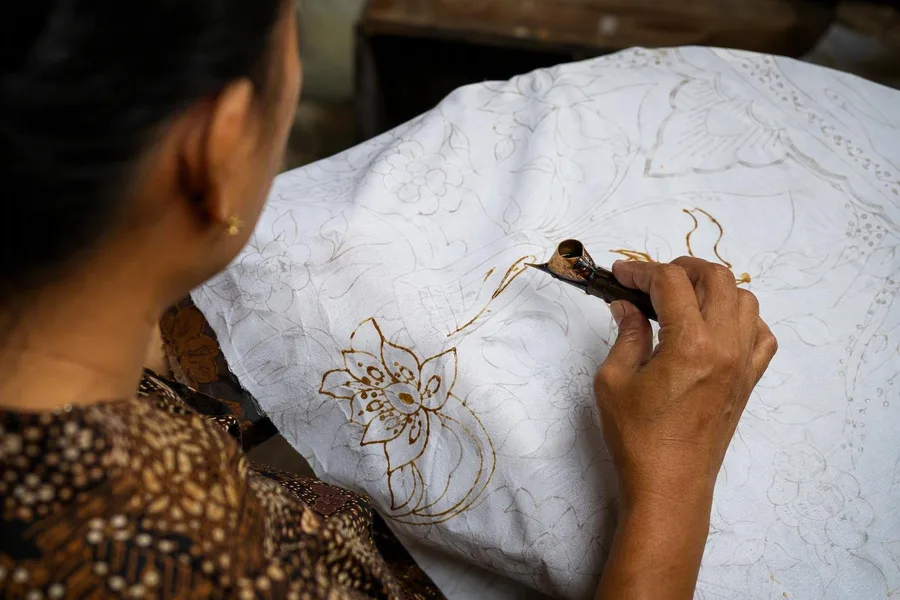 A participant applies liquid malam to white mori cotton during a batik lesson in Laweyan.
Through the regol
A preserved regol, or entrance gate, opens in one of Laweyan’s high boundary walls. Beyond it, a traditional compound can lead from courtyard and terrace to the pendopo, inner rooms, side wing and work area.
Batik lessons still take place in Laweyan. At the end of that passage stands the material start of the work: white mori cotton, liquid malam and a canting laying wax onto the cloth.
Keep exploring