Bowls, Banana Leaves and Peacock Feathers
At Đông Ba Market, Huế’s imperial past sits close to breakfast. Pots of fermented shrimp paste and strings of lotus seeds supply a cuisine that runs from forceful noodle soup to the measured display of a royal-style banquet.
Breakfast at Đông Ba
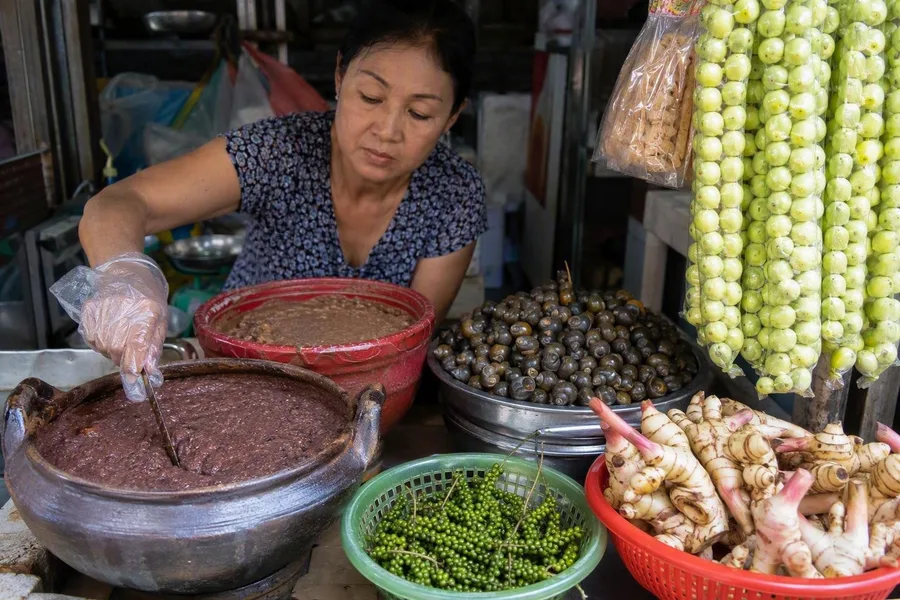 A vendor works beside fermented shrimp paste and river snails at Đông Ba Market in Huế.
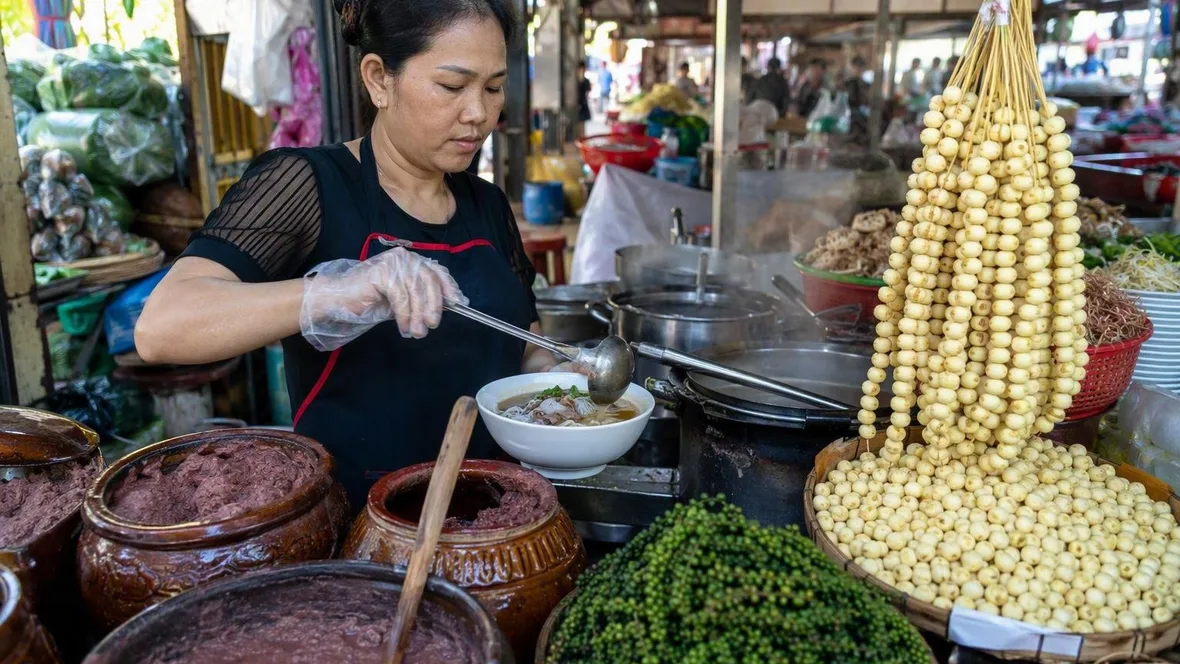
Scooters pass shoppers at Đông Ba Market. Vendors work beside pots of fermented shrimp paste, river snails and shells, knobbled galangal, green peppercorns and lotus seeds threaded on strings. Nearby stalls sell bánh nậm, sweet chè, crisp bánh khoái and bowls of bún bò Huế.
That noodle soup is Huế at its most direct. Cooks simmer beef and pork bones for the broth, then add lemongrass, fermented shrimp paste known as mắm ruốc, and chilli. Thick round rice noodles sit under sliced beef, often with pork trotter, blood and crab or pork sausage. Orange-red chilli oil and green herbs finish the bowl.
Bún bò Huế is hot, salty, fermented and substantial. Court food under the Nguyễn dynasty generally used little oil and avoided excessive sweetness or salt. The contrast matters: Huế’s food culture includes both a bowl built for an ordinary morning and a table arranged to show rank.
The Nguyễn court put food in order
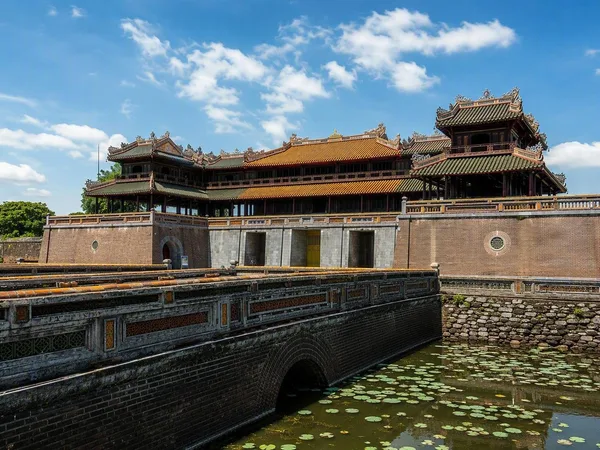
Nguyễn Phúc Ánh unified Vietnam in 1802, took the imperial name Gia Long, and made Huế his capital. Until 1945, the city served as the political, cultural and religious centre of Vietnam’s final royal dynasty. The court’s staff, rituals and supply chains made cooking organised palace work rather than the task of one celebrated cook.
Separate groups prepared daily food for the emperor, meals for palace women and dishes for banquets. At Thượng Thiện Sở, the facility that supplied the ruler and royal family, archaeologists found remains of cattle, buffalo, deer, pigs, birds, turtles, fish, shellfish and oysters. The palace used ingredients from land and water, but cost alone did not make a dish imperial.
Freshness and cleanliness mattered, as did a restrained balance of flavour. Staff followed rules for the order of courses, the serving time and the position of dishes on a tray. Labelled, closed baskets carried food until an order came to open them. Marked bowls and plates signalled rank. Small portions made room for many preparations without crowding the table.
A banquet could begin with light savoury bites, continue with meat, fish and soup, then end with sweet soups, confectionery and rare fruit. Nem công, or peacock spring roll, and chả phượng, phoenix paste, belonged to the eight precious delicacies served at major banquets. Cooks now usually use chicken, pork or prawns instead of the rare meats once associated with these dishes, while preserving the bird shapes and elaborate assembly.
Bánh phu thê, the husband-and-wife cake, carried another kind of ceremony. The cake came from northern Vietnam, reached Huế as an offering to the king, and later spread more widely. Its translucent tapioca skin holds mung bean, coconut and fine carrot strands. Woven coconut leaves form a square or five-sided box around the sweet. The wrapper and filling gave the cake a role in weddings and important royal ceremonies.
Rice, mussels and banana leaves
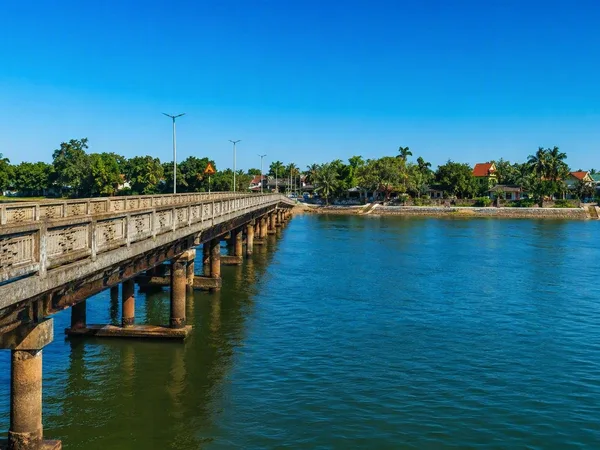
Most people in Huế do not eat phoenix-shaped paste for lunch. Cơm hến grew from leftover rice and the gathering of tiny freshwater mussels from the Perfume River. Cồn Hến, an island in that river, remains its traditional home.
Cooks boil the mussels for broth, wash and season them, and combine them with rice, herbs, sliced banana flower and star fruit. Peanuts and crisp pork rind provide crunch. Chilli and mắm ruốc bring a sharp fermented edge. At the table, diners mix cool rice, warm broth, shellfish and crisp toppings in the same bowl.
Huế’s small rice cakes show another side of the city’s cooking. Artisans in Đức Bưu have made bánh bèo, bánh nậm and bánh lọc by hand since the early nineteenth century. Today, the trio appears at pavement stalls, simple eating houses and restaurants.
Bánh bèo arrives in tiny bowls. Each soft steamed rice cake holds dried shrimp, crisp pork fat and spring-onion oil, with warm fish sauce loosened by shrimp cooking liquid. A full tray turns modest ingredients into a series of separate, finished bites.
Bánh nậm is flatter and softer. Cooks spread rice dough with shrimp filling, fold it in banana leaf and steam the parcel; when the leaf opens, orange shrimp marks the pale dough. Bánh lọc has a springier bite: translucent cassava dough wraps shrimp and pork, while banana leaf holds its warmth and scent until serving. Sweeter fish sauce with red chilli commonly accompanies bánh nậm; bánh lọc comes with a saltier sauce sharpened by green chilli.
Other everyday dishes depend on fire and quick assembly. For nem lụi, cooks mould seasoned pork around lemongrass and grill it over charcoal. The meat is eaten with rice paper, herbs, green banana, pineapple and chilli, then dipped in sauce. Bánh khoái encloses prawns, pork, quail egg and bean sprouts in a small, thick rice-flour pancake coloured with turmeric.
Restaurants stage a royal style
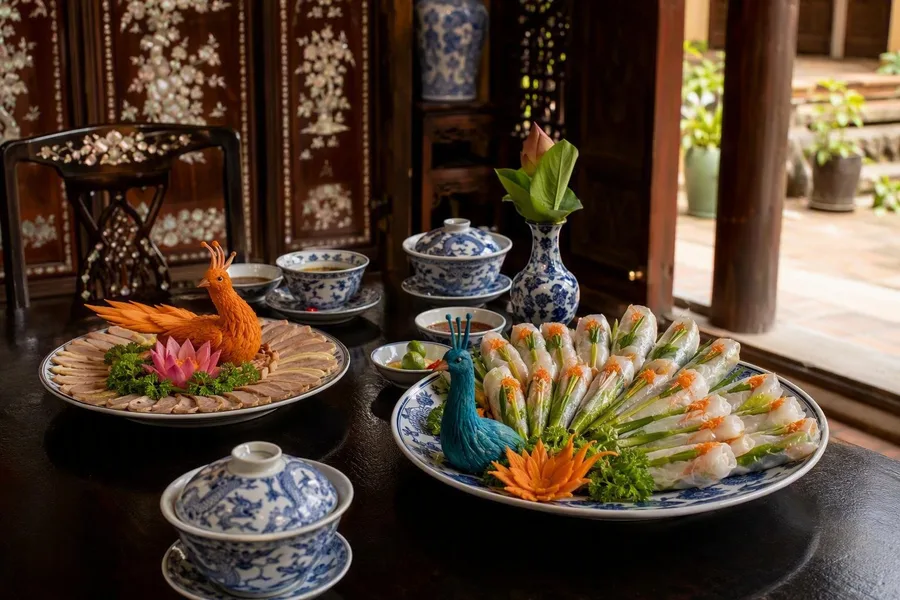 Peacock-shaped spring rolls and phoenix-shaped pork are served at Y Thảo Garden in Huế.
Huế’s royal restaurant meals preserve a manner of serving rather than an intact palace recipe book. Official Nguyễn chronicles did not record cooking instructions, so current menus reconstruct small portions, symbolic forms, ordered courses and precise presentation.
Y Thảo Garden serves a set menu in a traditional Huế compound inside the Imperial City. Peacock-shaped spring rolls and phoenix-shaped pork precede crab, bánh khoái, banana-flower salad, boned duck, lotus rice and sweet lotus-seed soup. Nguyễn porcelain and mirrored panels place the meal among objects associated with the former court.
Ancient Huế makes the theatrical side plain. Its eight-course menu can include royal clothing, court music, carved wood and mother-of-pearl decoration. The menu includes a phoenix starter, spring rolls on a dragon boat and grilled duck with ginger fish sauce. The same restaurant also serves Huế family dishes: fried river mussels, chicken and lotus-seed soup, and fish cooked in banana leaf. A royal set menu and a family meal therefore share a city but not the same purpose.
For everyday food, morning stalls and small quán around Đông Ba, Vỹ Dạ and the southern bank of the Perfume River serve bún bò, cơm hến and mixed plates of rice cakes. Royal menus at Y Thảo Garden and Ancient Huế focus on ceremony and presentation; check current menus and reservations directly with the restaurants.
At a market table, bánh lọc needs neither costume nor court music. Fingers open the banana leaf. The glossy translucent cake holds the curve of a prawn, with green-chilli fish sauce beside it.
Keep exploring