
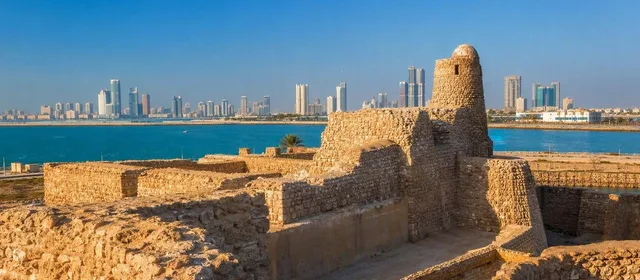
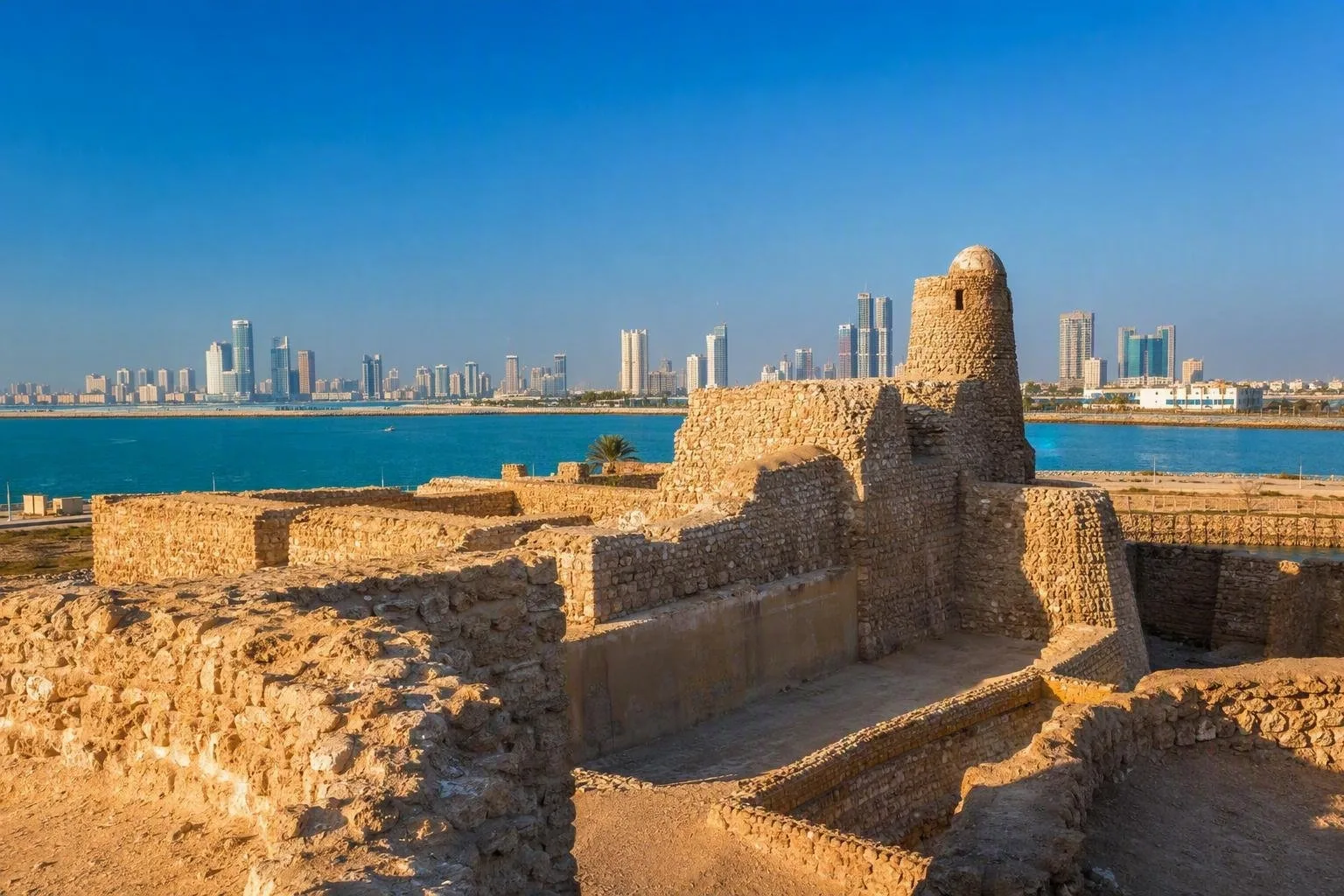
Bahrain packs more than 4,000 years of Gulf trade into a small group of islands. At Qal’at al-Bahrain, stone ramparts rise from an archaeological mound once used by Dilmun traders and later rulers. Across the bay, Manama’s office towers and apartment blocks stand along the coast. Formula One brings many visitors to the island, but fishing fleets, merchants and pearl divers shaped its towns long before oil began flowing in 1932. Muharraq shows that earlier wealth in close detail. Pearl merchants built houses around shaded courtyards, with carved plaster walls, teak doors and wind-catching features. The UNESCO-listed Pearling Path links those homes with former shops and the shoreline where diving boats left for the Gulf.
Manama has a different pace. At Bab Al Bahrain and the adjoining souq, traders sell saffron, incense, fabric and gold beside small cafés and phone shops. Order machboos, a spiced rice dish served with fish or meat, then finish with sweet tea and halwa. The food reflects the trade links that connected Bahrain with Arabia, Persia, India and East Africa.
Drive south from the capital and the dense streets give way to gravel plains, oil installations and low hills. Near Jebel Dukhan, the Tree of Life stands alone in the dry interior. In A’ali, potters shape clay beside fields of ancient burial mounds. Bahrain’s scale makes it possible to move from an old merchant quarter to an archaeological site or a busy waterfront in a single day. Take time for the markets, the old houses and a long meal, and Bahrain starts to show its character.


