
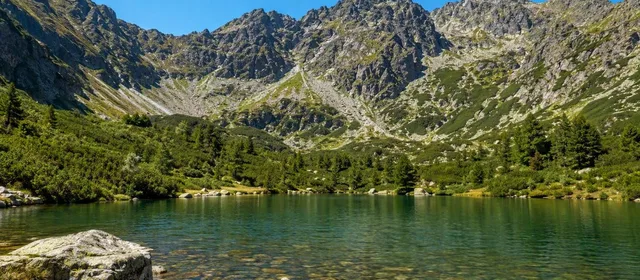
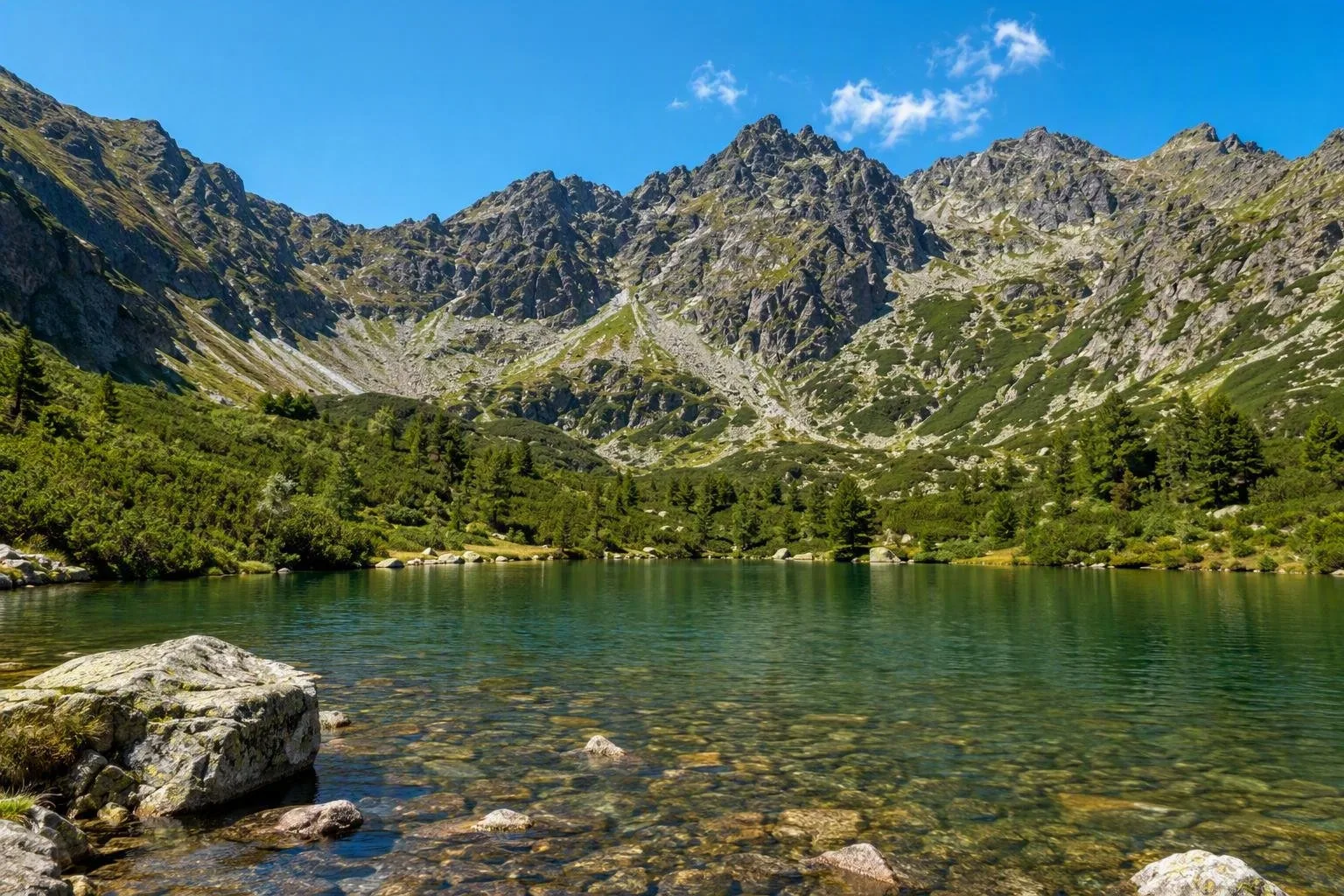
Look beyond Bratislava and Slovakia quickly turns from Danube streets to steep mountain country. In the capital, baroque lanes run below the castle hill, while the UFO bridge and Petržalka’s tower blocks stand across the river. A few hours northeast, paths in the High Tatras pass through pine forest and climb towards clear lakes and granite peaks. Compact distances put cities, castles and national parks close together, but each region keeps its own shape and history.
Banská Štiavnica rises through the Štiavnica Mountains, where steep streets, old mine workings and man-made reservoirs recall centuries of silver mining. East of there, Spiš Castle covers a limestone ridge above fields and villages. Levoča, nearby, retains its walls, square and the tall wooden altar carved by Master Paul. In the northeast, timber churches stand in villages where Latin and Byzantine Christian traditions have long met.
At the table, potato dumplings with bryndza sheep’s cheese sit beside soups, cabbage, mushrooms and poppy-seed pastries. Vineyards line slopes in the warmer south, and Slovakia’s small Tokaj area shares a wine-making tradition with neighbouring Hungary. Take time for a regional train, a village walk or a long lunch after the mountains. Slovakia suits travellers who like to move slowly between places with plenty to see.


