City · Slovakia
Bratislava
Bratislava is Slovakia’s capital on the Danube, where a compact medieval core sits below a castle hill and faces modern riverfront districts. Its streets carry the legacy of a former Hungarian coronation city alongside galleries, wine culture and striking post-war architecture.
Get oriented
Bratislava lies in southwest Slovakia on the Danube, close to the Austrian and Hungarian borders. The historic centre, Staré Mesto, is compact: its lanes, squares and major monuments are best handled on foot. Use the river as your south-side reference; the castle stands on the hill immediately west of the old town, while the SNP Bridge crosses to Petržalka.
Start around Main Square. The Old Town Hall holds the city museum, and the nearby Primate’s Palace contains the Hall of Mirrors, where the Peace of Pressburg was signed in 1805. Michael’s Gate is the sole surviving gate of the medieval walls; its tower gives a useful rooftop read of the old town’s layout.
Castle and coronation city
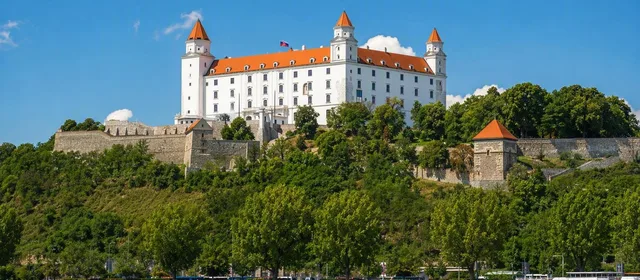
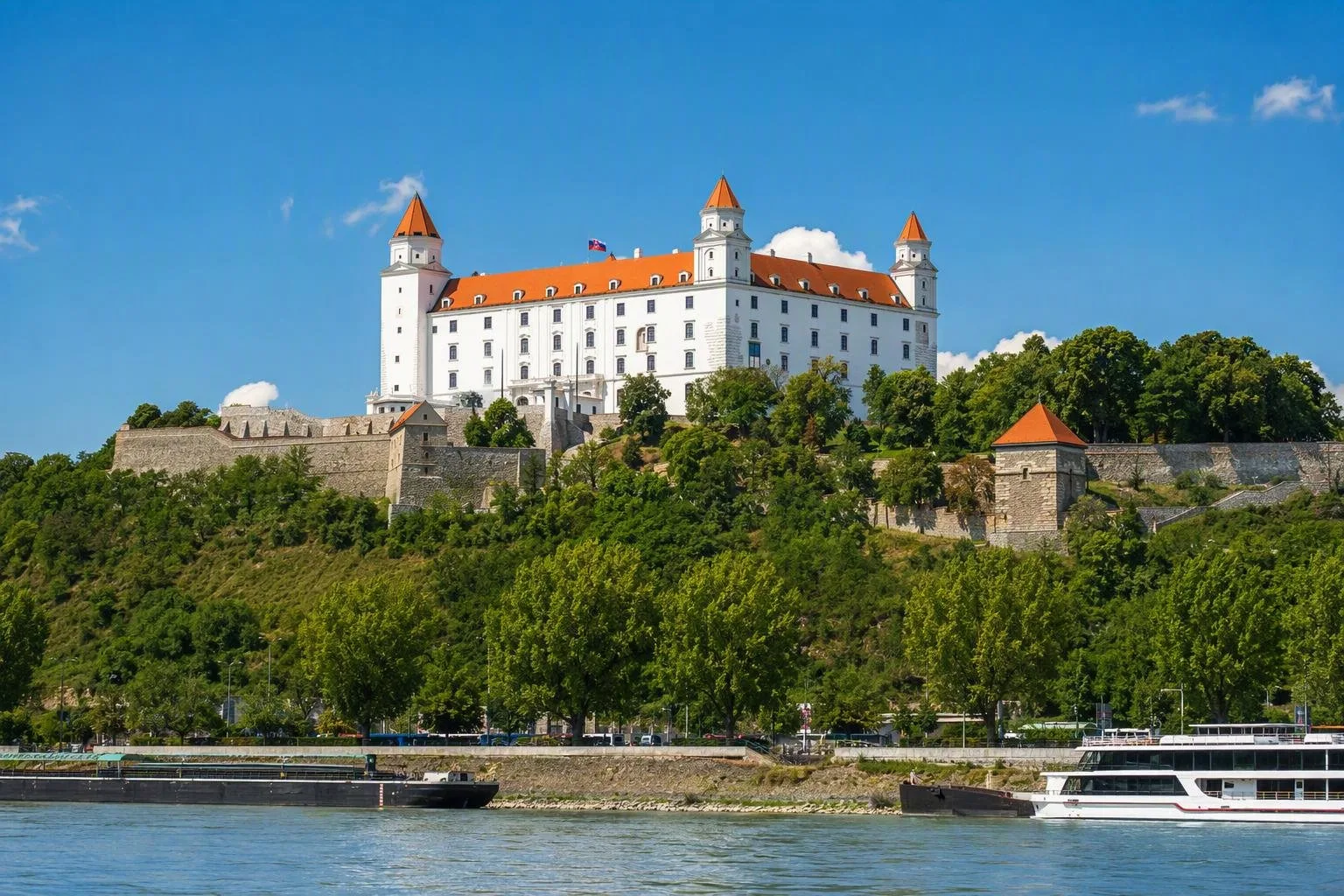
Bratislava Castle is the city’s defining silhouette: a white, four-towered palace on a hill above the Danube. The site has deep archaeological roots, while the present form reflects successive Gothic, Renaissance and Baroque rebuilding. Its museum interiors, terraces and restored Baroque garden justify the uphill walk; the grounds also give a clear view across the river and over the city.
Below the castle, St Martin’s Cathedral explains Bratislava’s historic weight. It was the coronation church of the Kingdom of Hungary from 1563 to 1830. Look up at the tower for the gilded replica of the Hungarian crown. Pair the cathedral with the castle: the two sites make the city’s former political role immediately legible.
The Danube and modern landmarks
Walk the embankment from the old town toward the Slovak National Gallery. Its renewed riverside complex combines Baroque, neo-Renaissance, 1970s and contemporary architecture; the elevated Bridge addition is impossible to miss.
At the SNP Bridge, the saucer-shaped UFO observation deck sits atop the pylon. It offers a high, wide-angle reading of the Danube, castle hill and Petržalka. For a ground-level alternative, cross the Old Bridge, reserved for trams, walkers and cyclists, then return along the south-bank parkland.
Art, wine and neighbourhoods
The Slovak National Gallery is the main stop for Slovak and European art, with long-term displays ranging from sacred art to twentieth-century modernism. For a smaller historical focus, the City Museum’s sites include the Old Town Hall and Michael’s Tower.
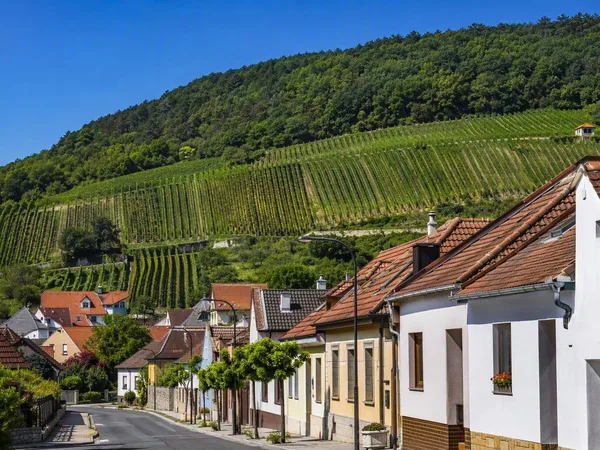
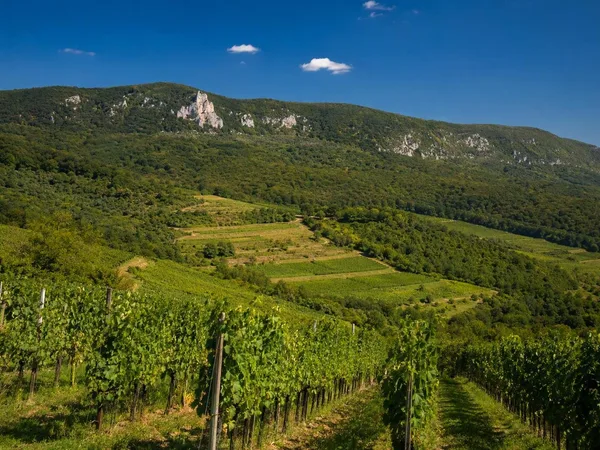
Wine is not only a regional day trip: Rača, in Bratislava’s northeast, retains vineyards and cellars among residential streets. Seek out Račianska frankovka, a local Frankovka modrá/Blaufränkisch wine. The Museum of Viticulture in the old town is a practical introduction before heading out to the district.
Arriving and moving around
Bratislava Airport is linked to the main railway station by bus 61; from the station, the old town is about a 15-minute walk. The city also has rail links with Vienna, Prague, Budapest and other Slovak cities. Vienna Airport has direct coach connections to Bratislava.
For the centre, walk. Use trams, buses and trolleybuses for Rača, Petržalka, the railway station and outer districts. Validate paper public-transport tickets when boarding. Bratislava Castle is a short but steep climb from the centre; allow time for it rather than treating it as a quick detour.
From the magazine
Stories about Bratislava
Editorial stories linked directly to Bratislava.
No stories about Bratislava have been published yet.
Routes from our editors
Travel through Bratislava
Editorial routes connecting Bratislava with other countries, cities and hotspots.
No routes through Bratislava have been published yet.
More in Slovakia
Related hotspots
Other cities, nature areas and places within Slovakia.