Ireland

Atlantic cliffs, lively streets and deep-rooted traditions

Ireland

Ireland pairs a rugged western coast with compact cities shaped by literature, music and centuries of migration.

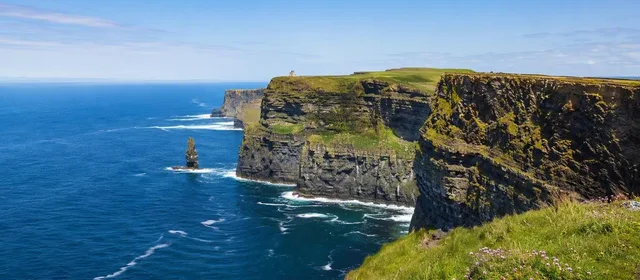
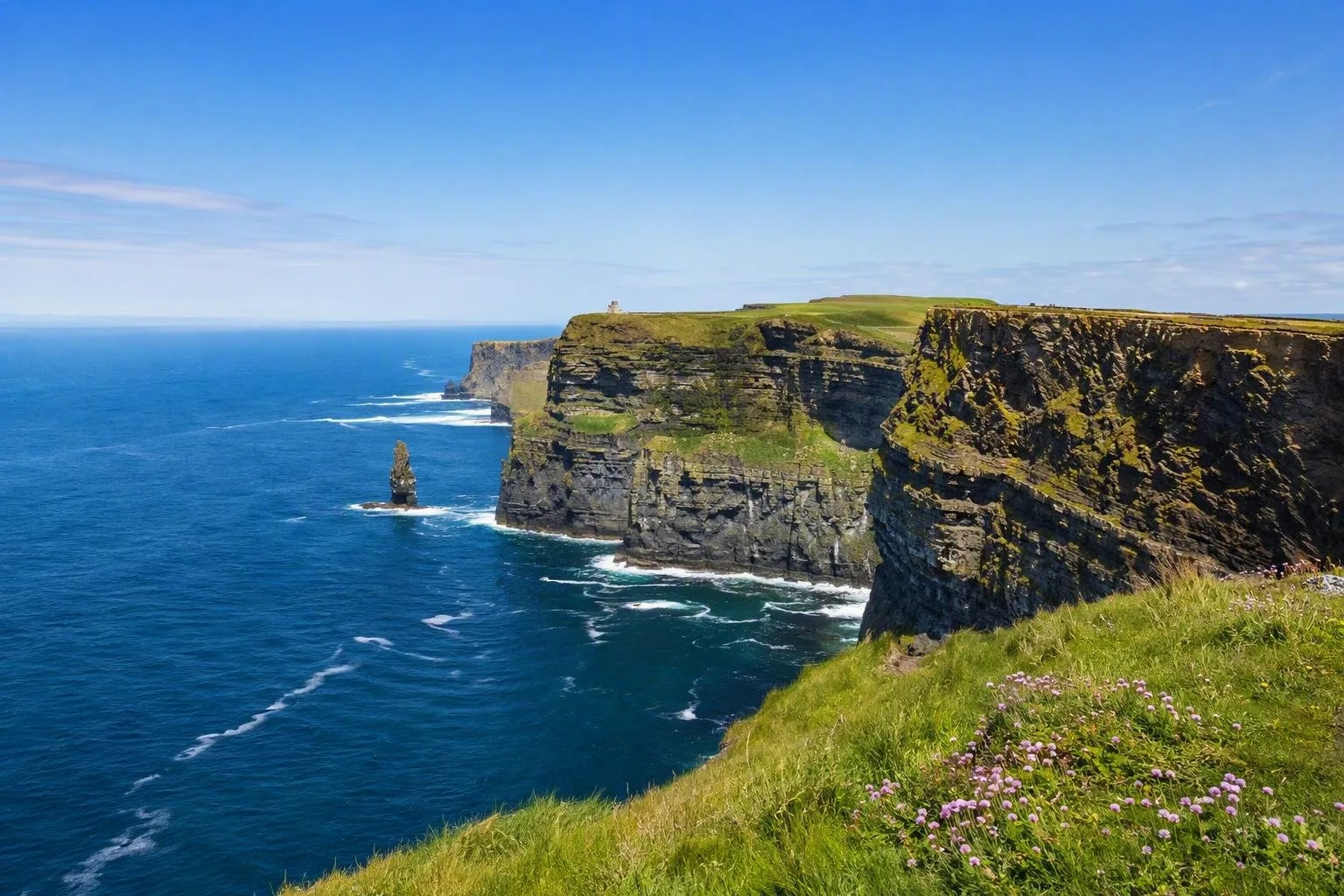
Ireland is far more than green fields and pub fronts. On the west coast, Atlantic waves break below the grass-topped Cliffs of Moher, stone walls cross small farms, and boats lie in sheltered harbours. Dublin offers a sharp contrast: Georgian terraces stand near the former docklands, while bookshops, theatres and packed pubs fill the streets around the River Liffey. James Joyce and Sally Rooney both wrote from this city, but music, Gaelic games and everyday talk give it its particular energy. The country’s past appears in plain sight. Famine memorials stand in Dublin and Cork, old workhouses remain in small towns, and names on streets and signs recall the struggle for independence. Irish families also carry the history of emigration through relatives in Britain, North America and Australia.

County Clare shows several sides of Ireland within a short drive. The Burren’s cracked limestone holds wildflowers in spring, and musicians in Doolin often play traditional tunes around a table rather than on a raised stage. In Cork, traders at the English Market sell butter, smoked fish, farmhouse cheese and loaves still warm from the bakery.

Irish is heard daily in Gaeltacht areas such as Connemara and the Dingle Peninsula, although English is the language most people use across the country. At Newgrange, visitors enter a passage tomb built before Stonehenge. Early Christian ruins stand beside lakes and on offshore islands. Take the smaller roads, stop in a market or a local pub, and leave time for places beyond Dublin. Ireland gives up its character gradually, in conversation, weather and the details of ordinary life.

When to go

Best time to travel

Monthly values are indicative average maximum temperatures for Dublin. Temperatures vary meaningfully between the milder coasts, inland areas, uplands, and the wetter west. Monthly values are indicative average maximum temperatures for Dublin. Temperatures vary meaningfully between the milder coasts, inland areas, uplands, and the wetter west.

jan8°C feb8°C mar10°C apr12°C may15°C jun18°C jul20°C aug20°C sep17°C oct14°C nov10°C dec9°C

Weather in the capital

Practical Ireland

On every country page we show the current weather for the capital.

Dublin
Morning16°Covercast
Afternoon19°Covercast
Evening20°Covercast
today20°C / 16°Chigh and low

Current forecast by Open-Meteo

Visa and entry requirements

Entry requirements vary by nationality, purpose of travel and length of stay. Check current guidance from the Department of Foreign Affairs and Trade before departure.

Getting around

Irish Rail links the main cities, and public and private coaches serve many towns. A car helps on rural coasts and in the countryside, though narrow local roads can make short distances take longer than expected.

Paying in Ireland

Cards are widely accepted, including for small purchases. Carry some cash for rural businesses, markets and older parking meters. Cities and larger towns have ATMs.

Where to stay

Ireland has city hotels and hostels, as well as rural guesthouses, self-catering cottages and farm stays. Book early for festivals, public holidays and major sporting events.

Before you leave

Worth knowing

A practical starting point for your trip. Check current conditions and local information before you leave.

01

Official languages

Irish and English are official languages. English is the everyday language for most people, while Irish is more widely spoken in Gaeltacht districts and appears on public signs.

02

Calling code

Ireland’s international calling code is +353. Drop the initial 0 from an Irish area or mobile code when calling from abroad.

03

Driving side

Traffic drives on the left. Most cars have the steering wheel on the right.

04

Road measurements

Road distances and speed limits use kilometres. Speed-limit signs show kilometres per hour.

05

Public transport payment

A Leap Card works on many urban buses, trams and local trains. Some networks accept contactless bank cards, but not all do, so check with the operator.

06

Rail tickets

Irish Rail sells tickets online and at stations. Advance online fares can cost less, and booking ahead helps on busy intercity services.

07

Tipping

Tipping is common but not compulsory. Around 10% is usual for table service when no service charge is included. For taxis and casual service, rounding up is enough.

08

Ordering in pubs

In many traditional pubs, customers order and pay at the bar. Food-focused pubs may offer table service; staff will let you know.

09

Meal times

Lunch often runs from noon to 2pm. Dinner commonly begins around 6pm, though kitchens in smaller towns may close earlier than those in cities.

10

Shop hours

Many shops open from about 9am to 6pm, with later hours in cities. Sunday opening is common, but independent shops may keep shorter hours.

11

Mobile connectivity

Mobile coverage is usually strong in towns and on main roads, but it can weaken on remote coasts and in mountain areas. Cafés, hotels and public buildings often provide Wi-Fi.

12

Bilingual place names

Road signs often show Irish and English names. In Gaeltacht areas, signs may use only the Irish form, such as An Daingean for Dingle.

Cities and hotspots

Places worth saving

From city to nature reserve: places with stories, facts and tips.