
Region · Ireland
Wild Atlantic Way
The Wild Atlantic Way is Ireland’s signed Atlantic coastal touring route, running for 2,500km from County Donegal’s Inishowen Peninsula to Kinsale in County Cork.
What this route is
The Wild Atlantic Way is a defined coastal touring route along Ireland’s west coast. It links long stretches of existing roads rather than forming one continuous new road, crossing nine counties and three provinces from Donegal to Cork.
It is too large to treat as a single drive. Use it as a framework for choosing a region, then build a trip around a few peninsula loops, towns, beaches, walks or islands.
How the route is marked
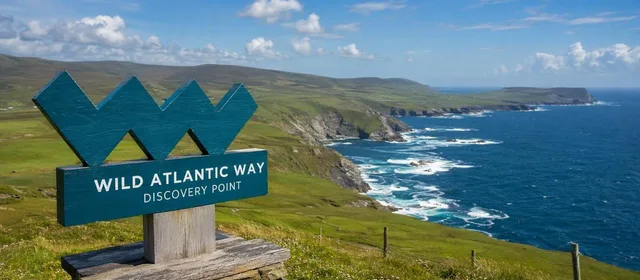
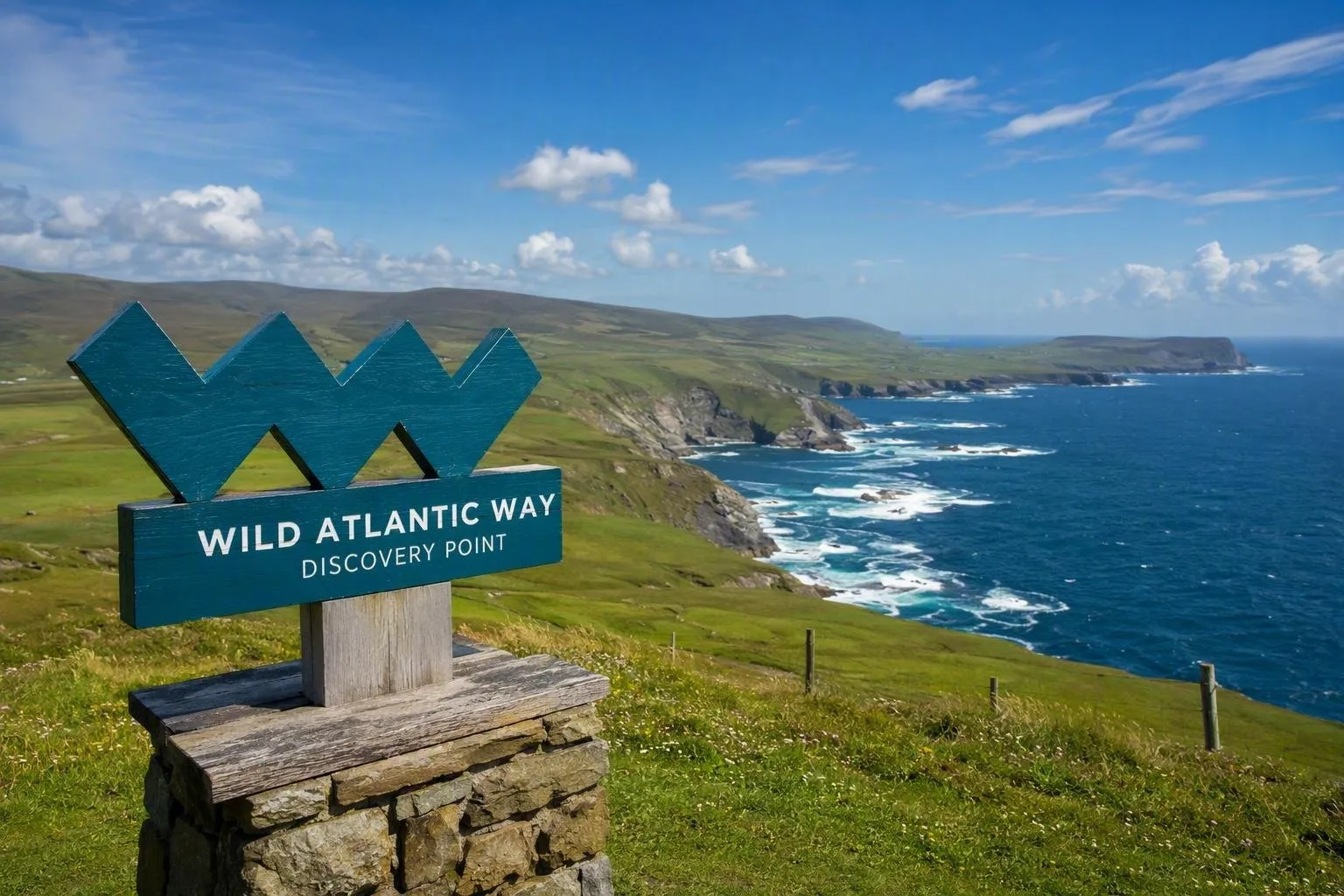
Look for the distinctive W-shaped Wild Atlantic Way signs. The route has 180 Discovery Points and 15 Signature Discovery Points, giving practical places to stop rather than simply following the coast without a plan.
The Signature Points provide a useful first shortlist. They range from Donegal headlands and Sliabh Liag’s sea cliffs to Connemara, the Burren, the Dingle Peninsula, the Skellig Islands and the Cork coast.
Choose a section, not the whole line
A productive itinerary usually concentrates on one or two neighbouring areas.
- Donegal and Sligo: headlands, beaches, sea cliffs and surf coast.
- Mayo and Galway: Clew Bay, Connemara, Killary Harbour and the Aran Islands.
- Clare and Kerry: the Burren, Cliffs of Moher, Dingle and the Skellig coast.
- Cork: Beara, islands, Mizen Head and the finish at Kinsale.
Build in time for detours. Peninsulas and coastal inlets make map distances look shorter than the driving day feels.
Getting around
A car is the most flexible way to cover the route, especially between rural viewpoints and trailheads. Ireland drives on the left. Cycling, walking, sailing and guided trips can work well for individual sections, but they are not substitutes for transport across the full 2,500km route.
For an island stop, treat the ferry or boat crossing as part of the day rather than an add-on. The route includes islands reached by ferry, while Dursey Island is accessed by cable car.
What to prioritise
The route’s strength is variety: sea cliffs, limestone pavement, beaches, mountain passes, harbours, islands and towns occur in quick succession. Pick one or two major landscapes per day and leave room for short walks and viewpoints.
For a clear visual thread, use the W signs and Discovery Points. They keep the journey anchored to the Wild Atlantic Way while allowing worthwhile diversions into national parks, coastal villages and offshore islands.
From the magazine
Stories about Wild Atlantic Way
Editorial stories linked directly to Wild Atlantic Way.
Routes from our editors
Travel through Wild Atlantic Way
Editorial routes connecting Wild Atlantic Way with other countries, cities and hotspots.
No routes through Wild Atlantic Way have been published yet.
More in Ireland
Related hotspots
Other cities, nature areas and places within Ireland.
There are no other hotspots in Ireland yet.