
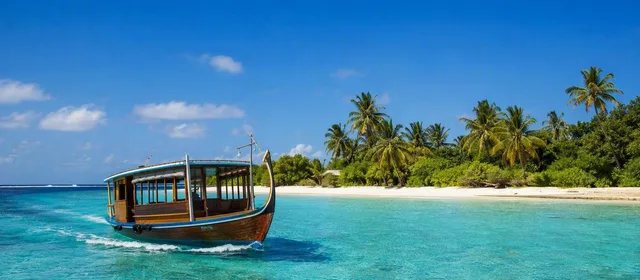
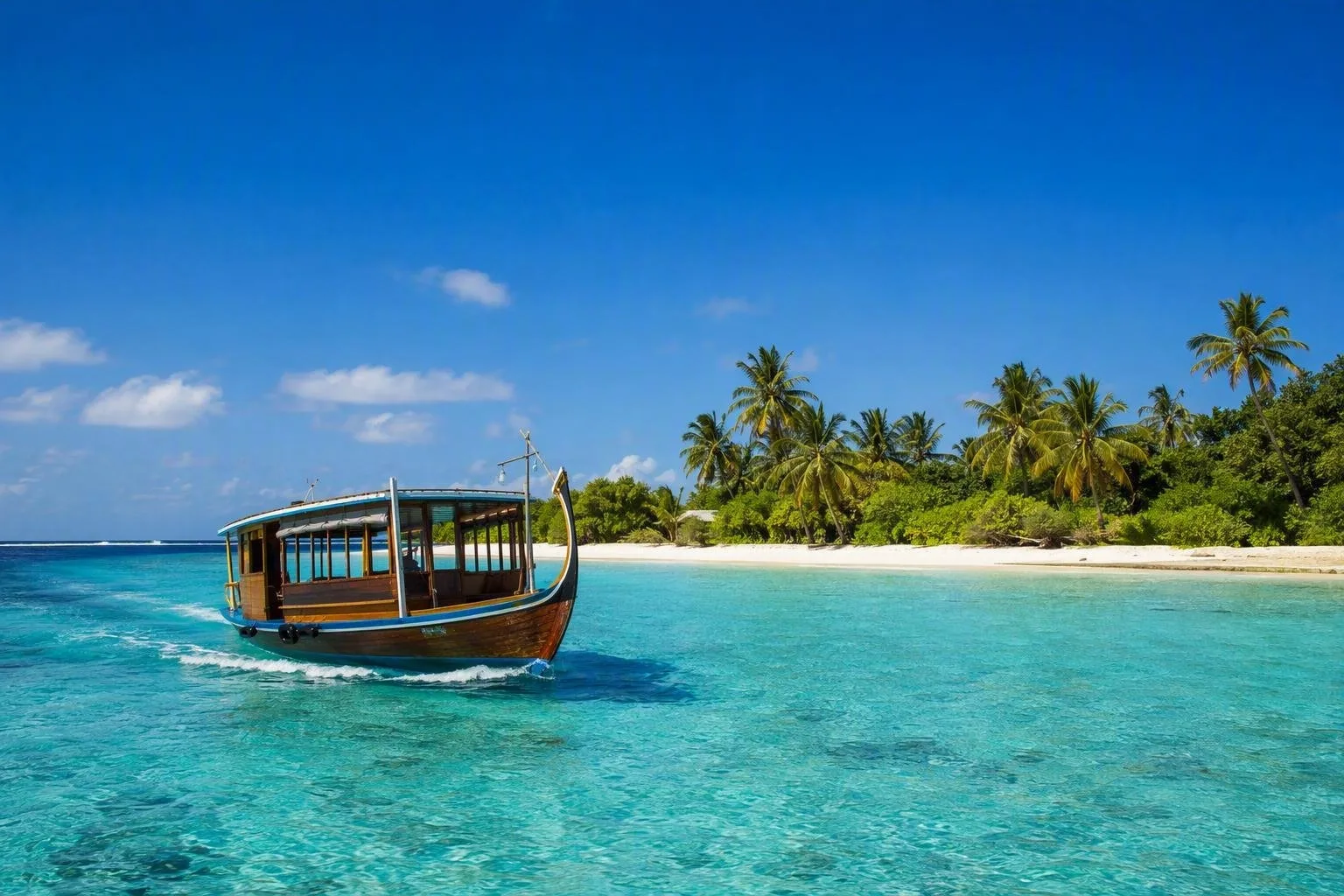
The Maldives has far more to show than private villas and pale sand. Its 26 natural atolls spread across a broad stretch of the Indian Ocean, while each island occupies a small piece of coral land. Reefs enclose shallow lagoons. Tuna boats cross the channels between them, and ferries link communities that have lived with the sea for centuries. Fishers bring in tuna, carpenters build wooden dhonis, and boats carry people, food and building materials between islands.
Malé gives the clearest view of how closely people live together here. Apartment blocks, mosques, market stalls and ferry jetties fill the compact capital. Across the water, Hulhumalé has wide roads and newer buildings on reclaimed land. On inhabited islands, boatyards repair dhonis, cafés sell fish rolls and coconut pastries, and guesthouses sit alongside family homes.
The reefs draw many visitors, but they also shape local work and travel. Baa Atoll includes a UNESCO biosphere reserve, and divers and snorkellers visit Ari Atoll for its channels and marine life. In the south, causeways join several islands in Addu Atoll, where remnants of a British military base stand among palms. Resorts are part of the Maldives, but so are fishing harbours, Friday mosques and local ferries. Take time on an inhabited island as well as a resort island, and the country comes into fuller view.


