City · Armenia
Yerevan
Yerevan is Armenia’s capital, spread across the Ararat Plain beside the Hrazdan River. Its compact centre combines pink-tuff civic architecture, Soviet planning, ancient Urartian archaeology and major Armenian cultural institutions.
Get your bearings
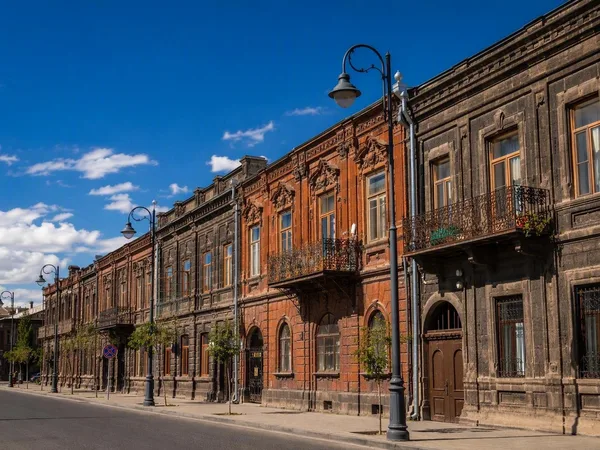
Yerevan’s walkable core runs from Republic Square through Northern Avenue to the Opera and the Cascade. Republic Square is the civic centre: government buildings, the History Museum and National Gallery frame a broad space built in pink and brown volcanic tuff. Start here to understand why the city is often called the Pink City.
The centre sits on rising ground. The Hrazdan River cuts a gorge west of the core, while the city spreads across the north-eastern Ararat Plain at roughly 900–1,200 metres above sea level. Views from higher ground can include Mount Ararat when conditions allow.
Walk the central axis
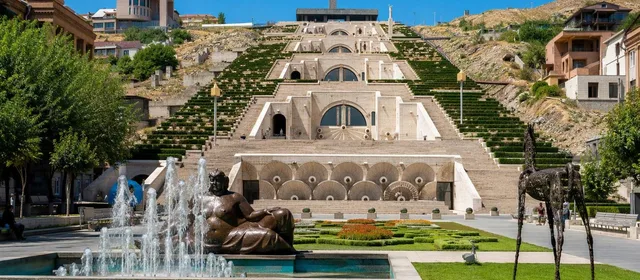
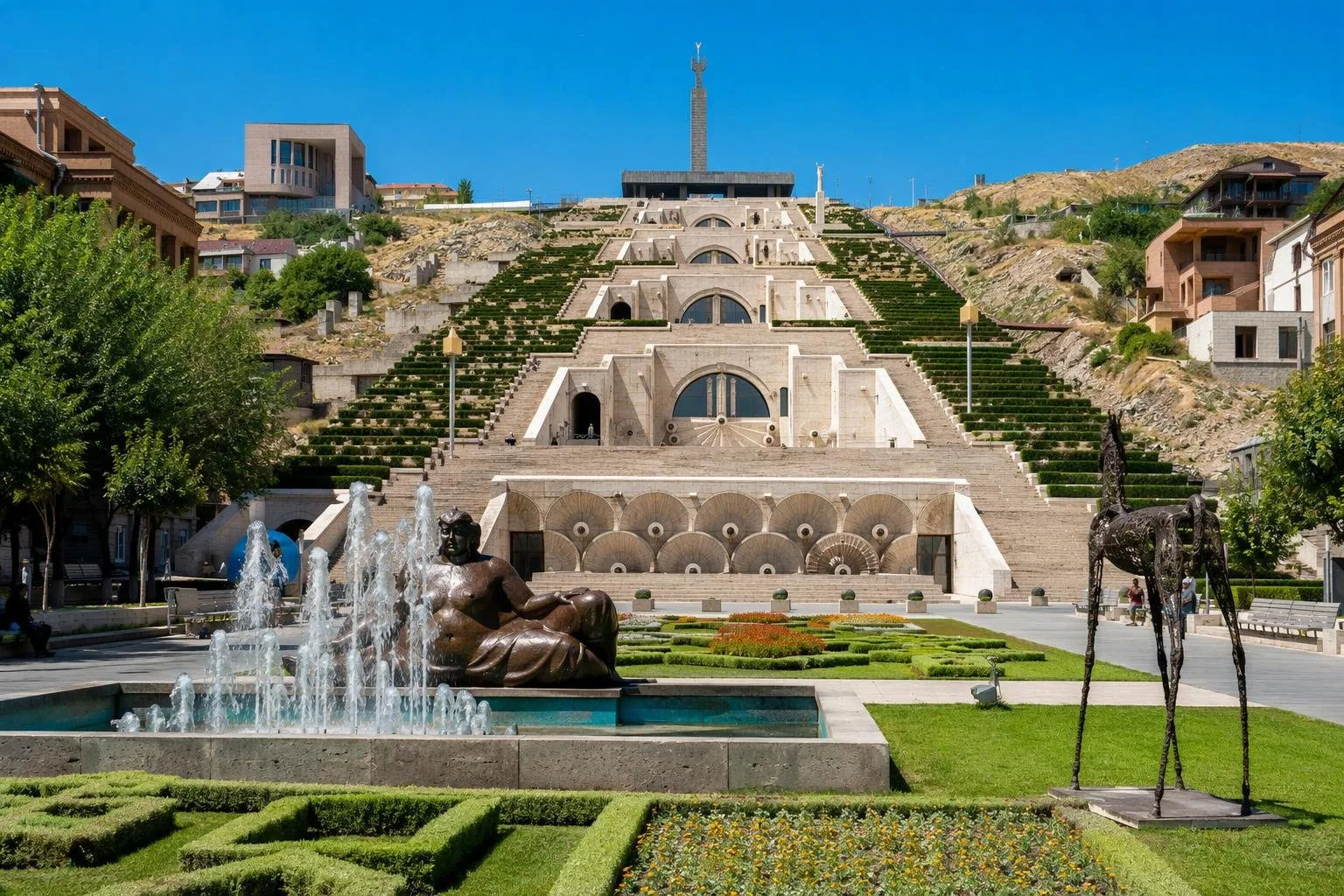
From Republic Square, take Abovyan Street or pedestrian Northern Avenue towards the Opera. The circular Opera and Ballet Theatre anchors a zone of parks, cafés and public space. Continue north-west to the Cascade Complex, a monumental stairway with fountains, outdoor sculpture and a city-facing ascent. It has 572 steps; escalators inside the Cafesjian Center for the Arts offer an alternative route upward.
At the upper end, Victory Park and the Mother Armenia monument continue the climb. The Cascade is the clearest place to read Yerevan’s 20th-century plan: architect Alexander Tamanyan shaped the modern city plan around formal avenues, stone facades and rising viewpoints.
Start with Erebuni
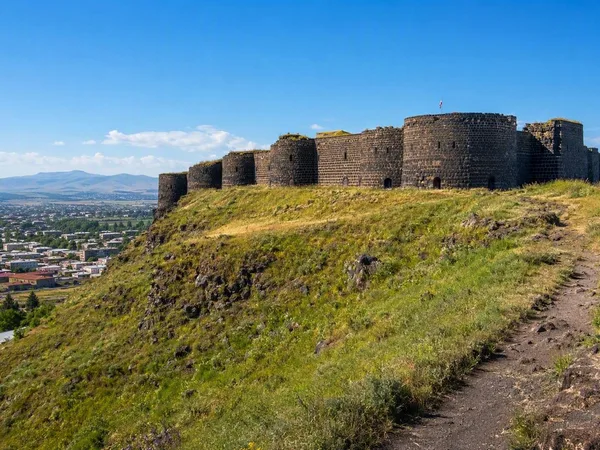
Yerevan’s recorded history begins at Erebuni, the Urartian fortress founded by King Argishti I in 782 BC. On Arin Berd hill in the south-east of the city, the archaeological reserve preserves fortress walls, palace and temple remains, plus the place where the foundation inscription was discovered. That cuneiform text gives the city its unusually precise founding date; the name Yerevan developed from Erebuni.
The Erebuni Museum at the foot of the hill displays finds from Erebuni, Shengavit and Teishebaini. Pair it with the History Museum on Republic Square for a useful sweep from prehistoric settlement to modern Armenia.
Manuscripts, art and memory
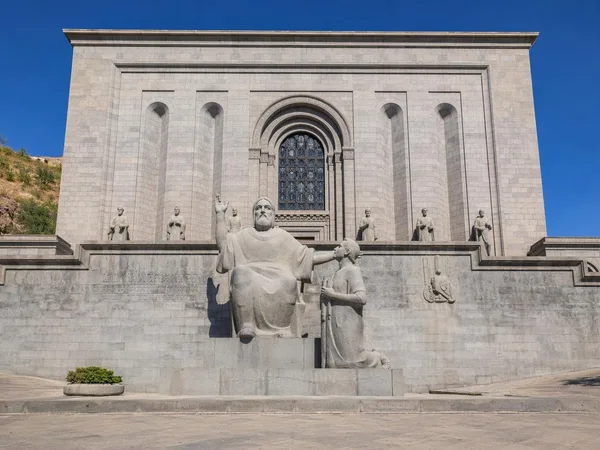
North of the Cascade, the basalt-faced Matenadaran is both a manuscript museum and research institute. Its collection includes Armenian manuscripts alongside texts in several other languages; allow time for the permanent displays rather than treating it as a quick photo stop.
For modern and contemporary art, use the Cafesjian spaces at the Cascade and the National Gallery. The Armenian Genocide Memorial and Museum at Tsitsernakaberd addresses a defining and difficult part of Armenian history. Give it dedicated time and approach it as a memorial, not a casual add-on.
Moving around and eating
The central sights work well on foot, but distances expand quickly beyond the core. The metro, buses and taxis connect key areas; taxis are particularly useful for Erebuni and Tsitsernakaberd. Use the Cascade escalators if the uphill walk is not practical.
For food, look for tolma, harissa, ghapama and lavash. Saryan Street is a useful address for Armenian wine bars, while the streets around the Opera and Republic Square offer the greatest concentration of cafés and restaurants.
From the magazine
Stories about Yerevan
Editorial stories linked directly to Yerevan.
No stories about Yerevan have been published yet.
Routes from our editors
Travel through Yerevan
Editorial routes connecting Yerevan with other countries, cities and hotspots.
No routes through Yerevan have been published yet.
More in Armenia
Related hotspots
Other cities, nature areas and places within Armenia.