City · Armenia
Gyumri
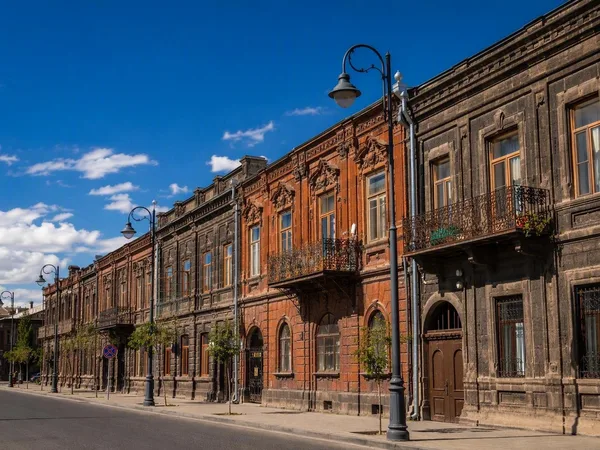
Gyumri is Armenia’s second-largest city and the centre of Shirak Province in the country’s northwest. Its draw is Kumayri, a historic quarter of black and red tuff-stone houses, churches and small museums.
Orientation
Gyumri sits on the high Shirak Plateau, about 120–125 km north of Yerevan. It is a compact city for a one- or two-night stay, but its streets require more time than a quick monument circuit. The 1988 Spitak earthquake reshaped the city; reconstruction and damaged fabric remain part of the urban landscape.
Base yourself around Vardanants Square or the Kumayri Historic District. The square is the practical centre, with the Cathedral of the Holy Mother of God on its north side and Holy Saviour Church to the south.
Walk Kumayri
Kumayri is Gyumri’s historic core, shaped largely in the 19th century when the city was known as Alexandropol. Look for black and red tuff masonry, carved entrances, wooden balconies and enclosed courtyards.
- Abovyan Street and side lanes: the best place for a slow architectural walk.
- Dzitoghtsyan Museum of National Architecture and Urban Life: a 19th-century merchant house with period interiors and material on urban life.
- Aslamazyan Sisters Gallery: paintings, ceramics and graphics by Mariam and Eranuhi Aslamazyan in a historic residence near the square.
This is a lived-in district, not an open-air museum. Do not enter private courtyards or photograph residents without permission. Cobblestones and uneven paving make sturdy shoes useful.
Churches and the fortress
Holy Saviour Church was severely damaged in 1988 and has been rebuilt in stages; its stone exterior anchors the south side of Vardanants Square. The Cathedral of the Holy Mother of God, also called Yot Verk or Seven Wounds, stands opposite. Dress modestly and keep voices low inside active churches.
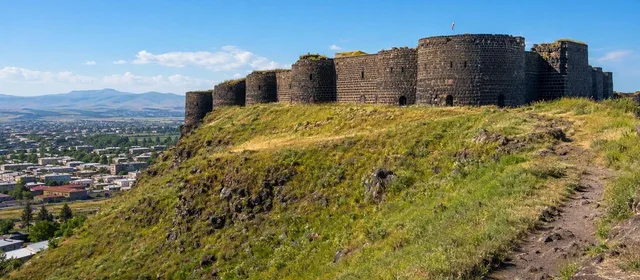
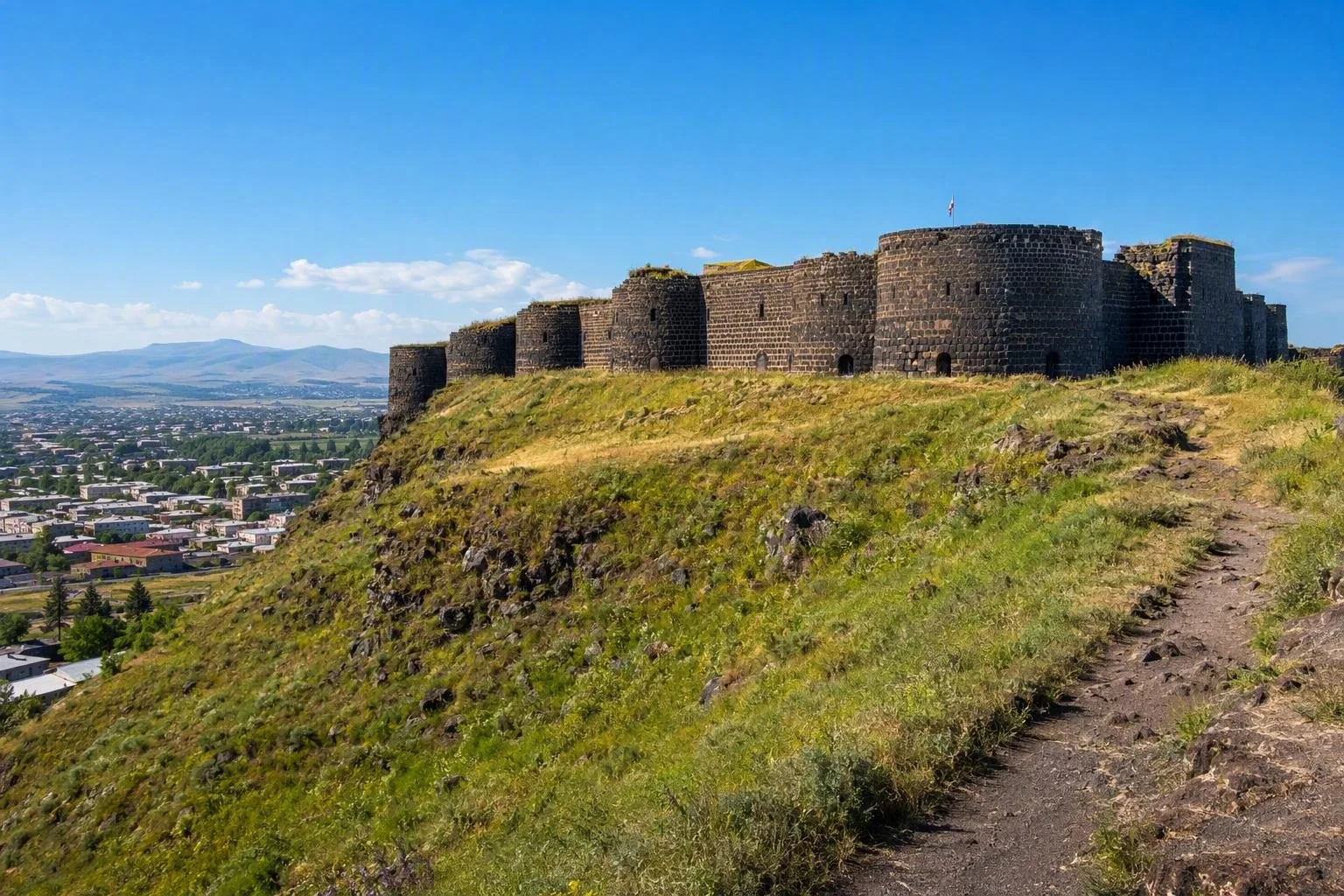
For the city’s broadest outlook, take a taxi or make the uphill walk to Sev Berd, the Black Fortress. This circular Russian imperial fortification was built in dark volcanic tuff in the 1830s and 1840s. Its exterior is a worthwhile stop even when the interior is unavailable: the building also functions as an event venue, so access can change. Keep off walls, closed sections and service areas.
Getting there and around
From Yerevan, the M1 road journey takes roughly two hours. Train and marshrutka connections also link the two cities; train frequency is limited, so time your return before committing to a day trip. Gyumri railway station is east of the historic centre.
Shirak International Airport is about 5 km southeast of the city. Taxis and buses serve the airport. Within central Gyumri, walk; use a taxi for the fortress, airport or outer districts.
When to go
Late spring and early autumn are best for walking. Summer days can be warm, but the city’s elevation keeps evenings cooler than Yerevan. Winters are cold and snowy; allow extra time for slippery streets and exposed viewpoints. Bring a windproof layer in every season.
From the magazine
Stories about Gyumri
Editorial stories linked directly to Gyumri.
Routes from our editors
Travel through Gyumri
Editorial routes connecting Gyumri with other countries, cities and hotspots.
No routes through Gyumri have been published yet.
More in Armenia
Related hotspots
Other cities, nature areas and places within Armenia.