When Coruche’s Cork Oaks Turn Red
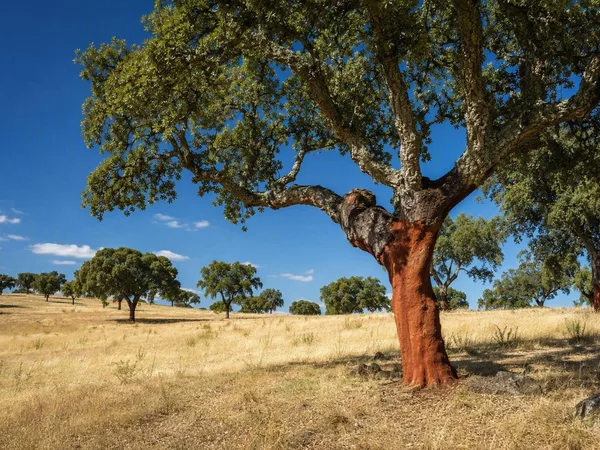
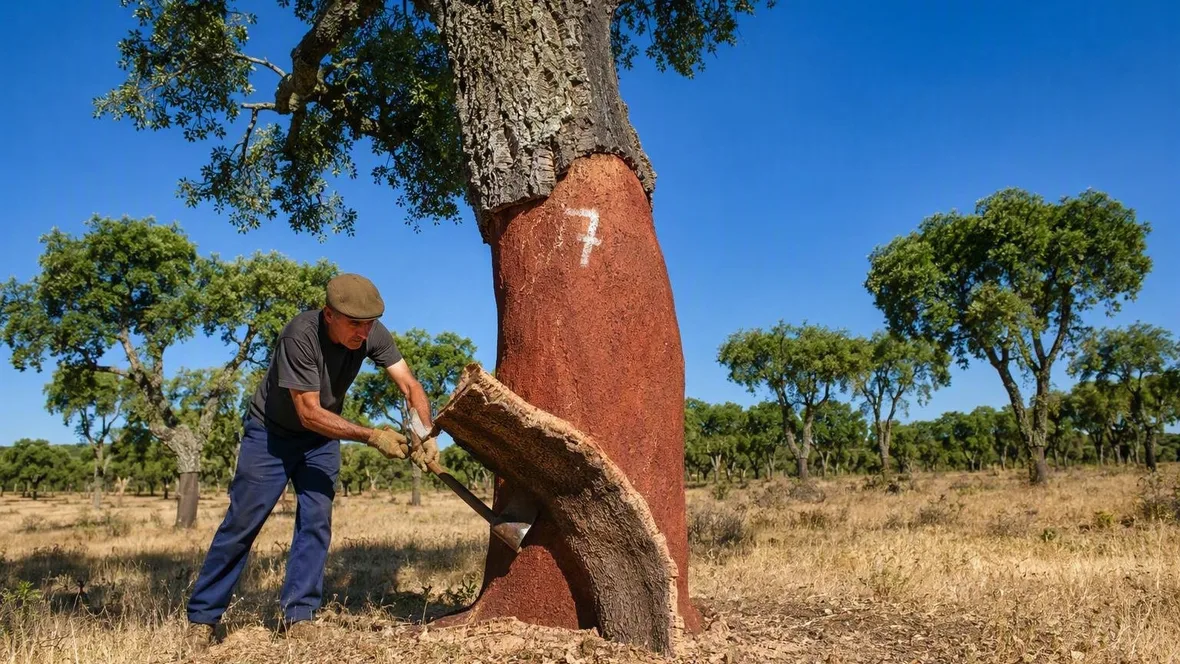
Freshly stripped cork oaks stand out at once: their exposed trunks are red-brown, with a white number painted across the new surface. Around Coruche, that colour marks a summer harvest built on sharp judgement, careful hands and nine years of waiting.
A summer cut on living trees
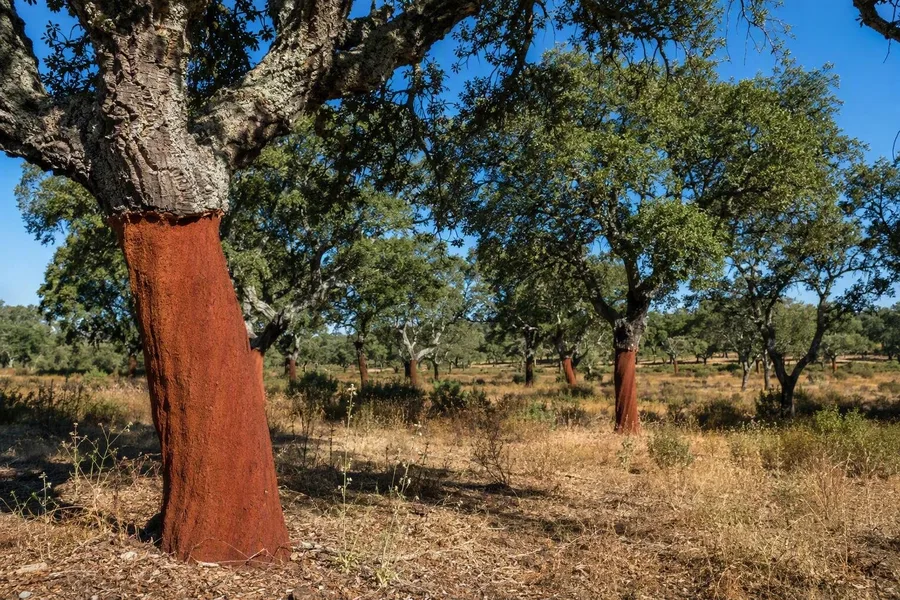 Cork oaks stand above dry grass and scrub on Coruche’s drier ground.
Cork harvesting around Coruche usually begins between mid-May and early June and continues into August. Workers remove bark only while active growth allows it to separate cleanly from the layer beneath. Rain, wind or a tree without enough moisture can halt the work.
The tree remains rooted and alive. Harvesters, known as tiradores, take only the outer bark and leave the living tissue beneath intact so another cork layer can grow. They cannot return to the same tree for at least nine years.
A painted number keeps that calendar visible. Workers mark the exposed trunk with the final digit of the harvest year, so a white 5 identifies cork removed in a year ending in five. The mark shows which trees must remain untouched and when a new harvest may be due.
The newly exposed surface is reddish at first, then darkens to brown as bark regenerates. In summer, these warm-toned trunks stand below broad green crowns and above the dry herb layer of the montado.
The axe must stop at the right depth
The main tool looks simple. A machada corticeira has a steel axe head and a lightly curved wooden handle ending in a wedge. The blade opens the bark. The handle then works as a lever. Crews use light cork ladders for higher sections and may carry a separate wooden lever.
Skill begins before the first full cut. A tirador studies the trunk, the old harvest boundary and natural cracks in the cork, then tests how readily the bark separates. A hollow, tearing sound from the axe indicates that the cork is giving cleanly. A short, dry note signals resistance, and forcing the bark at that point can damage the living layer and reduce a later harvest.
The worker makes a controlled vertical incision along a deep crack, followed by a horizontal cut that defines the cork plate. Both cuts must pass through the cork without biting into the tissue below. Harvesters learn that control largely through practice and from experienced colleagues, often across generations.
Next, the tirador turns the blade or inserts the wedge-shaped handle behind the plate. Small levering movements release the cork before the worker removes it by hand. A large, unbroken sheet is useful, but never at the cost of tearing the tree.
Clean work leaves an even upper boundary, little loose material around the base and no deep axe marks or ripped tissue on the exposed trunk. The difference is plain but exacting: the worker has eased the cork away rather than hacked it off.
Between the Sorraia and the dry uplands
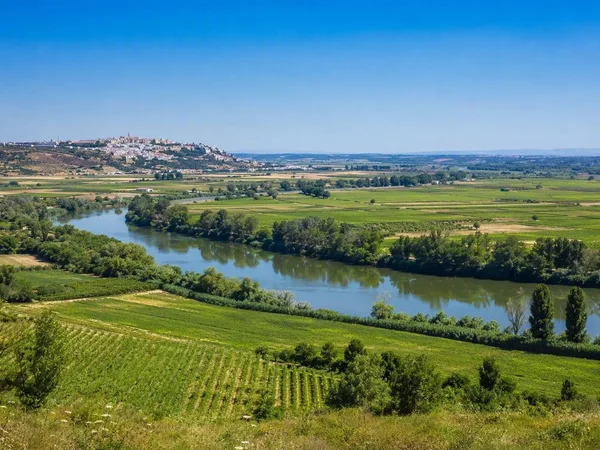
Coruche lies at the southern edge of Ribatejo, close to Alentejo. The Sorraia feeds a fertile lezíria used for irrigated agriculture, while drier ground supports cork oaks, stone pines and open pasture. About half of the municipality is forested, providing a large connected base for the local cork trade.
The montado is not a dense cork plantation. Widely spaced evergreen oaks spread broad crowns above annual grasses, herbs and patches of scrub. Farmers and land managers have maintained this pattern for centuries, combining cork production with grazing and products such as honey and firewood.
Coruche’s importance rests on that acreage and the work attached to it. The municipality accounts for about 8% of Portugal’s cork harvest, while local businesses connect estates with trade and processing. Portugal has entered the hand harvest in its national inventory of intangible cultural heritage because workers remove a useful material from a living tree without compromising its vitality.
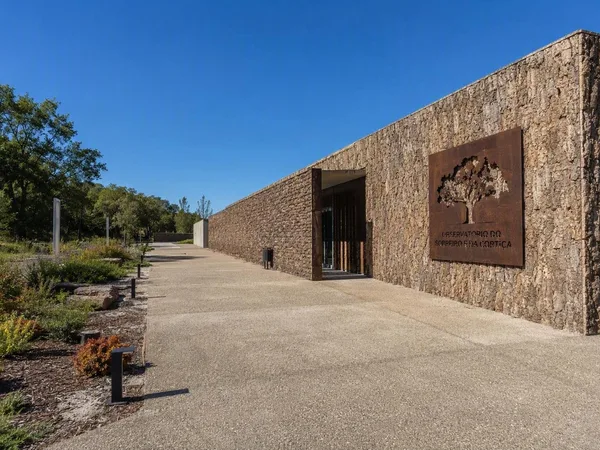
The town also supports training and technical work. The cork-clad Observatório do Sobreiro e da Cortiça contains laboratories, workshops, documentation and professional education linked to cork-oak management and production. Its building and displays give a fixed address to knowledge that also passes between estates, crews and processors.
Grass, livestock and shade beneath the oaks
The open ground between the trees has a practical role. Soil beneath a cork-oak crown generally holds more moisture and organic material than exposed ground, while shade slows evaporation. Grazing animals can find shelter and more nutritious grass beneath the canopy.
Sheep, cattle, goats and pigs crop grasses and shrubs, helping to keep the spaces between oaks open. Less dry vegetation leaves less material available to burn. Too much grazing, however, can prevent young trees from becoming established.
The seasons redraw the ground layer. Summer heat and drought dry grasses and herbs; autumn rain brings growth back. Mature trees remain above those changes, producing bark while pasture, livestock and scrub continue below. Cork gives landowners a reason to retain mature oaks rather than clear them for another crop.
Seeing the harvest and the montado
No public tour currently guarantees an active harvest, since stripping takes place on private estates. For a summer field visit, contact Coruche’s tourist service or an estate well ahead and rely only on an explicitly confirmed arrangement. In town, the Observatório do Sobreiro e da Cortiça opens Monday to Friday from 09.00 to 13.00 and 14.00 to 17.30, with weekend entry by appointment; it explains the tree and material but does not include a harvesting crew or factory visit, and it publishes no standard price or visit length. The free Núcleo Rural, open Tuesday to Sunday, adds local farming and craft context. Outside harvest season, guided walks sometimes link the Sorraia valley with cork-oak country. The Erra walk scheduled for 15 November 2026 is free with advance registration, but it does not promise bark stripping.
Red trunks on dry ground
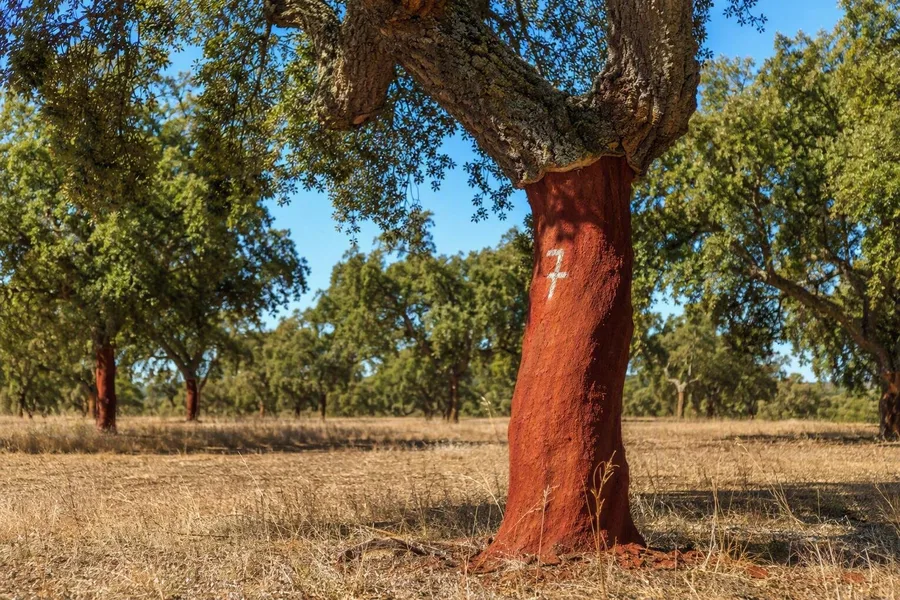 A freshly stripped cork oak near Coruche shows its red-brown trunk and white harvest digit.
Beyond the irrigated fields beside the Sorraia, the municipality’s drier ground carries scattered cork oaks above grass and scrub. In summer, the herb layer dries beneath their evergreen crowns. Among the darker bark of unharvested trees, freshly stripped trunks stand red-brown, each white digit fixed to the year when the axe last passed.
Keep exploring