Rajaportti, Tampere’s living public sauna
On the steep ridge between lakes Näsijärvi and Pyhäjärvi, workers built Pispala with timber houses, narrow lanes and necessity. Rajaportti Sauna still operates from the courtyard where Maria Lahtinen began heating a wooden sauna for her household and neighbours before it opened to the public in 1906.
Pispala rises above the water between lakes Näsijärvi and Pyhäjärvi. Wooden houses climb the slopes, and stairways sometimes do the work of streets. Factory workers settled here around 1900 because Tampere lacked affordable housing within its borders; Pispala then lay outside the city and beyond its building regulations. That history explains the crooked lanes, the close-built homes and the public sauna that still stands on Pispalan valtatie.
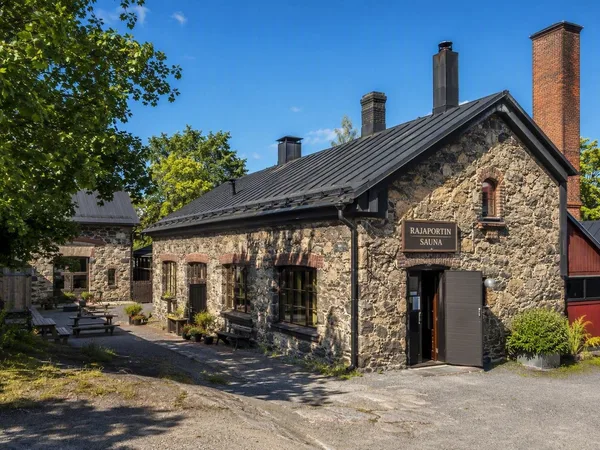
Rajaportti’s café faces the busy road. The sauna itself sits behind it, around a shared courtyard. Its age matters, but its daily use matters more: people still come here to wash, sweat, cool down and spend time in the same small complex.
A washhouse for a crowded hillside
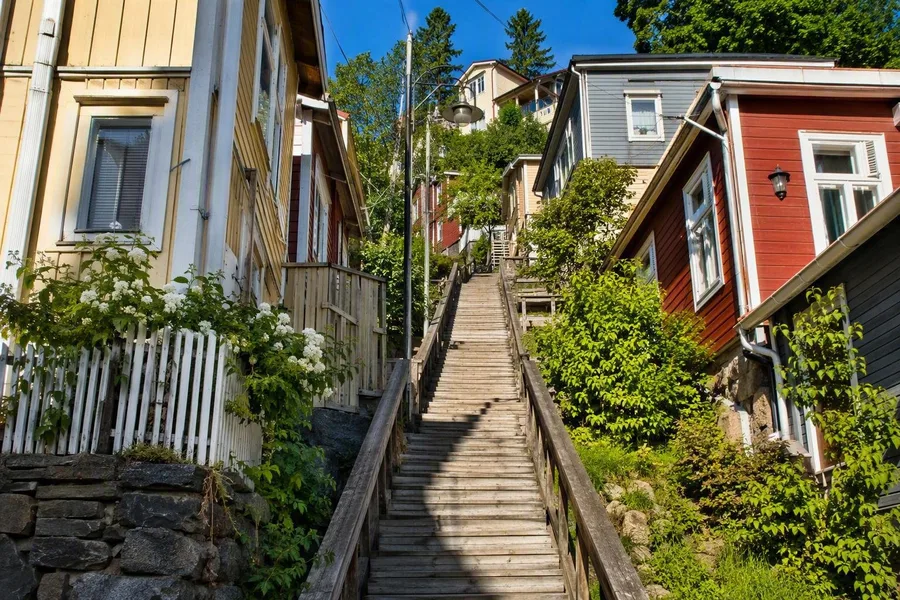 Wooden houses and a stairway climb Pispala’s steep hillside in Tampere.
Tampere’s late nineteenth-century factories drew workers, while cheap homes remained scarce in the growing city. Families built where they could on Pispala’s steep ridge. The homes stood close together, and bathrooms were almost unknown: in 1930, only eleven of Pispala’s 2,500 dwellings had a bath or shower.
A public sauna met an ordinary domestic need. It supplied hot water, warmth and a place to wash. News and stories also passed between neighbours, and parents watched one another’s children; at their peak, Tampere’s public saunas numbered more than a hundred. Nobody called this wellness. People needed somewhere to get clean.
Hermanni and Maria Lahtinen opened a shop on the Rajaportti site in 1900. Maria then heated a wooden sauna in the yard, first for her family and neighbours, then for a wider public. Rajaportti dates its public operation from 1906. The stone sauna now in use dates from 1915.
The first bathing room was mixed. When mixed-gender sauna bathing was prohibited in 1931, a curtain divided the room, followed later by a permanent wall. During regular opening hours, women and men still use separate sides. Both sides take their heat from the same stove.
One stove, two sides
Rajaportti’s stove is a vast wood-fired masonry structure. Staff heat it before the doors open, rather than feeding a fire throughout the bathing session. Long logs heat more than a tonne of stones; after the fire dies, that stone mass releases steady heat through the afternoon and evening.
The change shows in the löyly, the steam made by water on hot stones. Early in the day, it is drier and sharper. Later, it becomes softer and more humid.
The building makes that shared heat impossible to miss. Straight wooden benches stand on a raised stone gallery, reached by a short stair from the changing room. The washing area lies below, where the air is cooler. Pale limewashed masonry frames the dark stove. Water reaches the stones through hatches on either side, and steam rises from below the elevated benches.
This compact layout leaves little room for grand entrances or sprawling. Bathers make space on the benches, then step down to wash or out to cool off before returning to the heat. The sauna works because each person uses a small piece of a shared room.
A public place, not a period piece
Private bathrooms eventually removed the old need for public washhouses, and many of Tampere’s saunas closed. Rajaportti continued through use and upkeep. After a brief closure, the Pispala Sauna Association took over its operation and maintenance in 1989; the City of Tampere owns the complex.
Today, the regular rhythm runs from sauna room to cooling courtyard to café. A conversation may begin on a bench or over a drink, but nobody has to provide one. People can sit quietly beside strangers, speak softly, or take their talk outside. Rajaportti also holds silent sessions, when conversation stays in the courtyard and café.
The café gives the site another use beyond bathing. Its programme can include quizzes, bingo and tastings on mixed-sauna evenings, as well as concerts, poetry and public discussions. These are ordinary reasons to gather in the same courtyard, not proof that every visitor came looking for company.
Regular sessions retain separate women’s and men’s areas. On announced mixed-sauna days, everyone shares the changing rooms and benches, and each person may choose swimwear or nudity. At other times, the old wall divides the room while the single stove heats both sides.
Courtesy on the benches
Public-sauna etiquette in Tampere comes down to practical consideration. Bathers wash before entering, sit on a towel or seat cover, take only the bench space they need and make room when the sauna is busy. Phones and cameras stay outside the sauna area. Soft conversation suits ordinary sessions; designated silent hours mean silence.
Löyly affects every person in the room. At Rajaportti, the person with the ladle asks the others before adding water. If one person objects, no water goes on the stones. That small question saves a whole bench from somebody else’s idea of perfect heat.
Rajaportti calls the wider principle saunarauha, or sauna peace: no shouting, arguments or audible phones, and respect for other people’s privacy and space. Silence fits within that peace. So does a quiet conversation. Staring and unwanted touching do not.
Practical details
The regular public sauna opens Monday and Wednesday from 4pm to 10pm, and Friday and Saturday from 2pm to 10pm. Adult admission costs €8 on Monday and Wednesday, and €12 on Friday and Saturday. Public sessions are first come, first served and cannot be reserved. Towels cost €4 to hire; reusable or disposable seat covers cost €1. Announced mixed sessions take place on selected Thursdays from 4pm to 11pm, with shared changing rooms and optional swimwear; Rajaportti lists current dates in its online programme.
Up into the heat
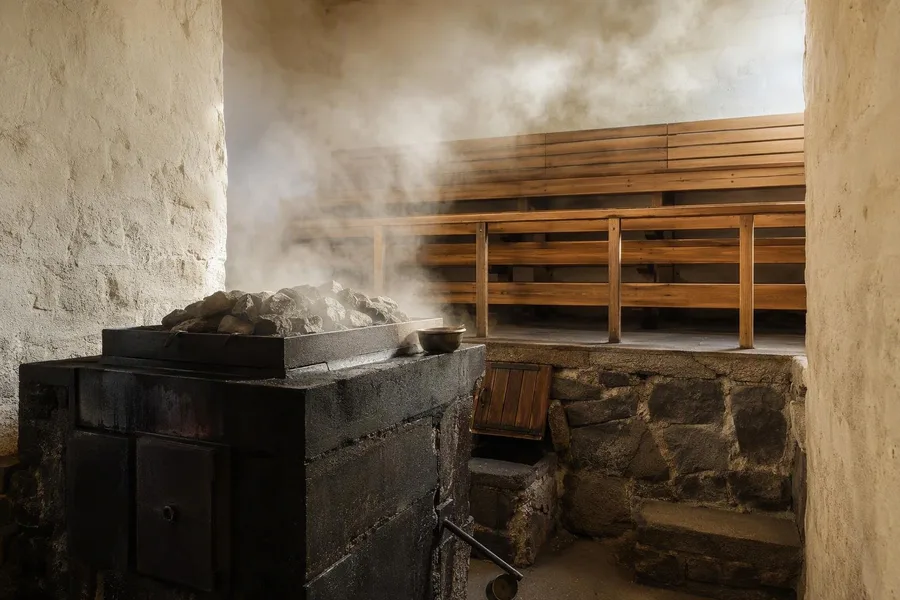 Steam rises beside Rajaportti’s masonry stove beneath the raised wooden benches in Pispala.
From the changing room, a bather climbs half a level towards the wooden benches. The washing space remains below, distinctly cooler, while heat and moisture gather around the stone gallery above. Water slips through a hatch onto the hidden stones. Steam rises past the dark masonry and reaches the pale walls on both sides of Tampere’s old public sauna.
Keep exploring