From Tegucigalpa to La Tigra’s Cloud Forest
La Tigra begins barely 20 kilometres northeast of Tegucigalpa, yet the road soon trades the capital’s built-up slopes for pines, dirt tracks and steep green ridges. In the upper forest, Caribbean moisture gathers on moss, ferns and bromeliads, feeding the water catchment that helped turn this former mining country into Honduras’ first national park.
Tegucigalpa sits at the foot of a steep mountain mass, and La Tigra makes a strikingly close escape from the capital. The park has two usual entrances, each reached by a different road and each showing a different side of the mountains.
Jutiapa lies beyond El Hatillo. El Rosario sits on the San Juancito side, reached through Santa Lucía and Valle de Ángeles. Jutiapa suits a shorter forest walk; El Rosario places old mines and company buildings near the start of the climb. A full-day crossing can join both sides on foot.
From Tegucigalpa to the Jutiapa trails
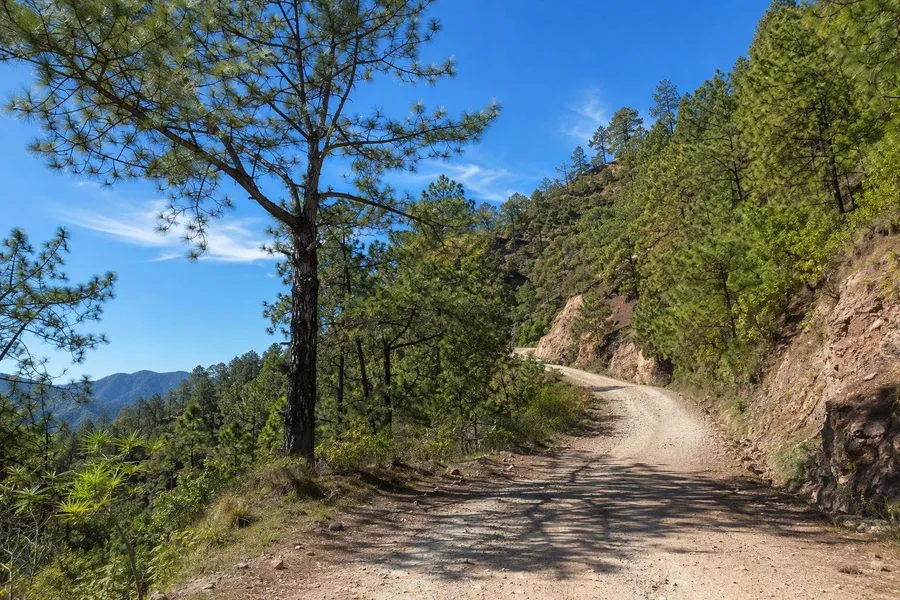 The dirt access road climbs through pine-covered slopes toward Jutiapa in La Tigra.
The Jutiapa road climbs towards El Hatillo. Views over Tegucigalpa open from the higher road, then pine-covered slopes replace the cityscape. The surfaced road ends beyond El Hatillo, and a generally good dirt road continues to the entrance; in dry weather, an ordinary car can usually manage it.
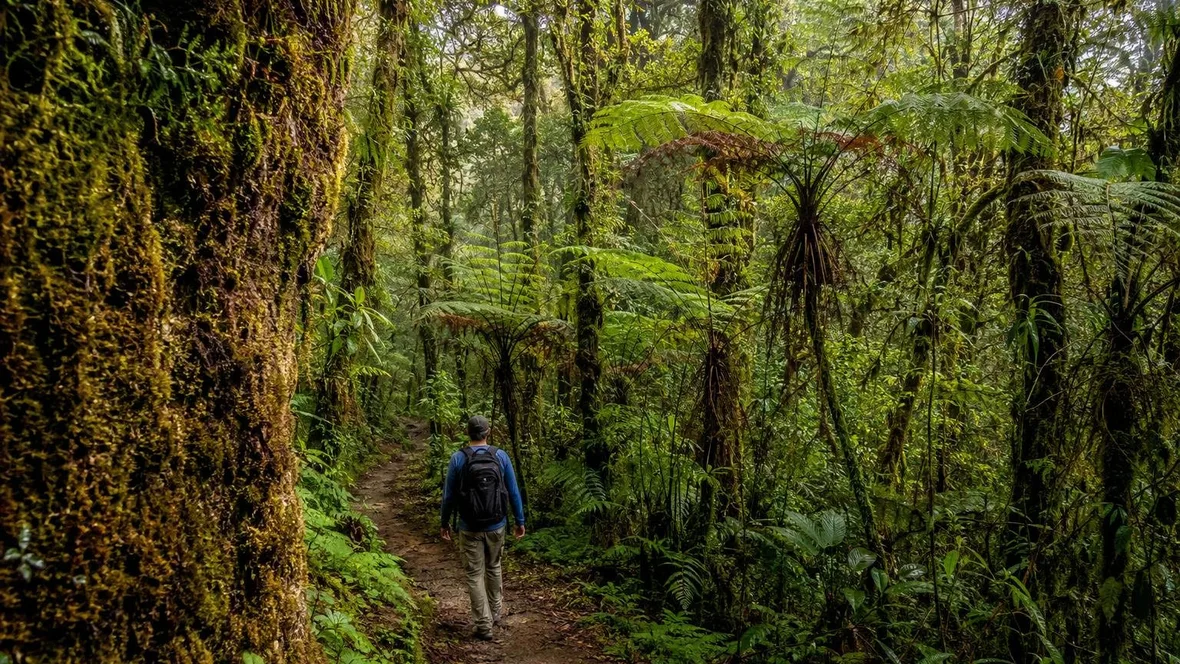
Jutiapa is the better choice for walkers who want to spend most of the day under trees. Marked paths lead into dense mountain forest, where ferns and mosses fill the undergrowth and bird calls carry through the canopy. Higher up, cooler air can bring mist that shortens the view.
The park’s cloud forest has a physical cause, not just a romantic name. Above roughly 1,800 metres, moist Caribbean trade winds strike La Tigra’s slopes, rise, cool and condense. Tree crowns, bromeliads and tree ferns catch droplets from the cloud. That horizontal rain helps keep the upper slopes wet when lower ground is drier.
Oaks, pines and liquidambar make up the canopy. Mosses, orchids, ferns and bromeliads grow on trunks and branches, while streams and waterfalls run down the wooded slopes. These wet highlands hold water for Tegucigalpa and nearby places, a central reason for the park’s protection.
San Juancito and the old mining slopes
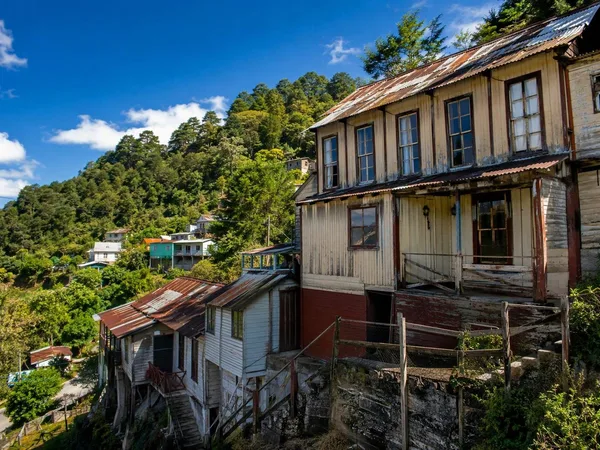
The El Rosario approach tells a more visibly human story. The road runs through Santa Lucía and Valle de Ángeles to San Juancito, where old mining installations remain in the mountain settlement. From there, the final unpaved stretch climbs towards the forest and is better tackled in a higher vehicle.
Gold and silver mining shaped this area from about 1880 to 1954. The New York and Rosario Mining Company built tunnels, rail lines, workshops, water pipes, housing and a hospital around San Juancito. The mining operation also consumed timber and stripped forest from parts of the slopes.
The remains make the scale easier to grasp. San Juancito still has old wooden houses and mining buildings, while higher ground holds mine entrances, collapsed passages and rocks marked by drilling and explosives. Vegetation now covers parts of those workings. At El Rosario, the visitor centre occupies a former mining-company building, so the route into the forest begins among the practical remains of an industrial settlement.
La Tigra became a forest reserve in 1952. In 1980, Honduras declared it the country’s first national park under Decree 976-80, with protection tied directly to the water supply of Tegucigalpa and surrounding communities. The park covers 24,040 hectares and supplies an estimated 30 per cent of Tegucigalpa’s water.
The crossing from mine openings to cloud forest
The fullest walk runs between Jutiapa and El Rosario. It follows Sendero Principal, Reales Minas, La Mina, La Cascada and Bosque Nublado, and usually takes four to six hours. This is a sustained mountain walk, with climbs and uneven ground rather than a flat circuit.
The Reales Minas section has viewpoints over surrounding ridges and sees fewer walkers than some other trails. Farther on, La Mina passes abandoned mine openings. The route then reaches a waterfall before entering the denser forest of Bosque Nublado. Mine traces and wet woodland sit close together here, without any need for a separate museum stop.
Rain changes the footing. The Bosque Nublado and La Cascada sections include steep passages that can become slippery when wet, and La Cascada is among the harder parts of the trail network. Solid walking shoes matter more than speed on this route.
For a shorter walk from Jutiapa, the La Esperanza–Bosque Nublado loop takes about two hours and is rated moderate. La Esperanza climbs to a mirador above the canopy and passes trees that can reach around 40 metres. Bosque Nublado returns through the wetter forest, where ferns and mosses provide the surest signs that the path has entered cloud-forest conditions.
Birds offer the best chance of seeing or hearing wildlife. Records near El Rosario include bushy-crested jays, Cabanis’s wrens, rufous-browed wrens, white-eared hummingbirds and flame-coloured tanagers. The resplendent quetzal also lives in La Tigra, although its recorded population is small and a sighting is far from certain. Puma, small wild cats, white-tailed deer and peccaries occur in the park but are shy and unlikely to appear on a day walk.
Practical details
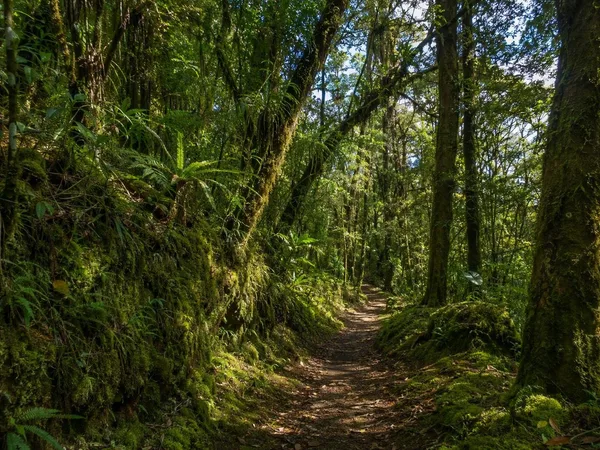
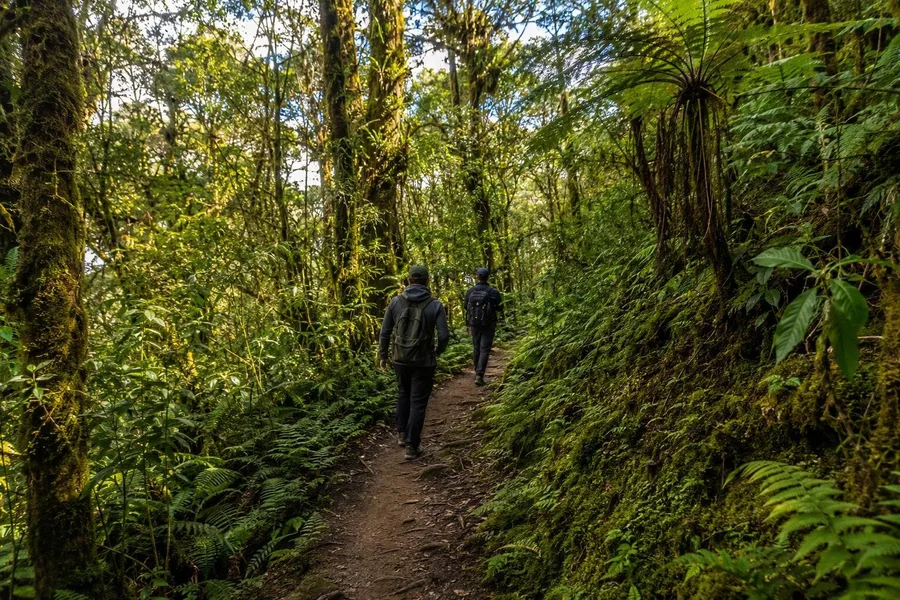 Walkers follow a mossy forest path near Jutiapa in La Tigra.
From Tegucigalpa, driving to either entrance generally takes 40 to 60 minutes. Jutiapa is reached via El Hatillo; El Rosario lies beyond Valle de Ángeles and San Juancito. Buses run to El Chaparro for Jutiapa and to San Juancito for El Rosario, with a walk required at the far end of each journey. Published park hours are 06:00 to 16:00 daily. The latest listed entry fee is US$10 for foreign adults and L100 for Hondurans over 12; take cash and confirm current fees or temporary closures before setting out. Day walks normally need no advance booking. Visitor centres can help arrange a guide, while overnight stays at El Rosario require advance reservation.
On the Bosque Nublado trail, the open ridges close behind trunks, tree ferns and branches thick with wet moss. Birdsong travels through the foliage as the path enters the damp upper forest.
Keep exploring