Village · Honduras
San Juancito
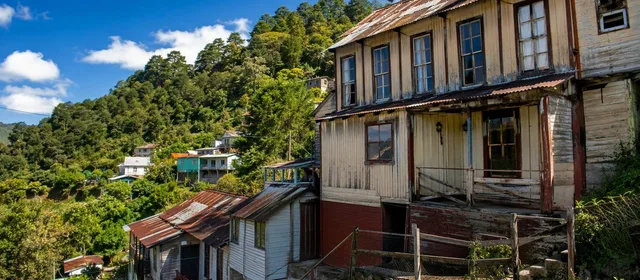
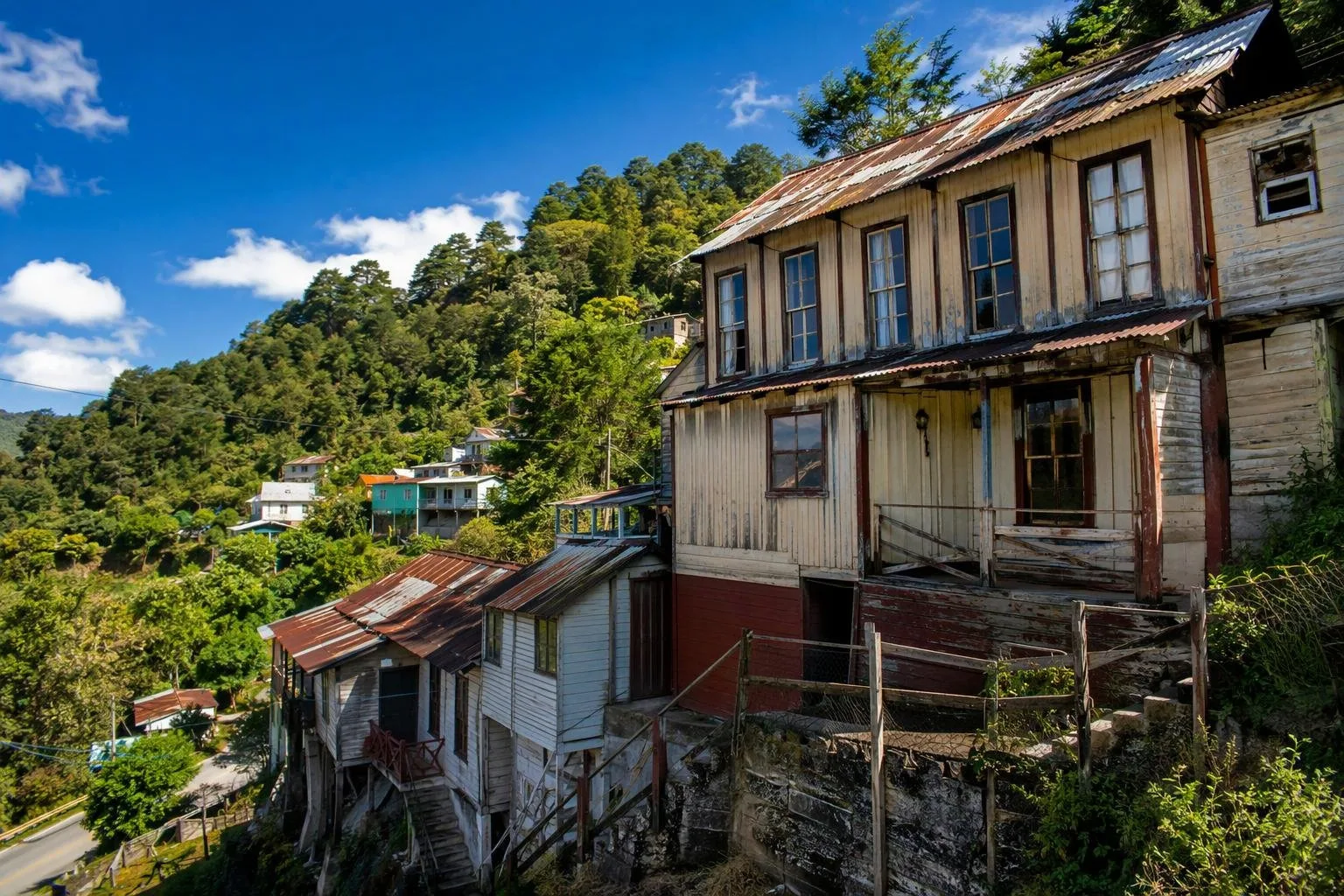
San Juancito is a former gold- and silver-mining village in Francisco Morazán, northeast of Tegucigalpa, on the slopes below La Tigra. Its wooden houses, industrial ruins and mountain roads preserve the footprint of the Rosario Mining Company.
Orientation
San Juancito is a steep, compact village in the Distrito Central area of Francisco Morazán, roughly 40 km northeast of Tegucigalpa. It sits below the La Tigra mountains, with the former mining settlement of El Rosario higher up the slope. This is a place for industrial history and mountain landscape rather than a polished heritage district.
The village grew around the New York and Honduras Rosario Mining Company, which worked local gold and silver deposits from 1880 to 1954. Its legacy is still written into the terrain: workers’ housing, company buildings, old mine infrastructure and roads climbing into the forest.
What to look for
Start in San Juancito itself. The surviving timber houses are the clearest visual link to the mining boom; their setting on uneven slopes explains why the village never developed a formal grid or grand central square.
Continue uphill toward El Rosario and Nuevo Rosario to see the larger industrial footprint. Notable remnants include:
- former company buildings and workshops;
- the brick building that housed the first US consulate in Honduras;
- the former mining hospital, later adapted for visitor use;
- old plant, machinery and mine-related structures scattered along the upper road.
The village’s historic centre appears on Honduras’s 500-lempira note, but the more useful way to read the place is on foot: look at how housing, watercourses and industrial remains occupy the narrow mountain corridors.
Mining landscape and La Tigra
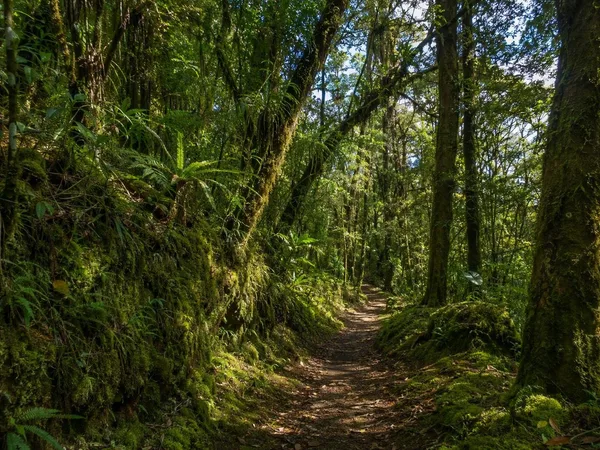
The climb above San Juancito leads toward old workings and the forest around La Tigra National Park. Mining once required tunnels, timber, water pipes, transport routes and a hydroelectric plant; forest has since reclaimed much of that disturbed ground.
Some mine entrances, drilled rock and collapsed passages remain visible in the upper area. Do not enter tunnels or sealed openings. Collapses and hazardous gases are a documented risk, and vegetation can conceal unstable ground.
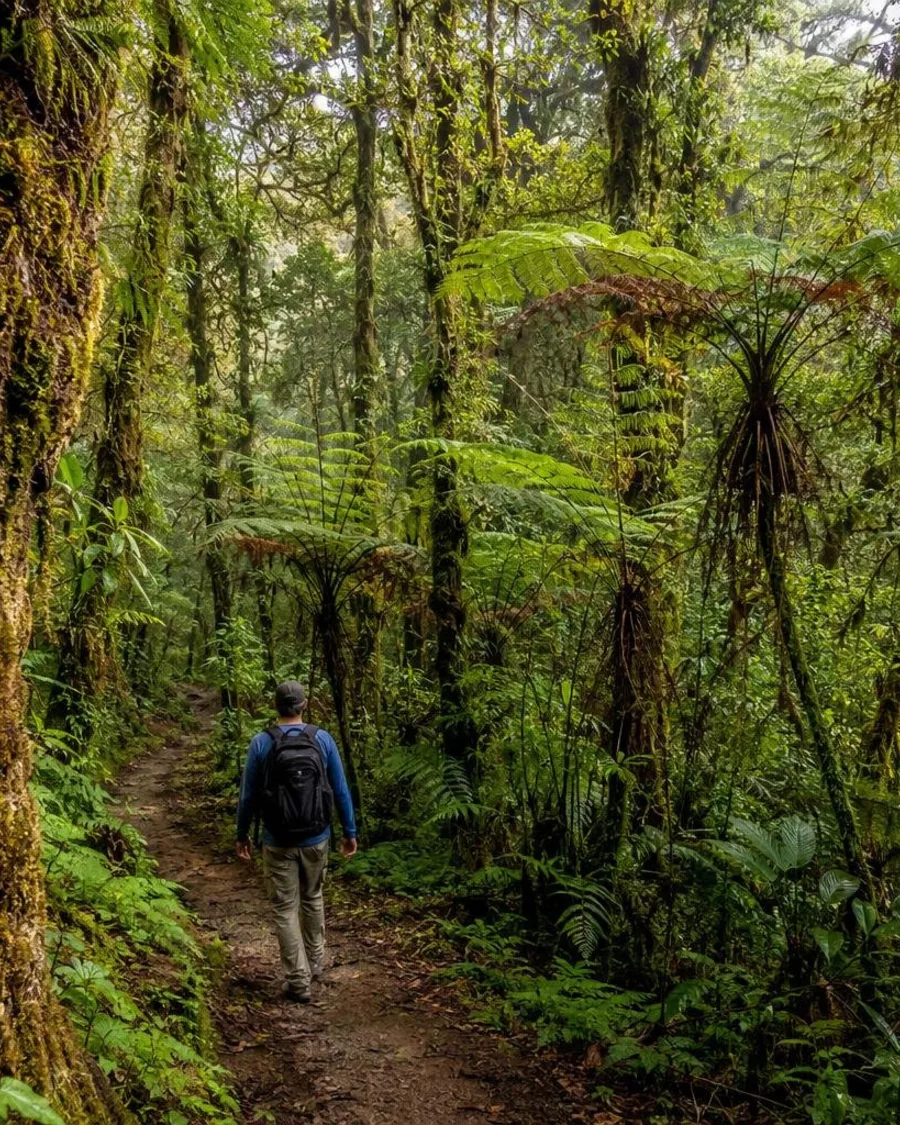
The transition from settlement to wet mountain forest is part of the visit. Expect steep gradients, cooler air at higher elevations and slippery surfaces after rain.
Getting there and moving around
From Tegucigalpa, drive via Santa Lucía and Valle de Ángeles; the journey to San Juancito is commonly about 45 minutes. The main approach is paved, while roads climbing toward El Rosario can be rougher and narrower. A high-clearance vehicle is the sensible choice for the final unpaved sections.
Public transport reaches San Juancito, but the historic sites and upper mining remains are spread uphill. Walking is practical only with sturdy shoes and time for sustained climbs; local transport can reduce the uphill leg.
Practical approach
Treat San Juancito as a daytime village-and-landscape visit. Carry water, rain protection and cash, and allow time to walk slowly between the lower settlement and El Rosario. If continuing into La Tigra, use the relevant visitor facilities and follow current access rules for the park area.
From the magazine
Stories about San Juancito
Editorial stories linked directly to San Juancito.
Routes from our editors
Travel through San Juancito
Editorial routes connecting San Juancito with other countries, cities and hotspots.
No routes through San Juancito have been published yet.
More in Honduras
Related hotspots
Other cities, nature areas and places within Honduras.