
Honduras

Carved Maya stone and Caribbean reefs

Honduras

Honduras spans the Maya stonework of Copán, cloud-forest highlands and the coral-fringed Bay Islands.

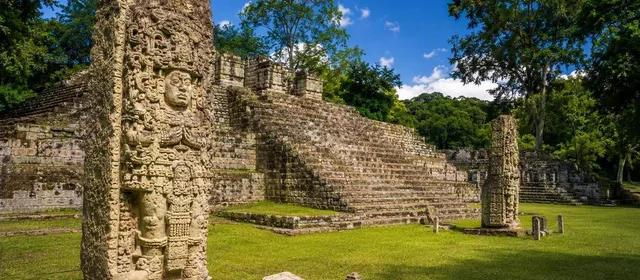
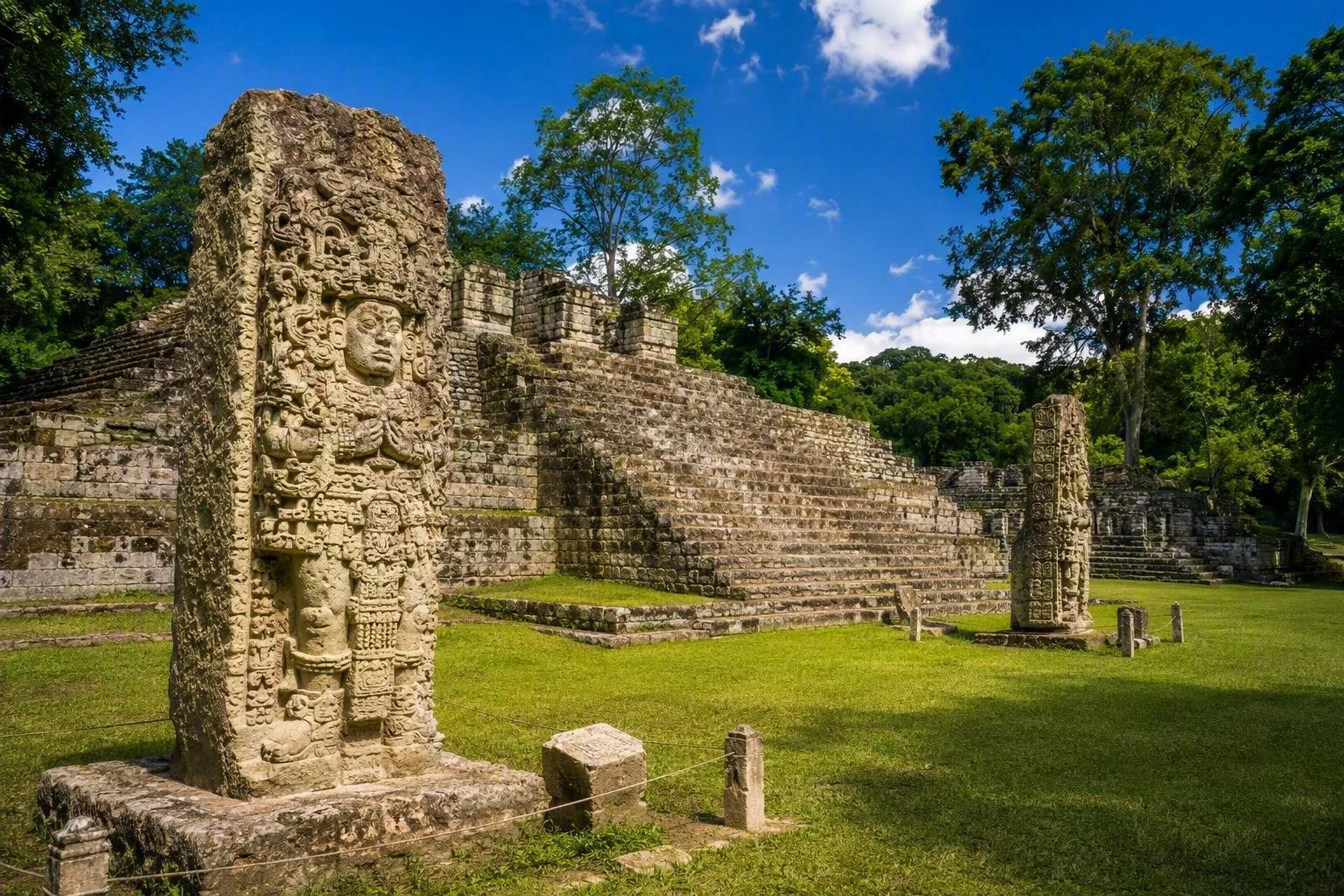
Copán gives Honduras one of Central America’s most striking archaeological sites. Maya sculptors cut rulers, dates and ritual scenes into tall stone stelae more than a thousand years ago. The Hieroglyphic Stairway climbs through the main acropolis, and forest edges the plazas where ceremonies and government once took place. West of Copán, the land rises into pine forest and cooler cloud forest around Gracias and La Esperanza. Lenca potters and weavers work in these highland towns, while coffee grows across many slopes. Copán’s carved stone and the daily trade of the mountain towns show two very different parts of the same interior.

North of the mountains, the Caribbean coast has Garifuna communities including Triunfo de la Cruz and Corozal. Garifuna families maintain their language, drumming and cooking traditions, with cassava, coconut and fish appearing often on local tables. Offshore, Roatán, Utila and Guanaja lie beside the Mesoamerican Barrier Reef. Divers and snorkellers visit the islands for coral walls, seagrass beds and clear water. English and English-based creoles are common there, unlike the Spanish spoken across most of the mainland.

Tegucigalpa climbs over steep hills, while Comayagua centres on its colonial cathedral and compact old quarter. At markets and roadside kitchens, order baleadas: folded flour tortillas filled with beans, cheese and cream. Grilled meat, plantain and curtido also appear on many plates. Give Honduras more than a quick stop for a reef or a ruin, and its highland towns, coast and kitchens will stay with you.

When to go

Best time to travel

Monthly values are indicative average maximum temperatures for Tegucigalpa. Temperatures and rainfall vary meaningfully between the central highlands, Caribbean coast, Pacific lowlands and Bay Islands. Monthly values are indicative average maximum temperatures for Tegucigalpa. Temperatures and rainfall vary meaningfully between the central highlands, Caribbean coast, Pacific lowlands and Bay Islands.

jan26°C feb27°C mar29°C apr30°C may29°C jun27°C jul27°C aug28°C sep28°C oct27°C nov26°C dec26°C

Weather in the capital

Practical Honduras

On every country page we show the current weather for the capital.

Tegucigalpa
Morning23°Cdrizzle
Afternoon33°Cpartly cloudy
Evening22°Cpartly cloudy
today33°C / 20°Chigh and low

Current forecast by Open-Meteo

Getting around

Intercity buses and shared minibuses connect most mainland towns. Domestic flights link longer-distance destinations and the Bay Islands, while ferries leave the north coast for the islands. A hire car suits rural areas and routes with limited bus services.

Paying in Honduras

Lempira cash is useful in markets and smaller towns. Cards are widely accepted in cities and established tourist areas. Larger towns and cities have ATMs.

Where to stay

Options include city hotels, family-run guesthouses, mountain lodges, dive resorts and island hostels. Book ahead for Easter, Christmas and major local festivals.

Before you leave

Worth knowing

A practical starting point for your trip. Check current conditions and local information before you leave.

01

Calling code

The international calling code for Honduras is +504.

02

Driving side

Traffic drives on the right.

03

Languages

Spanish is the official language. Garifuna, Miskito, Pech, Tawahka and Tolupan are also spoken. English and English-based creoles are common in the Bay Islands.

04

Tipping

Check restaurant bills for an included service charge. If none is listed, about 10% is customary for table service. Small tips for guides and hotel staff are common.

05

Meal times

Breakfast starts early, and lunch is often the main meal between noon and 2pm. Dinner commonly runs from about 6pm to 9pm.

06

Business hours

Many businesses open Monday to Friday from about 8am to 5pm, with shorter Saturday hours. Smaller shops may close for lunch. Malls and supermarkets often stay open later.

07

Intercity buses

Buses usually leave from terminals or company depots rather than a single central station. Direct and ejecutivo services make fewer stops. Buy tickets at the counter.

08

Taxis and ride-hailing

Many taxis do not use meters, so agree the fare before you leave. Shared colectivos run set routes and charge per passenger. Ride-hailing apps operate in larger cities.

09

Mobile connectivity

Claro and Tigo run the main mobile networks. Prepaid SIM cards are widely available, and registration usually requires identification. Coverage is strongest in cities and along main roads.

10

Measurements

Honduras officially uses the metric system. Road distances use kilometres, though pounds and US gallons still appear in everyday trade.

11

Finding addresses

Addresses often use neighbourhood names, nearby landmarks and directions instead of numbered streets. A map pin and local phone number can help a driver find the entrance.

12

Bay Islands ferries

Passenger ferries connect La Ceiba with Roatán and Utila. Guanaja has less frequent services, often linked with Trujillo. Departure days and operators can change.