Before the Café Tables Fill Pazari i Ri
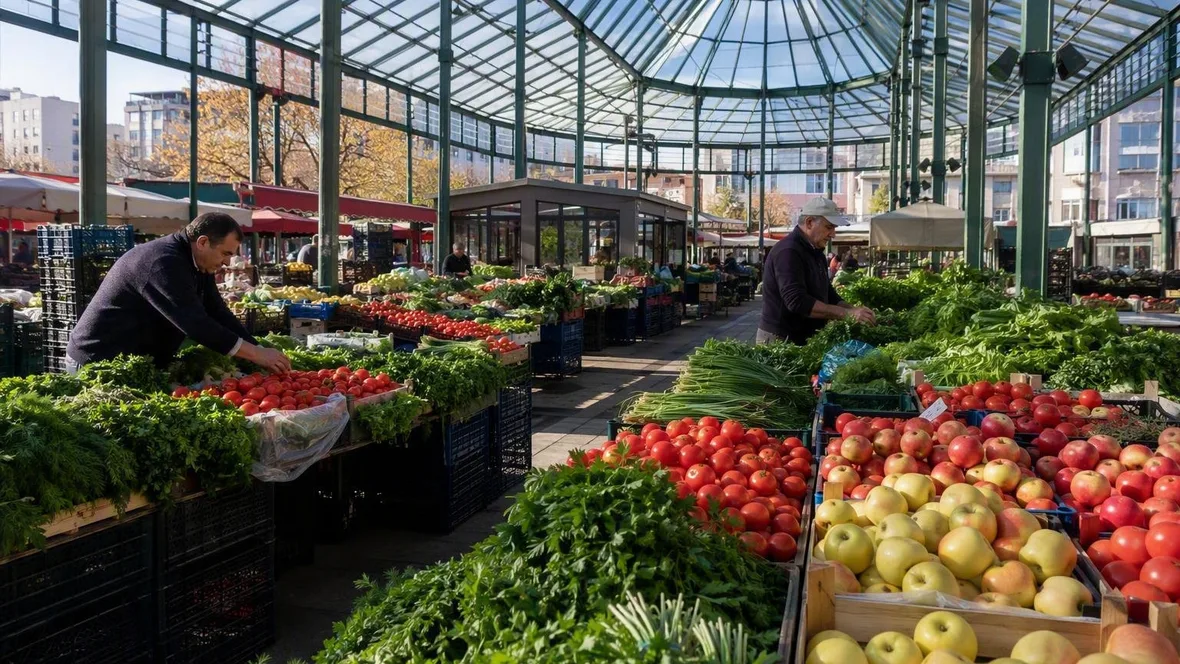
Around six in the morning, traders at Pazari i Ri begin unpacking produce brought into Tirana from surrounding villages. Apples, tomatoes and freshly cut herbs take their places under the market roof, while the cafés around the square wait for the hours when food and coffee replace the morning trade as the main activity.
The first shift under glass
The short morning loop starts at the market halls on Rruga Shenasi Dishnica. Pazari i Ri is already at work. Farmers bring fresh goods from nearby villages into Tirana, and traders unpack them from about six o’clock, sorting apples, tomatoes and cut herbs for sale.
The first task is plain and repetitive. Produce moves from delivery to stall, then into rows that make buying quick. Seasonal fruit and vegetables fill the open stands, while the covered parts of the market hold meat, cheese and other specialist food shops.
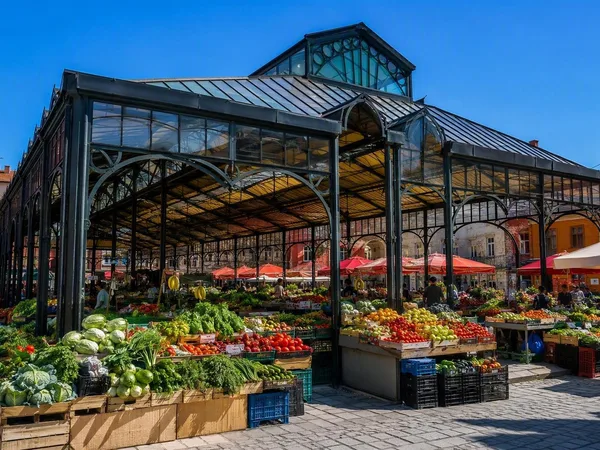
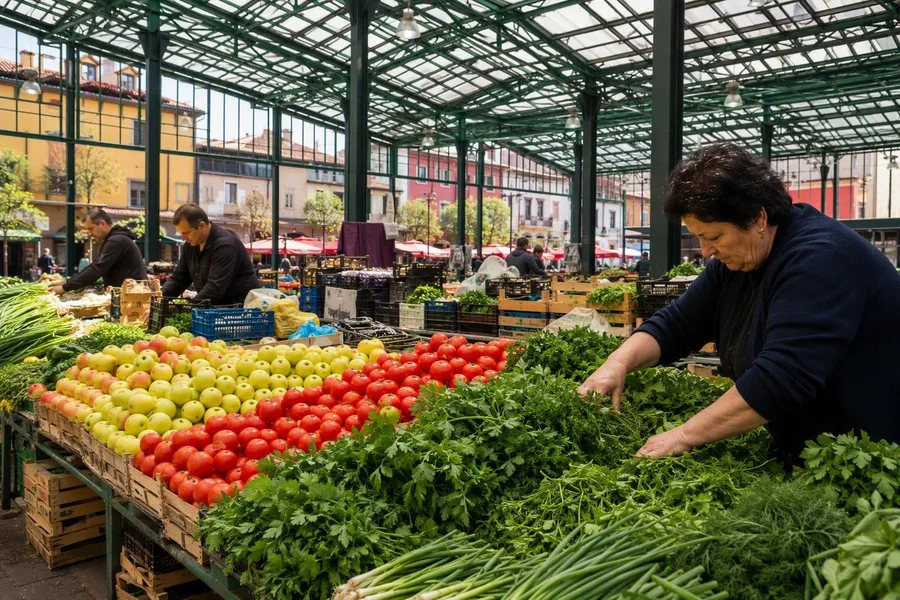 Traders arrange apples, tomatoes and herbs beneath Pazari i Ri’s glass roof in Tirana.
A high metal structure and glass roof cover the central market. The glass cuts direct sun and heat, and the height of the structure helps air circulate below. That practical shelter explains why the market work begins here rather than along an exposed kerb: crates and fresh food have a fixed place beneath the roof.
The ground underfoot is terracotta, laid in patterns that draw on Albanian carpet motifs. The design is more polished than the job at hand. Tomatoes still need sorting, herbs still need arranging, and customers still need to see what is for sale.
Pazari i Ri began in 1931, when trade had outgrown Tirana’s old bazaar. After the old bazaar disappeared in 1959, this became the city’s main market for meat, fish, fruit and vegetables. That history stays close to the surface in the morning because the market still serves the same basic purpose: food arrives, sellers lay it out, and neighbourhood shoppers come for daily supplies.
Across Sheshi Avni Rustemi
From the halls, the route crosses Sheshi Avni Rustemi and follows the market edge towards the corner of Rruga Luigj Gurakuqi. The walk is short and pedestrian-focused, with the two market halls, cafés around the square and that corner providing its clear public edges.
The square gives the market more room than the narrow lines of stalls suggest. Food trade remains the main business in the morning, but cafés and restaurants stand around the market area, ready for the later part of the day. Tables and chairs have been documented on the pavement near market entrances and grill businesses.
The order of the day is visible in the uses of the same ground. Sellers handle fruit, vegetables, fish and meat first. Cafés and restaurants take a larger share of the square later, when the food market no longer sets the pace.
A redevelopment completed in 2017 made the market area pedestrian-friendly and added room for food, cafés and evening activity alongside the established trade. The change did not turn Pazari i Ri into a stage set for an old bazaar. The market remains a working food centre in the morning, with restaurants and terraces forming a second use of the same streets and square.
Buildings around the square show the same overlap between home and work. Shops and services occupy many ground floors, while homes sit above them; the refurbishment included doors, windows, roofs and painted motifs drawn from Albanian tradition. The market therefore runs directly alongside ordinary residential life, not apart from it.
The corner of Luigj Gurakuqi
At Rruga Luigj Gurakuqi, the open market space narrows into a more ordinary street edge. The corner marks one boundary of this compact loop around Pazari i Ri. Nothing dramatic happens there. That is the point: the route stays with the ground-floor businesses and the routine work that surround the market.
The market halls remain close enough to explain the shape of the block. The meat-and-fish hall has retained columns and capitals from its older structure, while a transparent façade keeps the commercial interior visible from the square. Meat and fish are not hidden behind a decorative frontage. The building shows what it contains.
That directness matters more than architectural detail. Pazari i Ri continues to function as a market for meat, fish, vegetables and fruit, even though cafés and restaurants have become more prominent around it later in the day. Morning shopping comes first. Lunch and coffee follow.
The route does not need a landmark beyond the market itself. The useful sight is a working frontage: food under cover, produce outside, shops at street level and homes above. That mix gives the surrounding streets their daily purpose.
North on Qemal Stafa
From the market’s northern side, Rruga Qemal Stafa adds one more block to the walk before it returns to Rruga Shenasi Dishnica. The street lies directly north of Pazari i Ri and includes bicycle sellers and repair businesses.
The food stalls fall out of sight here. Ground-floor work does not. Bicycle shops and repair businesses extend the neighbourhood’s commerce beyond the market, while the nearby blocks continue the pattern of shops below residential floors.
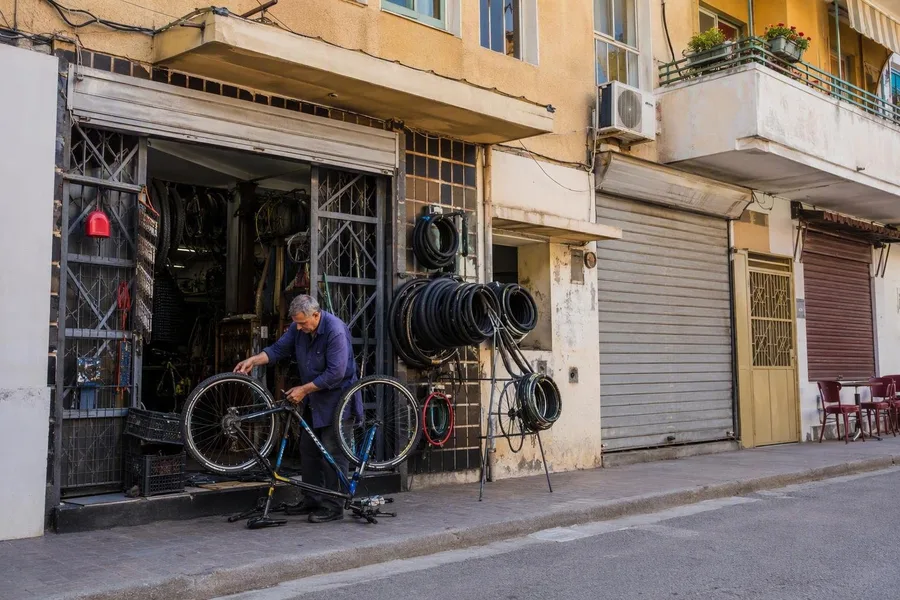 A bicycle repair business works beneath homes on Rruga Qemal Stafa north of Pazari i Ri.
This is a useful detour precisely because it is not much of a detour. The route passes no grand monument and asks for no special explanation. It stays within the few streets where a market, small businesses, cafés and homes sit close together.
The return brings the roofline of Pazari i Ri back into view. Under the covered market, goods and traders have shelter from direct sun; outside, the open stalls keep fruit and vegetables facing the public square. Coffeehouses and places to eat line the adjoining pedestrian streets, sharing the market’s edges without replacing its morning purpose.
The square takes its daytime shape
By seven or eight, vegetable sellers are in position and Pazari i Ri is running as a working market. The earlier unpacking has become a settled display: apples, tomatoes, herbs and seasonal produce stand in ordered rows under the high roof and at the open stalls.
The division of labour is easy to read from the square. Fruit and vegetables remain outside where they face the passing public. Meat, fish, cheese and specialist food businesses occupy the covered areas. The old market function has not gone anywhere; it simply shares its address with cafés and restaurants.
Around the entrances, tables and chairs stand on sections of pavement used by cafés and grill businesses. The terracotta surface runs between the halls, the surrounding façades and the pedestrian square. Beneath the glass canopy, the market stalls hold their fixed rows of produce; along the edge, the café tables and chairs form their familiar lines.
Keep exploring