
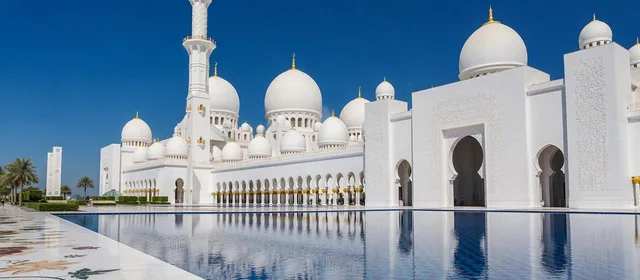
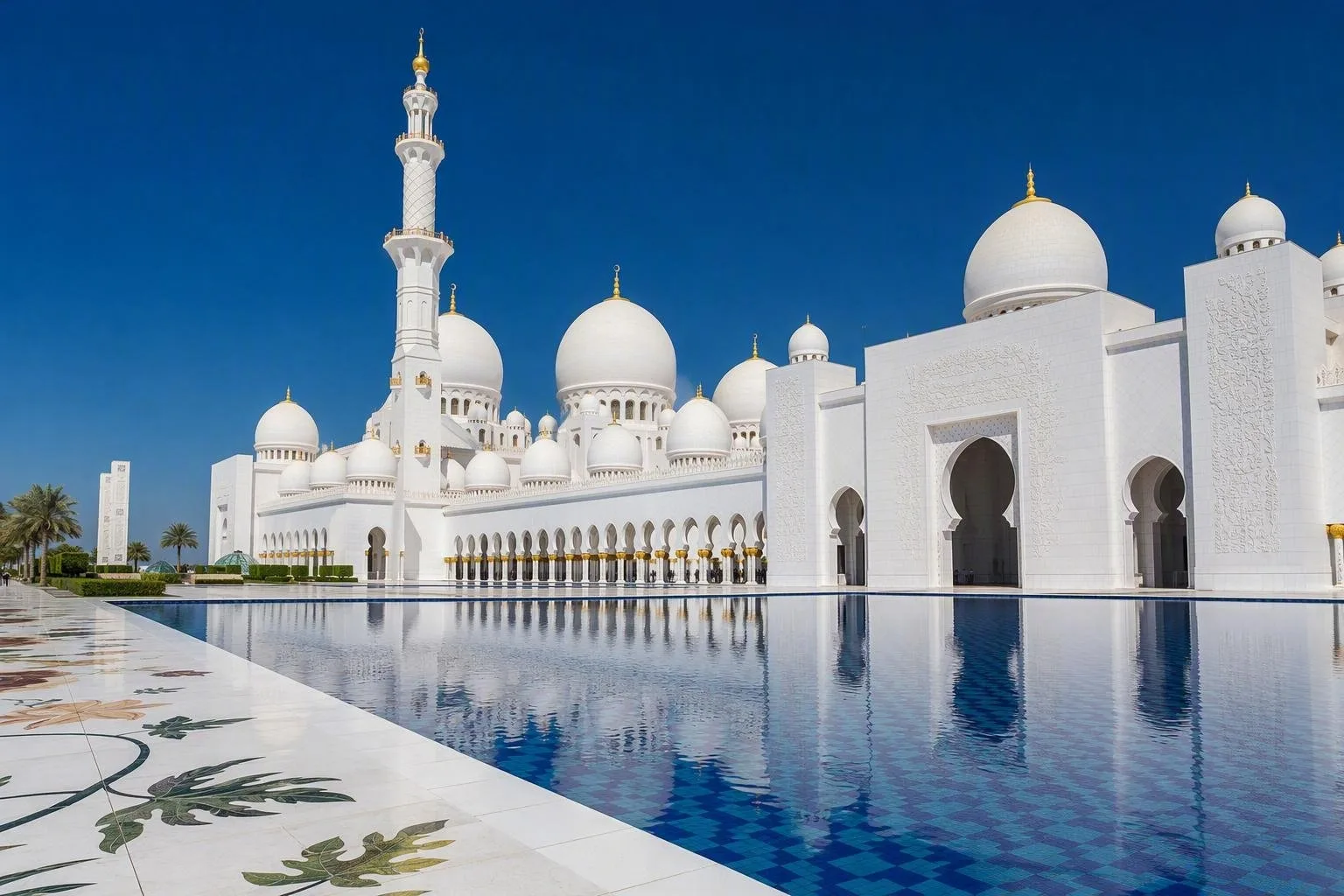
Dubai’s towers draw the headlines, but the United Arab Emirates offers much more than a skyline. In Abu Dhabi, the white domes, marble courtyard and reflecting pools of Sheikh Zayed Grand Mosque sit a short drive from mangrove channels, where kayakers move between low green islands. Inland, Al Ain replaces glass towers with date palms, old falaj irrigation channels and a long-settled oasis landscape. The city’s forts and markets trace a history that reaches back well before the federation formed in 1971.
The sea still shapes daily life. Wooden abras carry passengers across Dubai Creek between Deira and Bur Dubai, near the wind towers and narrow lanes of Al Fahidi. In Sharjah, restored merchant houses sit alongside museums and galleries in the old centre. On the east coast, the Hajar Mountains rise behind Fujairah, where fishing boats work the Gulf of Oman.
The country’s tables show the same mix of roots and arrivals. Emirati dishes pair rice, dates, fish and slow-cooked meat. Indian, Iranian, East African, Levantine and Filipino cooks have also shaped the restaurants found across the emirates. Hosts often serve Arabic coffee with dates when guests arrive. Leave the big malls and landmark towers behind for an afternoon, and you can follow the creek, walk an oasis path or eat in a busy neighbourhood restaurant. Those small stops show the country’s older trading links and the people who keep its cities moving.


