City · United Arab Emirates
Abu Dhabi
Abu Dhabi is the capital of the United Arab Emirates, spread across a Gulf island and its connected coastal districts. It combines the country’s political centre, a long waterfront, major museums and the historic fort where the city’s story begins.
Get your bearings
Abu Dhabi’s central island is a broad, orderly grid between the Gulf and the mainland. The Corniche follows its northwest shore; downtown, Al Hosn and the main hotel districts sit inland from it. The city’s headline sights are not all in walking range: the Sheikh Zayed Grand Mosque is inland, while Saadiyat and Yas are separate islands to the east.
Choose your base by purpose. Downtown or the Corniche works well for the waterfront and old city; Saadiyat suits museum-focused stays; Yas is for theme parks, the circuit and arena events.
Start with the city’s foundations
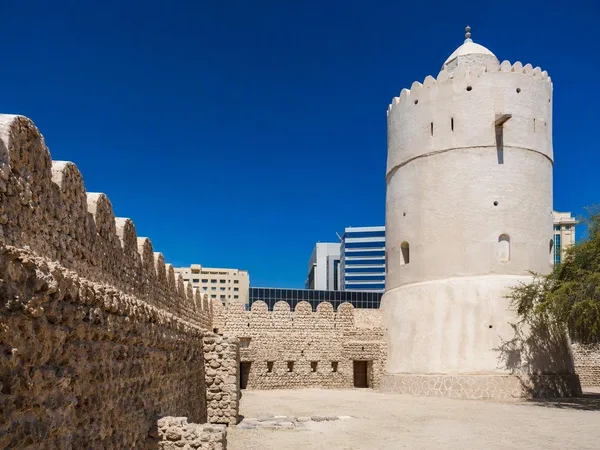
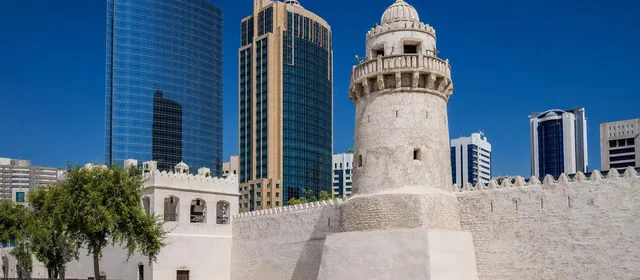
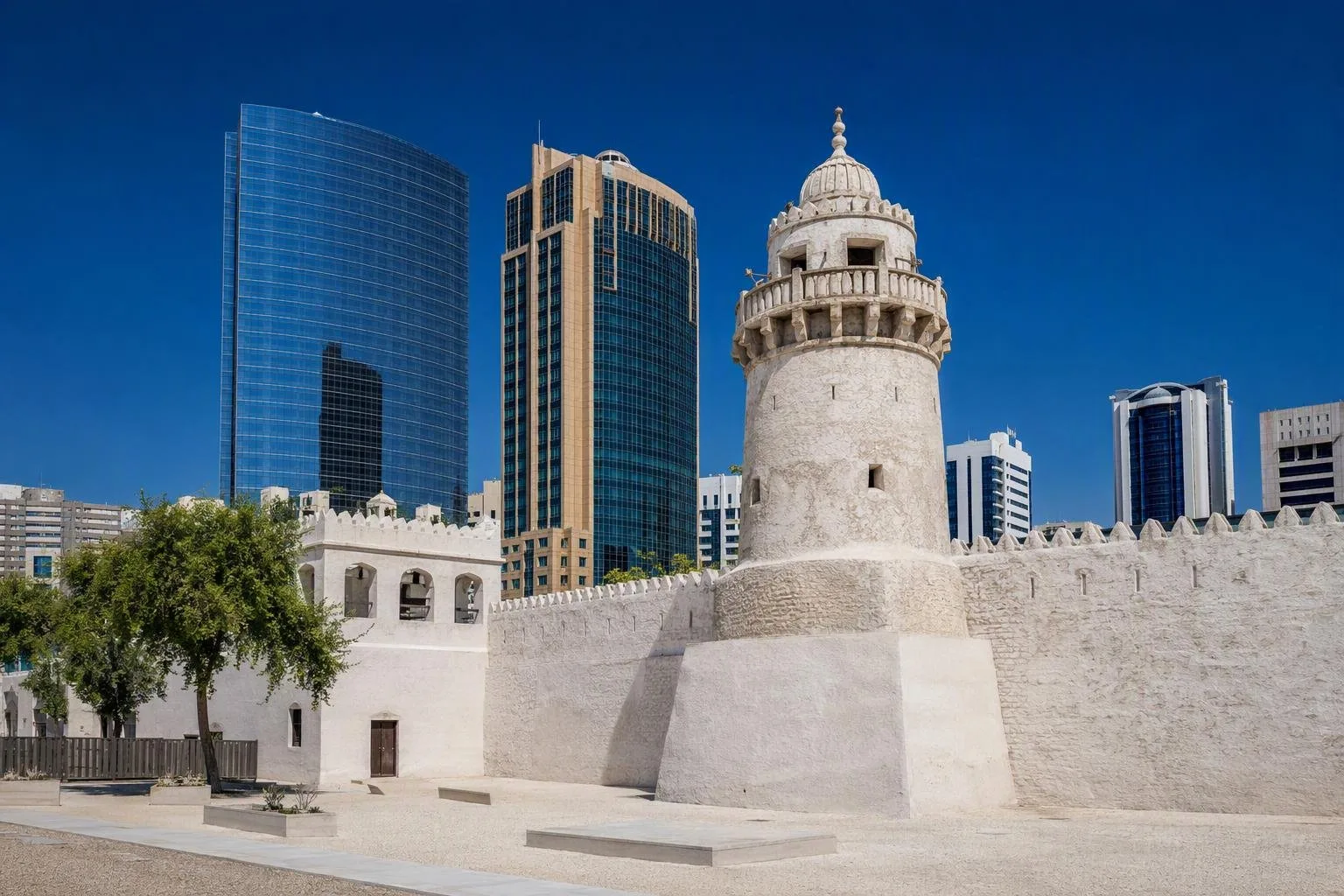
Qasr Al Hosn is the essential historical stop. Its oldest element began as an 18th-century watchtower protecting freshwater, then expanded into an inner fort and an outer palace. The whitewashed complex served as a residence for the Al Nahyan family and a seat of government before becoming a museum. Allow time to inspect the exposed coral and sea-stone masonry as well as the galleries.
Pair it with the nearby Cultural Foundation and House of Artisans. Then take the Corniche west or east for the contrast that defines Abu Dhabi: low historic fabric and open Gulf frontage set against a modern skyline.
Architecture and museums
The Sheikh Zayed Grand Mosque is the city’s defining religious landmark: white marble, 82 domes, reflective pools and a vast courtyard. It is an active mosque, not simply an architectural attraction. Wear clothing that covers shoulders and knees; women also need a headscarf. Visitor access changes around Friday prayers.
On Saadiyat Island, Louvre Abu Dhabi is as much an architectural visit as a museum visit. Jean Nouvel’s perforated dome casts a shifting pattern of light over low galleries and waterside walkways. Allow several hours if you want to see the collection rather than only the building.
For state architecture, visit Qasr Al Watan, the presidential palace open to visitors. Its Great Hall, library and displays focus on governance, knowledge and diplomacy.
Waterfront, mangroves and Yas
Walk or cycle part of the Corniche in the early morning or late afternoon. It is the city’s most useful free orientation route, with beach, gardens and views across the water.
For a different landscape, use a guided paddle or boardwalk visit at the mangroves. On Yas Island, Yas Marina Circuit and the indoor parks are a full-day commitment; do not try to combine them with Saadiyat museums on the same day.
Moving around and timing
Taxis are practical for crossing between districts. Buses use the Hafilat smart card: tap when boarding and again when alighting. Standard-service fares begin at AED 2 plus a distance charge; a transfer within 60 minutes can avoid another boarding charge.
Plan outdoor walks for morning and reserve museums, malls and indoor attractions for the hottest part of the day. During Ramadan and on Fridays, opening and visitor hours can differ, particularly at religious and cultural sites.
From the magazine
Stories about Abu Dhabi
Editorial stories linked directly to Abu Dhabi.
No stories about Abu Dhabi have been published yet.
Routes from our editors
Travel through Abu Dhabi
Editorial routes connecting Abu Dhabi with other countries, cities and hotspots.
No routes through Abu Dhabi have been published yet.
More in United Arab Emirates
Related hotspots
Other cities, nature areas and places within United Arab Emirates.