City · Ukraine
Kyiv
Kyiv, Ukraine’s capital, spreads across the hills and riverbanks of the Dnipro. Its compact historic core connects medieval religious architecture, civic landmarks, museums and a serious contemporary food culture.
Start with the historic heights
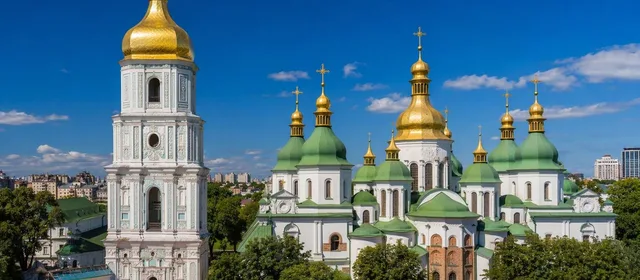
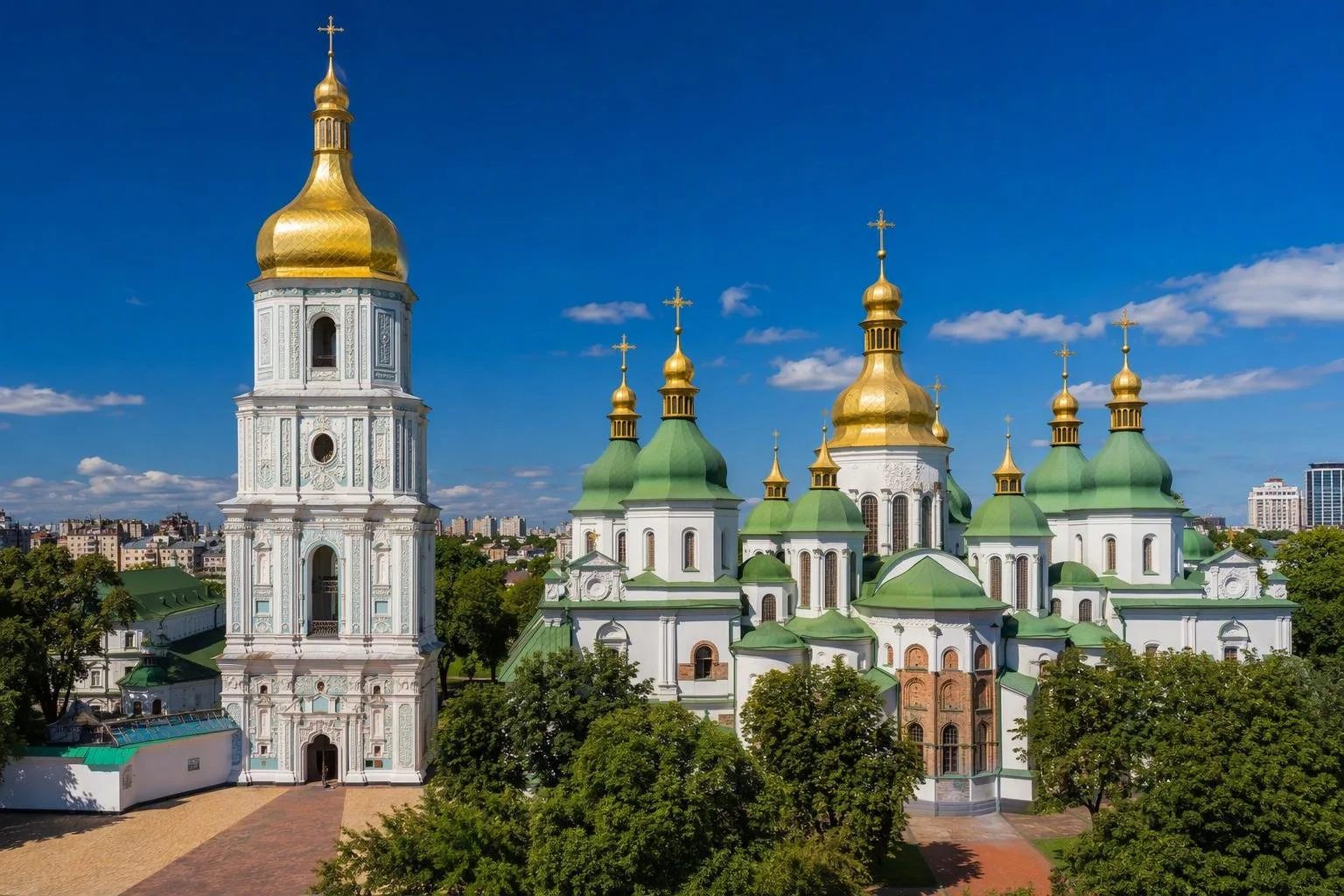
Kyiv’s historic centre occupies the high right bank of the Dnipro. Begin around Saint Sophia Cathedral, whose 11th-century mosaics and frescoes sit within a later Ukrainian Baroque monastic ensemble. Pair it with St Michael’s Golden-Domed Cathedral and the views from Volodymyrska Hill.
From there, walk down Andriivskyi Descent towards Podil. This steep historic street links the Upper Town with the old trading district; St Andrew’s Church stands at its crest. Podil is the better area for a slower circuit of older streets, cafés, galleries and Kontraktova Square.
Core places to understand Kyiv
- Maidan Nezalezhnosti: the central square and a key site of Ukraine’s modern civic history.
- Khreshchatyk: the central boulevard running through the city centre.
- Kyiv-Pechersk Lavra: a large monastic complex on the Dnipro hills, with churches, bell tower, museums and the Near and Far Caves. Allow several hours and dress respectfully for religious spaces.
- National Museum of the History of Ukraine: a useful broad introduction to the country’s past.
Saint Sophia Cathedral and Kyiv-Pechersk Lavra form a UNESCO World Heritage property, now listed as in danger because of the war.
Eat borshch as a living tradition
Borshch belongs to Kyiv’s domestic food culture as much as to restaurant menus. A 16th-century account already described it as everyday home cooking in the city. Order it as one version among many, not as a fixed recipe: red beet borshch, green sorrel borshch, mushroom and bean versions, and vegetarian interpretations all have a place.
Look for pampushky—small garlic buns—as an accompaniment. Kyiv also gathers regional Ukrainian cooking alongside Crimean Tatar, Georgian and other cuisines. Menus often identify ingredients in Ukrainian and English in central districts; a translation app is useful elsewhere.
Getting around
The metro is the fastest way to cover distance and links the central railway station, the historic centre and major districts. Contactless bank-card payment and digital QR tickets are accepted. Walking works well between Saint Sophia, Maidan, Khreshchatyk and Podil, but Kyiv is hilly: save the long riverbank connections for public transport or a taxi.
International flights to Kyiv are suspended during the war. Overland rail and bus connections are the practical routes into the city.
Wartime conditions
Kyiv remains subject to missile and drone attacks. Do not treat a visit as a normal city break: follow official travel advice, know the nearest shelter at your accommodation and obey air-raid instructions immediately. Underground metro stations function as shelters, while surface transport may stop during alerts.
Curfew rules, opening hours and transport arrangements can change. Keep identification, a charged phone, power bank, water and essential medication with you. Do not photograph or share air-defence activity, military sites, equipment movements or the immediate aftermath of strikes.
From the magazine
Stories about Kyiv
Editorial stories linked directly to Kyiv.
No stories about Kyiv have been published yet.
Routes from our editors
Travel through Kyiv
Editorial routes connecting Kyiv with other countries, cities and hotspots.
No routes through Kyiv have been published yet.
More in Ukraine
Related hotspots
Other cities, nature areas and places within Ukraine.