
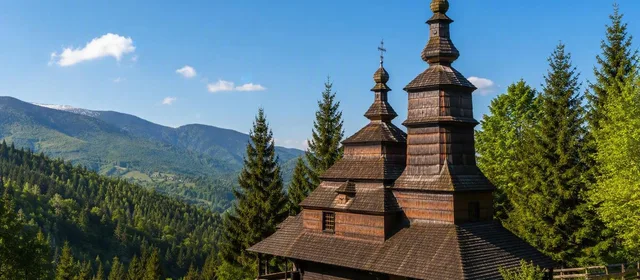
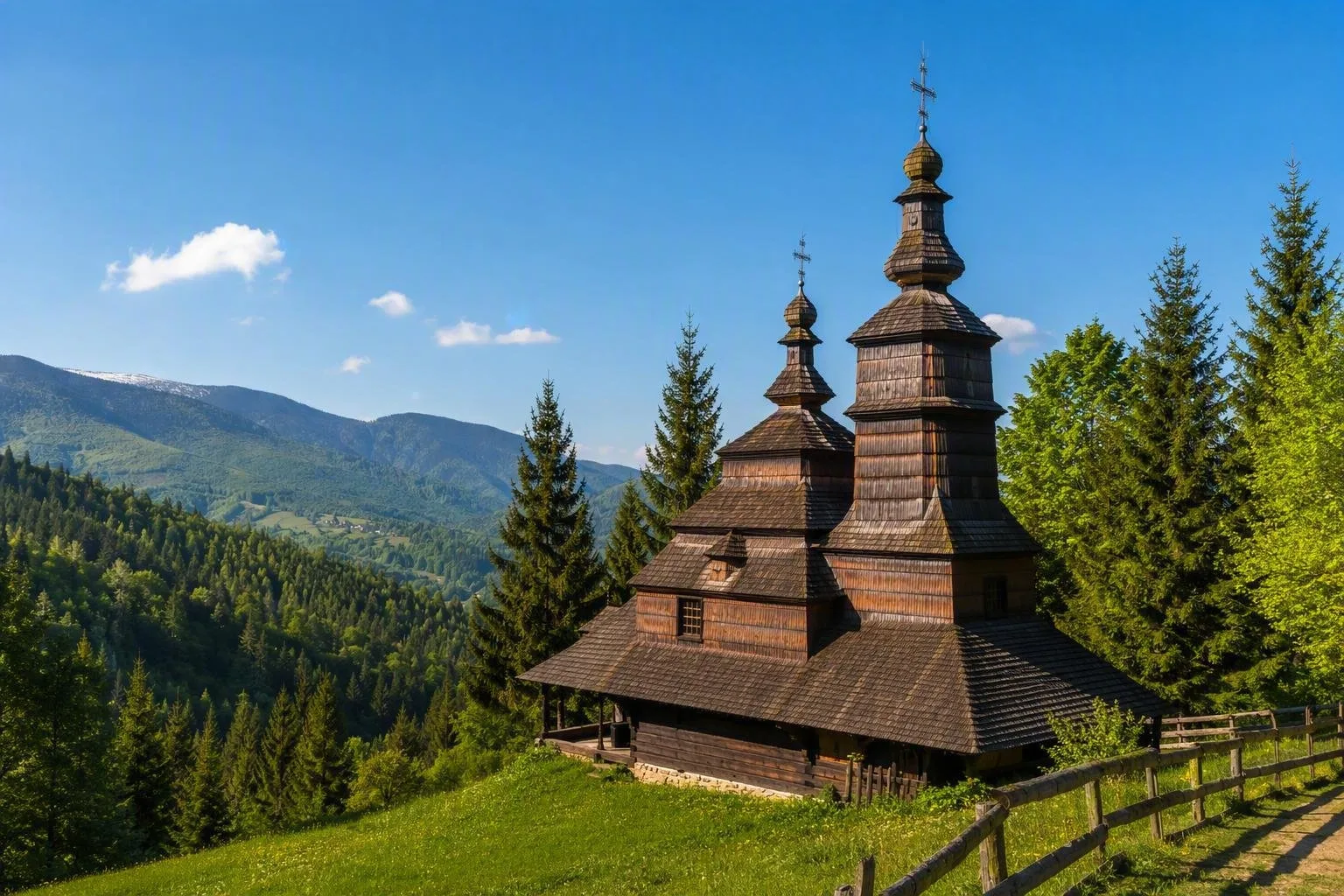
Kyiv gives a clear reason to look closer. The city rises above the Dnipro, where gold-domed monasteries stand near broad avenues, bookshops, markets and walls painted with contemporary murals. Its churches trace the history of medieval Kyivan Rus, while galleries, theatres and music venues show a city still making new work. West of Kyiv, the Carpathians narrow into forested valleys of spruce and beech. In Hutsul communities, makers use carved wood, woven wool, embroidery and ceramics in forms passed between generations. Wooden churches, built from local timber and roofed with shingles, show the skill of mountain carpenters. Farther south, the steppe opens out towards the Black Sea. In Odesa, Ukrainian, Jewish, Greek and other communities have left their mark on streets, food and trade.
Food gives each region its own details. Cooks fill varenyky with potato, cabbage, soft cheese or sour cherries, and households make borsh with different vegetables, broths and garnishes. In Lviv, coffeehouses occupy Renaissance townhouses and buildings from the Habsburg period. Kyiv pairs old monasteries with independent galleries and busy cultural life.
Since 2022, Russian attacks have killed civilians, displaced millions and damaged homes, infrastructure and cultural sites. Ukrainians have protected museum collections, repaired buildings, published books and continued to make music. When circumstances allow, spend time with local people and see the work that keeps these places and traditions present.


