City · Malta
Valletta
Valletta is Malta’s fortified capital, built on a narrow peninsula between Grand Harbour and Marsamxett Harbour. Its compact grid of limestone streets holds the country’s government, major churches, museums and harbour viewpoints.
Get the layout right
Valletta was founded in 1566 by the Order of St John as a fortified late-Renaissance city. Its regular street grid runs along and down a steep peninsula, enclosed by bastioned walls. That plan makes orientation simple: Republic Street is the main spine; Merchants Street runs roughly parallel; the side streets drop sharply towards the two harbours.
The city is compact but not flat. Walk the spine first, then use the cross streets deliberately for harbour views, gardens and individual sights. The warm local limestone is the material that ties palaces, churches, arcades and fortifications together.
Core sights
- St John’s Co-Cathedral: Valletta’s essential interior. Its Oratory holds Caravaggio’s The Beheading of St John the Baptist and St Jerome Writing. Allow time for the floor tombstones, chapels and audio guide; visitor numbers can be managed to protect the building.
- Upper Barrakka Gardens: A practical stop for the Grand Harbour panorama, looking towards the Three Cities and the dockyards.
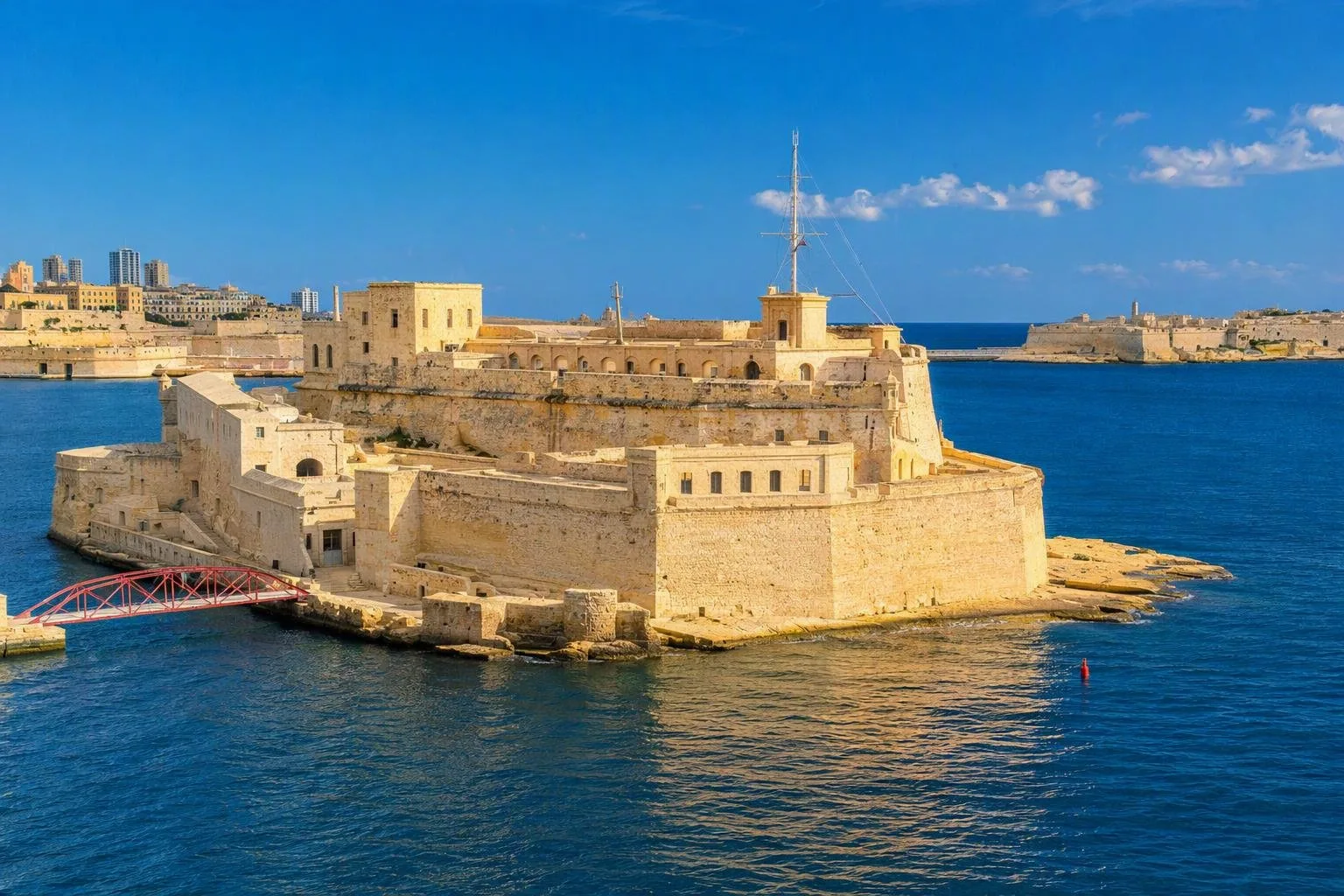
- Fort St Elmo and the National War Museum: At the peninsula’s tip, the fort explains why this site mattered militarily. It faced the 1565 siege, was absorbed into Valletta’s defences in 1689, and now contains the National War Museum.
- National Museum of Archaeology: In the Auberge de Provence on Republic Street, this is the concise introduction to Malta before the Knights, with Neolithic material including the Sleeping Lady.
Streets, food and daily rhythm
Do not treat Valletta as a sealed museum district. Government offices, shops, cafés and churches still occupy the grid. Republic Street is the obvious route, but Merchants Street and the streets around St John’s reward slower detours for balconies, carved doorways and small squares.
For a quick local snack, order a hot pastizz—usually ricotta or pea filling—from a pastizzeria. It is designed for eating immediately, often with tea or coffee, rather than as a formal meal. Keep it simple: choose the filling, take the paper bag, and continue walking.
Arrivals and moving around
The main bus terminal sits outside City Gate beside Tritons’ Fountain, making Valletta the island’s principal bus hub. From there, enter on foot; the historic core is best covered walking.
The circular 133 bus links the centre with the ferry quays and reaches Fort St Elmo. Ferries connect Valletta with Sliema and Cospicua in the Three Cities; the Cospicua crossing includes access via the Upper Barrakka lift. Use the ferry when the harbour is part of the day’s plan, not merely transport.
Practical limits
Start early for churches and museums, then reserve late afternoon for the gardens, waterfront edges and Fort St Elmo. St John’s is a working church: dress appropriately, avoid flash photography, and expect restricted access on Sundays and public holidays. Valletta’s slopes, steps and polished stone can be demanding; choose shoes with grip, especially after rain.
From the magazine
Stories about Valletta
Editorial stories linked directly to Valletta.
No stories about Valletta have been published yet.
Routes from our editors
Travel through Valletta
Editorial routes connecting Valletta with other countries, cities and hotspots.
No routes through Valletta have been published yet.
More in Malta
Related hotspots
Other cities, nature areas and places within Malta.