Region · Luxembourg
Luxembourg Moselle
Luxembourg Moselle is the country’s wine-growing region, following the Moselle River along the German border in eastern Luxembourg. Its villages, vineyards and cellars run from Schengen to Wasserbillig.
Orientation
The Luxembourg Moselle—d’Musel in Luxembourgish—follows the river that forms Luxembourg’s eastern border with Germany. The wine landscape stretches for about 42 km from Schengen in the south to Wasserbillig in the north. Remich, Wormeldange and Grevenmacher are the most useful bases for exploring it.
This is Luxembourg’s only wine region. The river, orchard country and compact wine villages make it best suited to a slow day or two rather than a single headline sight.
Vineyards and wine
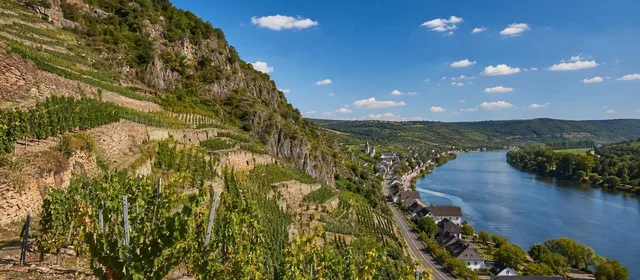
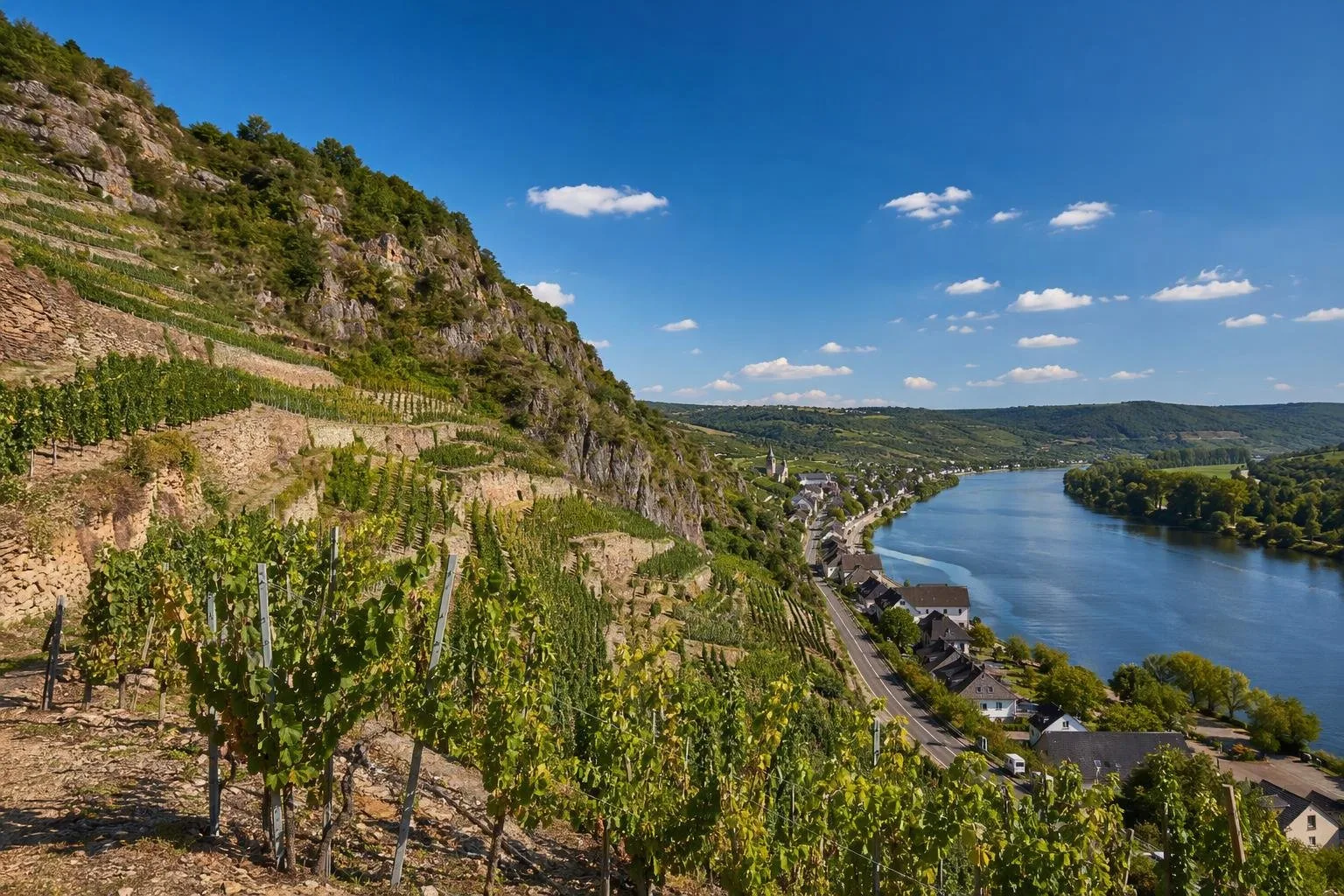
Vines occupy the sunny slopes above the river. The southern stretch between Schengen and Greiveldange is broader and gentler, with clay soils; farther north around Grevenmacher, limestone creates steeper slopes and a narrower valley.
Look for local still whites and Crémant de Luxembourg. Core grapes include:
- Riesling for dry, mineral wines
- Elbling and Rivaner for lighter styles
- Auxerrois, Pinot Blanc and Pinot Gris
- Pinot Noir and Gewürztraminer in smaller quantities
Cellars and estates are spread across the valley, so choose one or two stops rather than trying to cover the whole region in one tasting circuit. Remich, Wellenstein, Wormeldange and Grevenmacher have major cellar addresses; smaller independent growers are found in the intervening villages.
Walks, water and landscapes
The best way to see the terrain is to leave the river road. The Palmberg Wine and Nature Trail starts at Ahn and runs through vineyards, limestone outcrops and woodland; it is about 9 km and rated moderate. The Schengen without Borders Dream Loop is another moderate circuit, at roughly 7.4 km.
For flatter travel, use the riverside cycle routes between villages. Boats operate from the Moselle towns in season, while Remerschen’s lakes offer swimming and waterside recreation. Nearby Haff Réimech is a protected wetland with birdwatching infrastructure.
Schengen and regional history
Schengen is more than a wine village: the first Schengen Agreement was signed there in 1985 by France, Germany and the Benelux countries. The museum and monument stand on the Luxembourg riverbank.
Wine is much older here. Celts, Gauls and Romans cultivated vines in the valley, and the landscape remains defined by that long agricultural use. In Wormeldange, the Koeppchen vineyard and its chapel make the limestone escarpment particularly legible.
Planning the route
Start in Schengen for the European-history stop and southern vineyards, Remich for a riverfront base and cellars, or Grevenmacher for northern wineries and river activity. The Moselle Tour is a 116.7 km driving loop beginning and ending in Remich; it is not fully signposted, so navigation is essential.
Harvest and wine events concentrate in late summer and autumn. Spring is better for walking among fresh vines; summer suits river cruises, cycling and the Remerschen lakes.
From the magazine
Stories about Luxembourg Moselle
Editorial stories linked directly to Luxembourg Moselle.
No stories about Luxembourg Moselle have been published yet.
Routes from our editors
Travel through Luxembourg Moselle
Editorial routes connecting Luxembourg Moselle with other countries, cities and hotspots.
No routes through Luxembourg Moselle have been published yet.
More in Luxembourg
Related hotspots
Other cities, nature areas and places within Luxembourg.