City · Luxembourg
Luxembourg City
Luxembourg City is the capital of Luxembourg, built around a rocky promontory above the Alzette and Pétrusse valleys. Its compact Upper Town combines a former fortress landscape with markets, bakeries and restaurants serving Luxembourgish specialities.
Start with the old fortress city
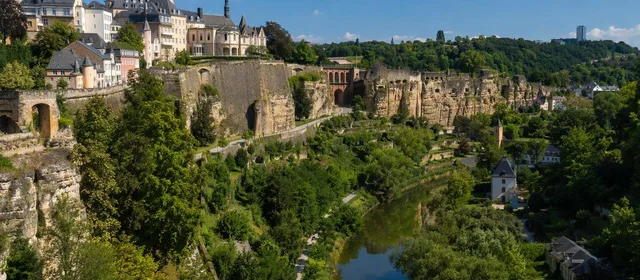
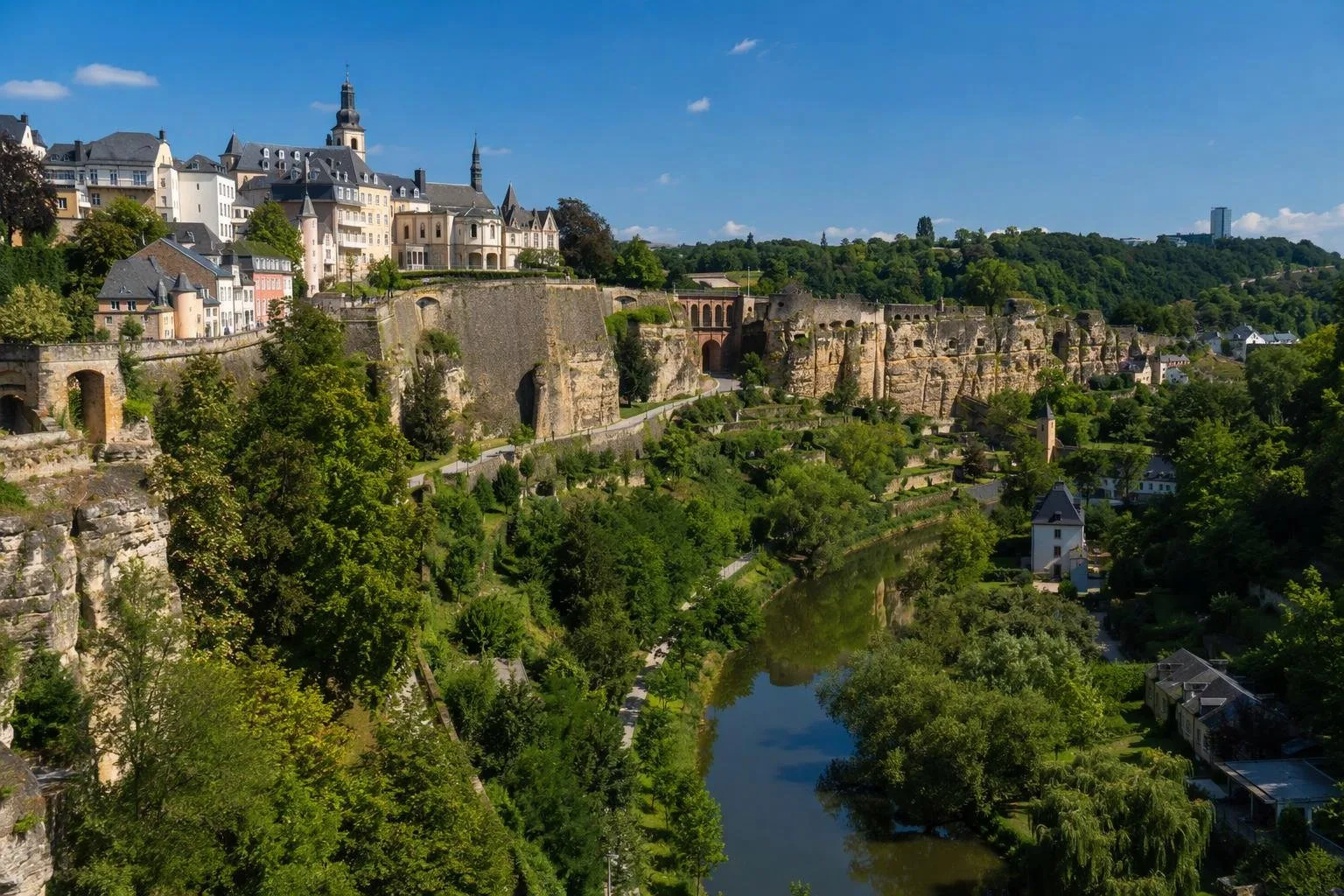
Luxembourg City grew around the Bock, a rocky spur above the Alzette. The old quarters and fortifications form a UNESCO World Heritage site: successive European powers strengthened this strategic position from the 16th century until the walls were dismantled in 1867.
The city’s historic core is small enough to cover on foot, but it is sharply divided by valleys. Begin in Ville Haute for the principal squares and shops, then descend to Grund or follow the Chemin de la Corniche towards the Bock for the relationship between the plateau, defensive works and river valley.
Read the city through its fortifications
The Bock remains the clearest physical anchor. Its rock contains casemates—underground defensive galleries from the 17th and 18th centuries—and the old city’s streets still follow a layout shaped by defence.
Key stops fit into one walk:
- Bock promontory: fortress remains and views across the Alzette valley.
- Chemin de la Corniche: a route linking the Bock and Upper Town along the old defensive edge.
- Grund: the lower quarter below the ramparts, marked by Neumünster Abbey.
- Fëschmaart / Marché-aux-Poissons: the medieval market space near the city’s earliest core. It is no longer a fish market; expect historic streets and the Nationalmusée um Fëschmaart instead.
Markets and local food
For produce rather than history, head to Place Guillaume II, commonly called the Knuedler. The twice-weekly Stater Maart brings fruit, vegetables, flowers, spices, fresh cheese, homemade jam and artisan goods to the square. It may move to Place de la Constitution for major events.
Luxembourgish food is direct and substantial. Look for Gromperekichelcher (fried potato cakes), Kachkéis (cooked cheese), Rieslingspaschtéit (a meat pie with Riesling jelly) and Kniddelen, flour dumplings often served with cream and smoked bacon. Moselle Riesling and Crémant are natural local pairings.
Pastry counters carry French-style baking alongside local specialities. Bamkuch, made in concentric layers over a flame, is a classic; seasonal Bretzel and Boxemännchen also appear in bakeries and cafés.
Practical rhythm
Walk the Upper Town and Bock in one continuous loop rather than treating them as isolated sights; the changes in level explain the city’s geography. Use Place Guillaume II as a central reset point between the palace area, Fëschmaart and the western shopping streets.
The market is best approached in the morning, when stalls are fully set out. If food is the priority, combine it with a short old-town walk: market purchases, a bakery stop and a Luxembourgish dish at lunch give the city’s culinary vocabulary more context than a single formal meal.
From the magazine
Stories about Luxembourg City
Editorial stories linked directly to Luxembourg City.
No stories about Luxembourg City have been published yet.
Routes from our editors
Travel through Luxembourg City
Editorial routes connecting Luxembourg City with other countries, cities and hotspots.
No routes through Luxembourg City have been published yet.
More in Luxembourg
Related hotspots
Other cities, nature areas and places within Luxembourg.