
Luxembourg

Fortresses, forests and Moselle vineyards

Luxembourg

Luxembourg packs a fortified capital, wooded ravines and vineyard-lined riverbanks into a small stretch of western Europe.

Luxembourg City gives this small country its sharpest contrast. Stone walls and old barracks line the cliffs above the Alzette, while the glass offices of Kirchberg stand across the valley. Walk the steep streets of the old town to the Grand Ducal Palace, then descend to the lower-town houses of Grund. At the Bock casemates, tunnels cut through the rock beneath the former fortress. French, German and Luxembourgish fill daily conversation, shop signs and public offices. On weekdays, trains and roads bring commuters from Belgium, France and Germany into the capital, adding to its international feel without obscuring its local habits.

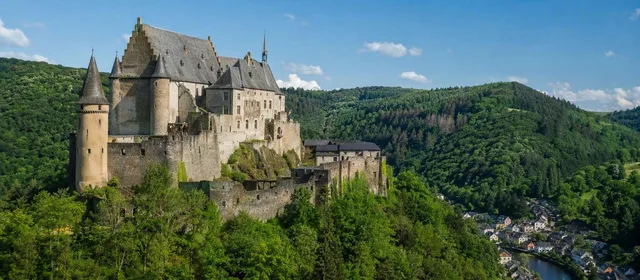
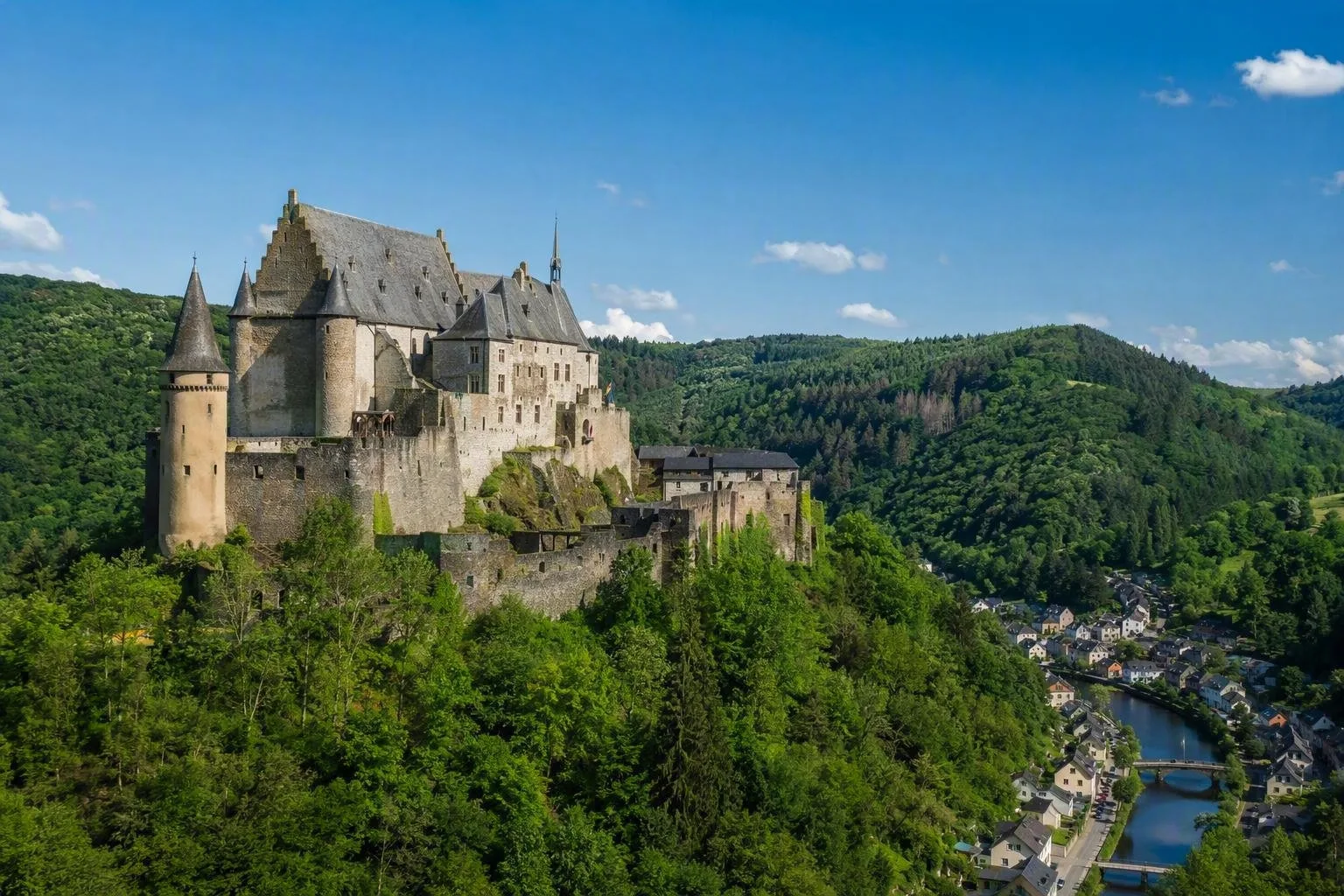
The country changes quickly beyond the capital. Vianden Castle stands high above the wooded Our valley, its restored rooms and towers visible from the town below. In Mullerthal, footpaths pass beech woods, sandstone walls and tight rock clefts. The northern Ardennes hold small villages and cooler, higher ground.

Along the Moselle, vineyards cover slopes above the river and produce Riesling, Auxerrois and Crémant. Local menus pair French and German influences with dishes such as judd mat gaardebounen, smoked pork served with broad beans. Allow time for a castle town, a valley walk and a long lunch by the river. Luxembourg is easy to look beyond its financial district, and it repays a slower visit.

When to go

Best time to travel

Monthly values are indicative average maximum temperatures for Luxembourg City. Conditions vary meaningfully between the sheltered Moselle valley, the capital and the higher, cooler Ardennes in the north. Monthly values are indicative average maximum temperatures for Luxembourg City. Conditions vary meaningfully between the sheltered Moselle valley, the capital and the higher, cooler Ardennes in the north.

jan5°C feb7°C mar11°C apr15°C may19°C jun22°C jul24°C aug24°C sep19°C oct14°C nov9°C dec6°C

Weather in the capital

Practical Luxembourg

On every country page we show the current weather for the capital.

Luxembourg City
Morning16°Covercast
Afternoon18°Covercast
Evening17°Covercast
today18°C / 13°Chigh and low

Current forecast by Open-Meteo

Getting around

Domestic buses, trams and standard-class trains are free. Rail and bus services link Luxembourg City with Vianden, the Moselle valley, Mullerthal and towns across the country.

Money and payments

Luxembourg uses the euro. Cards work in most shops, restaurants and hotels, but small cafés, market stalls and independent shops may prefer cash. Towns have plenty of ATMs.

Where to stay

Luxembourg City has the widest choice of hotels and hostels. Guesthouses, campsites and holiday rentals are common in Mullerthal, the Moselle valley and the wooded north.

Before you leave

Worth knowing

A practical starting point for your trip. Check current conditions and local information before you leave.

01

Official languages

Luxembourgish is the national language. Luxembourgish, French and German are used in administration and daily public life.

02

Calling code

Luxembourg’s international calling code is +352.

03

Driving side

Traffic drives on the right, and drivers overtake on the left.

04

Zero-fare public transport

Domestic buses, trams and standard-class trains are free. First class and cross-border journeys require a valid ticket.

05

Card payments

Shops, restaurants and hotels commonly accept debit and credit cards. Carry some cash for small purchases and market stalls.

06

Tipping

Service is included in restaurant bills. Diners often round up the total or leave a small extra amount for good service.

07

Meal times

Lunch is usually served from about noon to 2pm. Dinner commonly begins between 7pm and 9pm.

08

Sunday opening

Most shops close on Sundays. Some bakeries, supermarkets, museum shops and businesses in visitor areas open for limited hours.

09

Measurements

Luxembourg uses the metric system for distance, weight and volume.

10

Cycling

Cyclists ride on the right and use marked cycle lanes where provided. A national network links towns, river valleys and former railway lines.

11

Cross-border connections

Frequent trains and buses connect Luxembourg with Belgium, France and Germany. You need a ticket for travel outside Luxembourg.

12

Greetings

“Moien” is a common Luxembourgish greeting, while “Bonjour” is also widely used. A brief handshake is usual in formal introductions.