
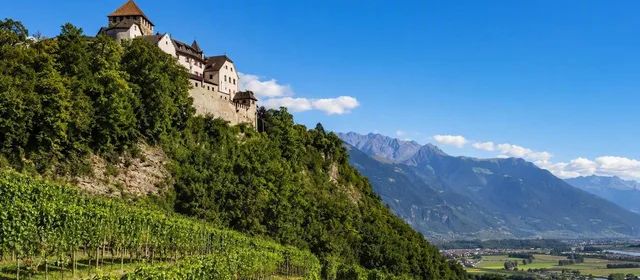
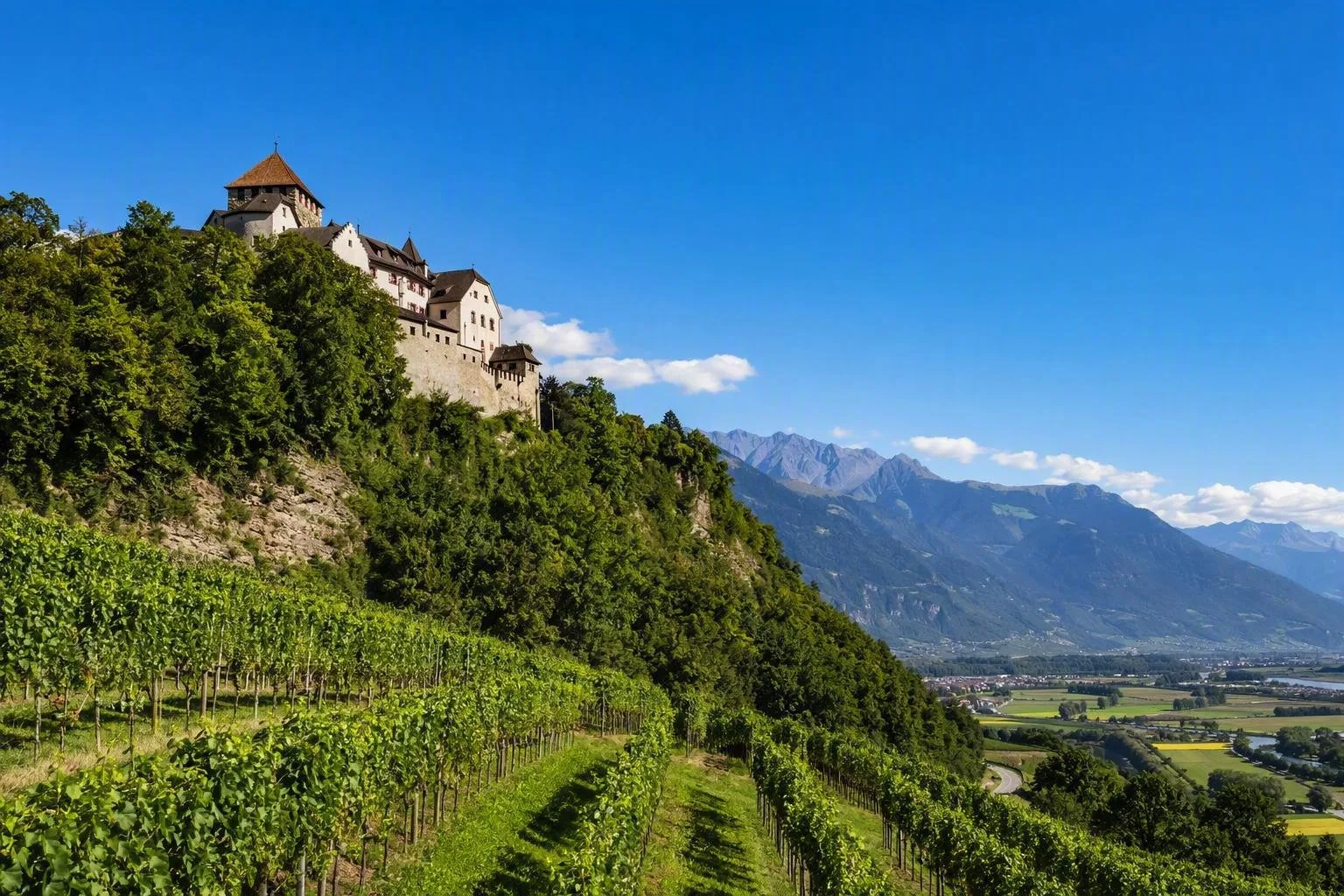
Most visitors first notice Vaduz Castle, high on its wooded slope above the Rhine Valley. Below it, vineyards run towards the centre of Vaduz, where the parliament building stands near the Liechtenstein National Museum and the dark concrete Kunstmuseum Liechtenstein. The prince’s family still lives in the castle, but the streets below it feel more like a small working capital than a ceremonial showpiece.
The Rhine marks the country’s western edge, beside farmland, factories and villages. To the east, roads climb quickly into the Alps. Triesenberg retains strong Walser roots and a local Alemannic dialect, while Malbun sits higher up among ski slopes and summer walking paths. German is the official language, though residents often use Alemannic dialects in daily conversation.
Liechtenstein has no large city, so its institutions, vineyards and mountain communities sit close together. At the southern end of the country, Gutenberg Castle rises above Balzers and its old houses. Local restaurants serve Käsknöpfle, small flour dumplings with melted cheese and fried onions. Growers around Vaduz produce pinot noir on sunny valley slopes. Walk along the Rhine, stop for a glass of local wine, then head uphill towards Triesenberg or Malbun. Take time to look beyond the castle and enjoy the country at its own unhurried scale.


