
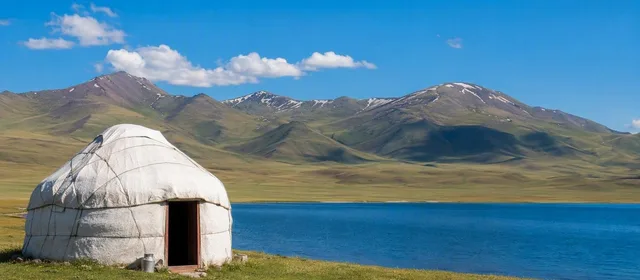
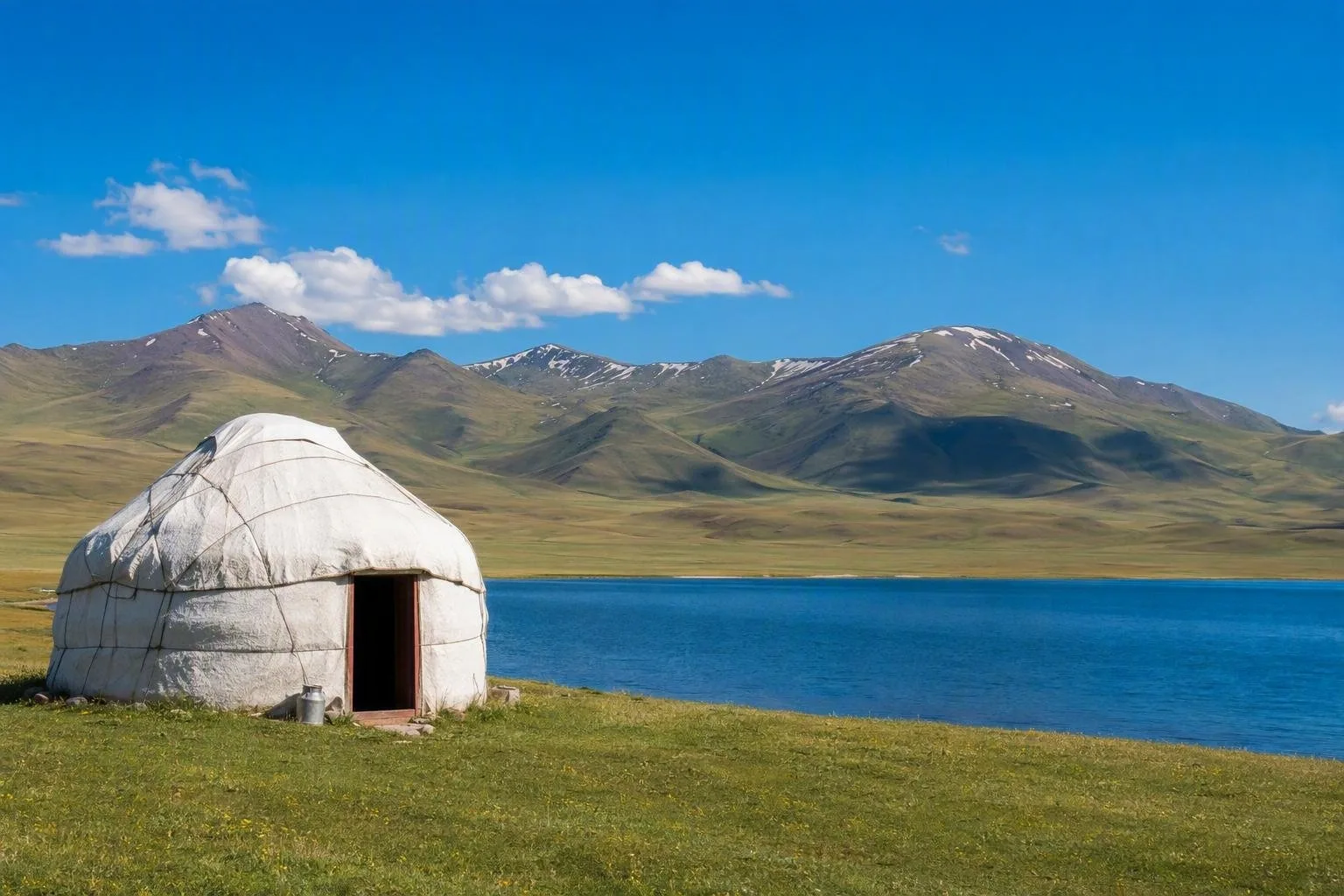
Look past the map’s broad green interior: Kyrgyzstan’s mountain country still carries the marks of seasonal life. At Song-Köl, herding families bring horses and sheep to summer pasture, and white yurts stand beside the cold alpine lake. Farther east, the Tien Shan rises beyond Issyk-Köl, where beaches and orchards meet dry red canyons. Petroglyphs, burial mounds and old passes trace much older movement through these valleys, from pastoral camps to traders and armies.
Bishkek shows another side of the country. Soviet-era avenues and apartment blocks sit beside busy bazaars, small parks and restaurants serving lagman noodles, manty dumplings and grilled meat. In Osh, traders sell bread, spices and dried fruit beneath Sulayman-Too, a sacred hill that has drawn pilgrims for generations.
In many mountain communities, families still organise the year around livestock, pasture and kin. Craftspeople make shyrdak felt rugs, while horse games and yurt building keep practical skills in use. The lakes and high passes catch the eye, but markets, meals and family homes show how people live with the mountains. Take time for both the cities and the smaller settlements, and Kyrgyzstan will stay with you.


