
Bhutan

Himalayan valleys and living Buddhist culture

Bhutan

Bhutan pairs cliffside monasteries and fortified dzongs with a young democracy and changing mountain towns.

Look beyond the prayer flags and Bhutan shows a country where old institutions sit squarely in daily life. Whitewashed dzongs serve as both monasteries and district offices. In Thimphu, cafés stand near archery grounds, traffic police direct cars at junctions, and the city has no traffic lights. Buddhist practice appears in chortens by the road and in the steady flow of people visiting temples. It also shares space with young musicians recording in Dzongkha and English, market traders selling red rice and chillies, and elected representatives working alongside the monarchy.

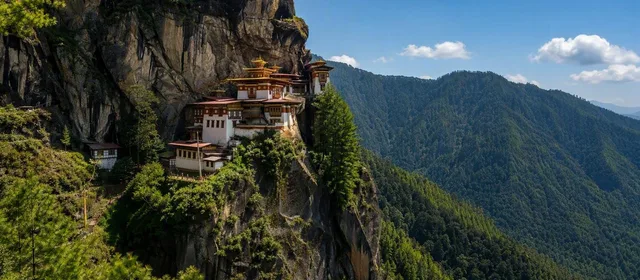
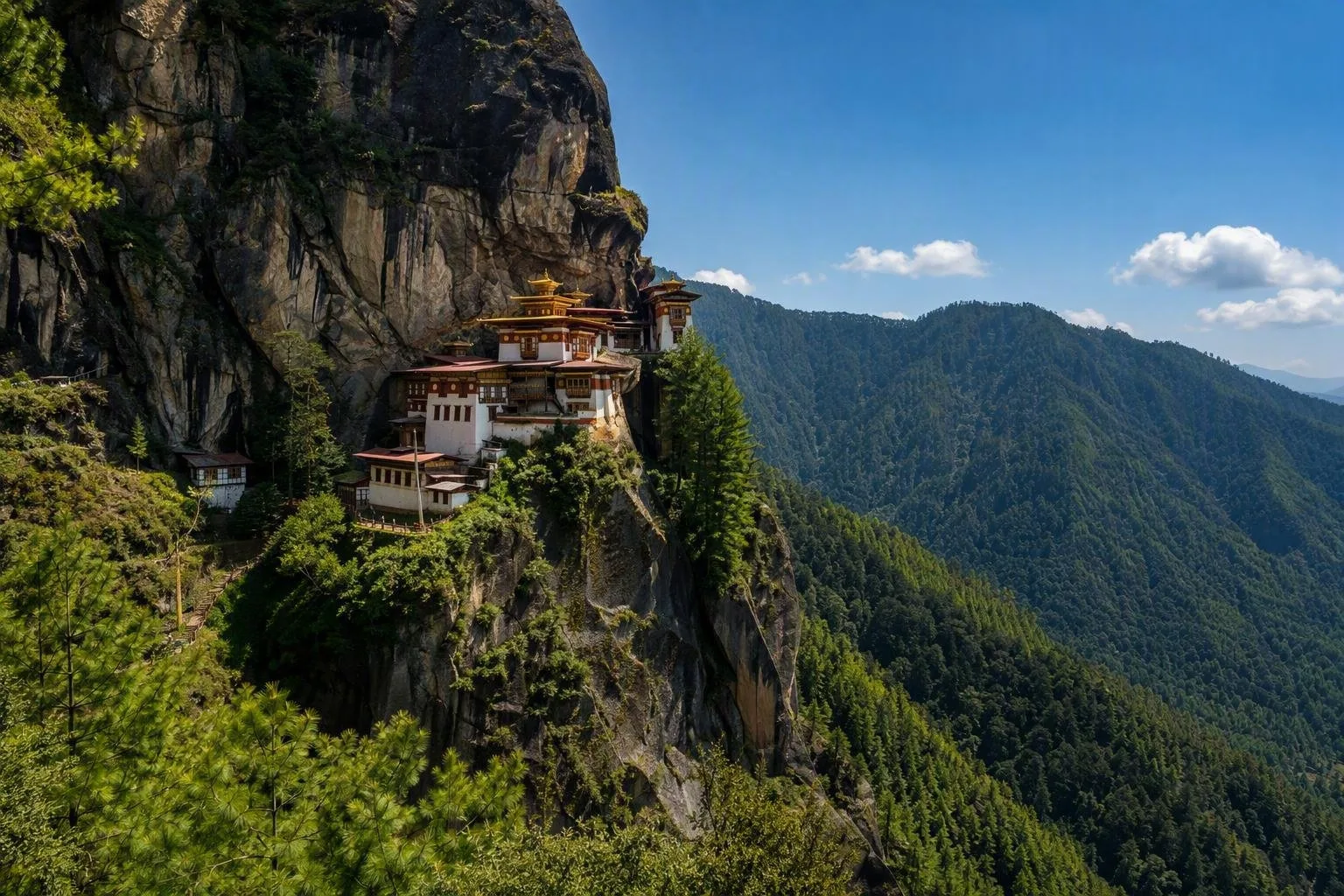
Paro gives a clear view of Bhutan’s contrasts. Farmhouses and fields spread across the valley floor, while Taktsang Monastery stands high on a forested cliff above them. In Punakha, the Pho Chhu and Mo Chhu meet beside a large dzong and rice fields. The road east climbs over high passes towards Bumthang, where temples, villages and monasteries fill four mountain valleys.

Food follows the land. Cooks serve red rice, buckwheat pancakes, dried beef and ema datshi, a dish of chillies and cheese. Monasteries stand above working farms, and masked dancers fill dzong courtyards during major festivals. In Phobjikha, farmers work around wetlands where black-necked cranes spend the winter. Stay long enough to leave Paro and Thimphu behind, and Bhutan’s valleys offer plenty of room to linger.

When to go

Best time to travel

The monthly values are indicative average maximum temperatures for Thimphu Valley. Temperatures and rainfall vary meaningfully with altitude and between the southern foothills, central valleys and high mountains. The monthly values are indicative average maximum temperatures for Thimphu Valley. Temperatures and rainfall vary meaningfully with altitude and between the southern foothills, central valleys and high mountains.

jan15°C feb17°C mar20°C apr23°C may25°C jun26°C jul26°C aug26°C sep25°C oct23°C nov19°C dec16°C

Weather in the capital

Practical Bhutan

On every country page we show the current weather for the capital.

Thimphu
Morning16°Cshowers
Afternoon18°Cthunderstorm
Evening15°Covercast
today18°C / 15°Chigh and low

Current forecast by Open-Meteo

Getting around

Most visitors travel between valleys by vehicle with a driver. Mountain roads wind over steep ground, so short distances can take several hours. Buses and shared taxis connect the main towns.

Paying in Bhutan

Cash is useful outside larger towns. ATMs and card payments are available mainly in Thimphu, Paro and other major centres, while rural areas have fewer options.

Where to stay

Bhutan has licensed hotels, guesthouses, farm stays and a small number of luxury lodges. Paro and Thimphu have the widest choice; remote valleys have fewer places to stay.

Before you leave

Worth knowing

A practical starting point for your trip. Check current conditions and local information before you leave.

01

Language

Dzongkha is the official language. English is widely used in schools, government, hotels and the travel sector.

02

Calling code

Bhutan’s international calling code is +975.

03

Driving side

Traffic drives on the left.

04

Mountain-road journeys

Narrow roads, steep passes and frequent bends make journey times longer than the distance suggests.

05

Buses and shared taxis

Intercity buses and shared taxis link major towns. Departure times and comfort levels vary, especially on less-travelled routes.

06

Tipping

Tipping is not compulsory. Visitors often give guides, drivers and service staff a discretionary tip for good service.

07

Meals and dining

Meals often centre on rice with several shared dishes. Chilli is a main ingredient in many recipes, so ask about the heat level when ordering.

08

Business hours

Government offices generally work Monday to Friday. Many shops and restaurants open at weekends, though closing days and hours vary.

09

Mobile connectivity

B-Mobile and TashiCell run the main networks. Visitors can buy registered local SIM cards, and coverage is strongest in towns and settled valleys.

10

Photography

Photography may be prohibited inside temples, monasteries and dzongs. Check signs and ask permission before photographing interiors, ceremonies or people.

11

Sacred-site etiquette

Wear clothing that covers shoulders and knees, remove shoes and hats when requested, and walk clockwise around chortens and other sacred structures.

12

Measurements

Bhutan uses the metric system: kilometres for distance, metres for elevation and kilograms for weight.