City · Bangladesh
Sylhet
Sylhet is the main city of northeastern Bangladesh, set on the Surma River and serving as the administrative centre of both Sylhet District and Sylhet Division. It pairs a major Sufi shrine and river landmarks with tea-country edges and a distinct Sylheti food culture.
The city at a glance
Sylhet is a compact urban base in northeastern Bangladesh, centred on the Surma River. The commercial core around Zindabazar and the shrine district north of it are the most useful areas for first-time visitors; the river and railway station sit to the south.
The city works best as a place for shrine visits, market streets, riverside landmarks and Sylheti meals—not as a substitute for the wider region’s wetlands and border landscapes.
Core sights
Hazrat Shah Jalal Dargah is Sylhet’s defining religious landmark: the shrine complex is the resting place of the 14th-century Sufi saint Shah Jalal. It is an active place of worship, so dress conservatively and keep the visit quiet and unhurried.
Walk or take a short rickshaw ride south to the Surma waterfront:
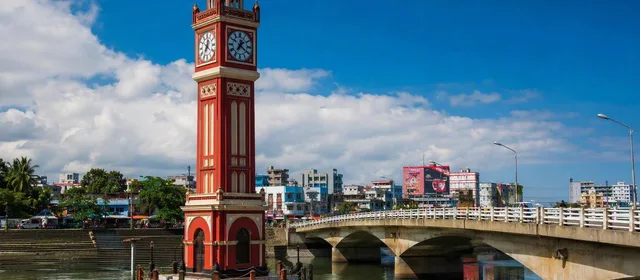
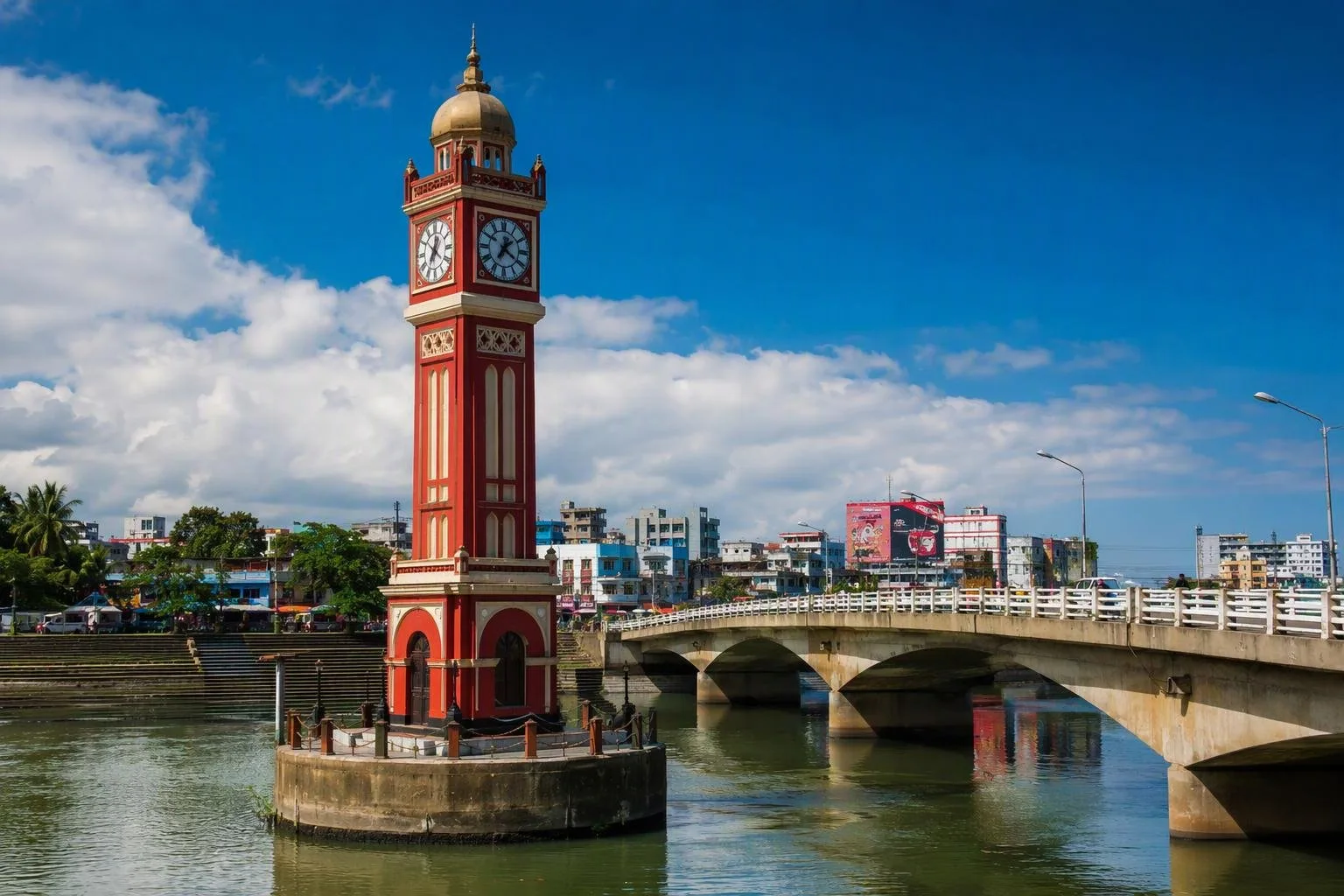
- Keane Bridge crosses the river and remains one of the city’s clearest landmarks.
- Ali Amjad’s Clock Tower stands on the riverbank near the bridge. The pair makes the most recognisable central-Sylhet view.
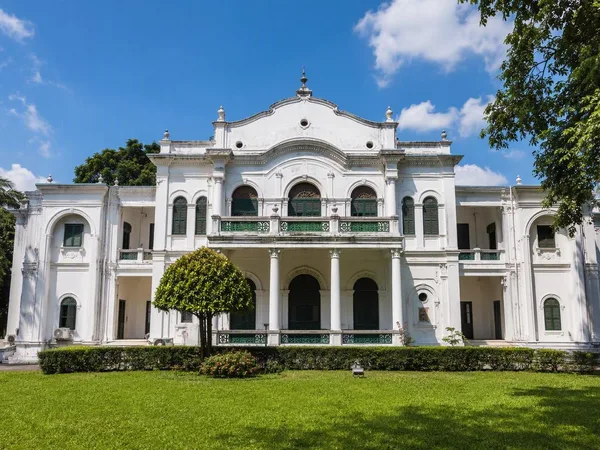
- Kendriya Muslim Sahitya Sangsad, near Dargah Gate, is a long-established literary institution with a substantial collection of books, periodicals and manuscripts.
Tea and food
Tea gardens lie around the city, particularly along the airport-road side, putting orderly rows of tea bushes within a short ride of the centre. They are working landscapes, not public parks; treat access as private unless a host permits entry.
Sylheti cooking is worth seeking out in local restaurants. Order rice with fish, dal and vegetables, or try meat cooked with shatkora, the knobbly regional citrus. Its bitter, fragrant peel gives slow-cooked beef or chicken a sour citrus edge. Ask whether a dish is prepared in the Sylheti style rather than assuming a standard curry-house menu will use it.
Getting in and moving around
Osmani International Airport serves Sylhet, while Sylhet railway station links the city to other Bangladeshi rail destinations. Long-distance coaches use terminals south of the river.
Within town, cycle rickshaws and CNG auto-rickshaws are the practical choices for short hops; agree the fare before setting off. Central distances can look short on a map, but traffic, patchy pavements and the river crossings make walking slower than expected.
Weather and timing
The drier stretch from November to February is the simplest period for city walks. From April into October, heat, humidity and heavy rain shape the day; the wettest months fall between May and September. Carry rain protection and leave time for journeys when storms build.
For the shrine and markets, go earlier in the day. The riverfront is most useful later, when the heat eases and the clock tower and bridge are easier to take in together.
From the magazine
Stories about Sylhet
Editorial stories linked directly to Sylhet.
No stories about Sylhet have been published yet.
Routes from our editors
Travel through Sylhet
Editorial routes connecting Sylhet with other countries, cities and hotspots.
No routes through Sylhet have been published yet.
More in Bangladesh
Related hotspots
Other cities, nature areas and places within Bangladesh.